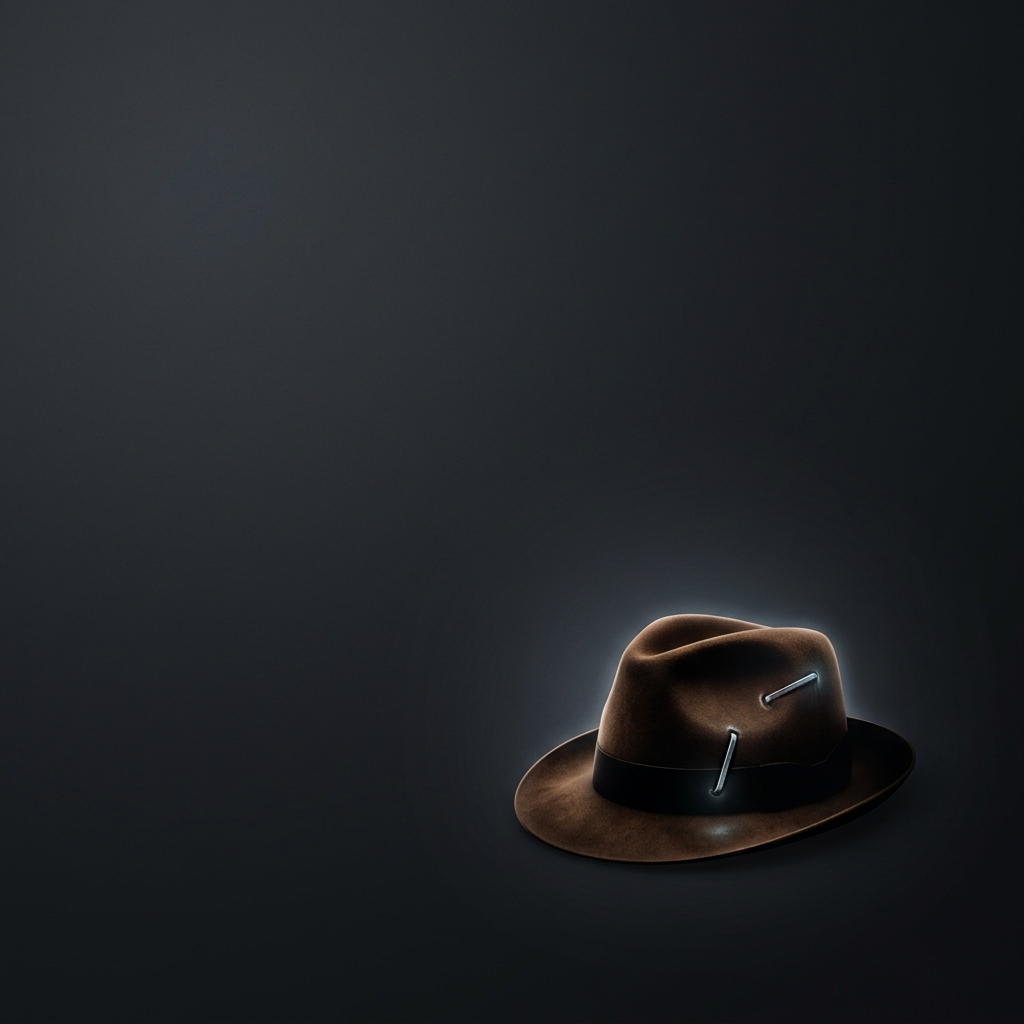
A hat had to survive the action
Indiana Jones’s fedora is more than a costume accessory: its shape makes the character recognizable even in a quick shot. But a hat that looks effortless on screen can be awkward to film. Running, ducking, fighting, and changing camera angles all give a loose brim chances to shift or fall off. If it moves between shots, the mismatch can also interrupt the illusion that the action is unfolding continuously.
The gag turns a real problem into a visual punchline
In behind-the-scenes footage, Harrison Ford brings a stapler toward the fedora as a joke. The image lands because it exaggerates the practical question facing a production: how do you keep a distinctive hat where the camera needs it while an actor is moving? A stapler is an instantly legible, absurd answer—especially when the hat is associated with a person, not just a costume rack.
The footage supports the joke, not the more startling version that Ford actually stapled the hat to his scalp. Keeping a costume in place is a normal continuity and staging challenge; the gag makes that challenge memorable by pretending to solve it in the most extreme way possible.
Why the hat matters in a shot
A fedora slipping at the wrong moment could change the character’s silhouette or draw attention away from the action. And if a scene is filmed in pieces, the costume has to look consistent from one take to the next. That does not mean every moving costume needs an elaborate fix. It means wardrobe and performers must account for how an item behaves under the specific demands of a scene.
The stapler joke sticks because it compresses that behind-the-scenes balancing act into one image: keep the iconic hat on, but do not let the solution become more distracting than the adventure.