Why a Lightsaber Fight Needed a Quiet Set
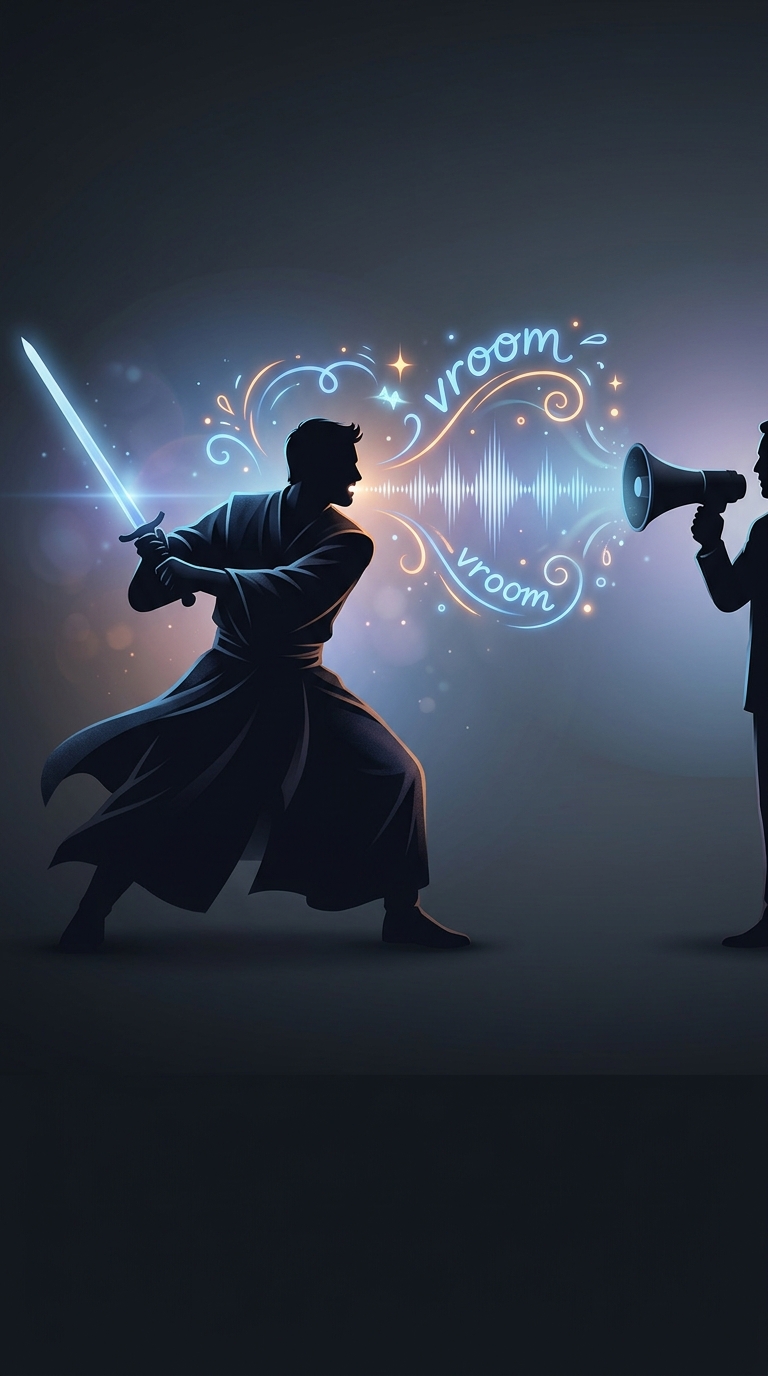
A lightsaber is instantly recognizable not only by its glowing blade but by its distinctive electronic hum and clash. Those sounds, however, were added in post-production—the stage after filming when editors and sound designers build and refine a movie’s audio. On set, Ewan McGregor’s task was to perform the fight, not to supply the weapon’s soundtrack.
That separation matters because a camera records everything within earshot. A performer making the familiar saber noises can leave extra sound mixed in with dialogue, movement, and the set’s ambient noise. Even if the sound is faint, it may distract from the carefully designed effects or make a clean audio mix harder to assemble.
The Sound Was Built After the Performance
Skywalker Sound’s editors could remove McGregor’s humming from the recorded audio, then add the intended lightsaber effects in the edit. This gave the sound team control over when each hum, swing, and impact began and how loud it was. A blade could sound precise and dramatic without relying on the timing or volume of an actor’s improvised mouth sounds.
The reminder from George Lucas reflects a small but revealing tension in filmmaking: actors often respond physically to the world of a scene, while the finished movie may depend on keeping that world quiet enough to construct later. McGregor’s instinct was to make the weapon feel present; the production needed him to leave room for the specialists who would make it audible to the audience.
The result is a familiar movie illusion: on set, a duel could be performed without its iconic soundtrack, then transformed in post-production into a clash of humming blades.