Two ways to ask a chicken for an omen
Alectryomancy used a bird’s eating to produce a message. In one version, letters were laid out with grain on or near them; the chicken’s pecks selected letters that could be read as an answer. The name comes from Greek words for “rooster” and “divination.” The bird was not understood as composing a sentence: the ritual gave meaning to the pattern of its choices.
Roman commanders also consulted sacred chickens, but their military ritual was simpler. Attendants offered the birds grain and watched whether they ate eagerly. That response was treated as a sign about whether the gods favored the planned action—not as a spelled-out prophecy.
When a bad sign met a battle plan
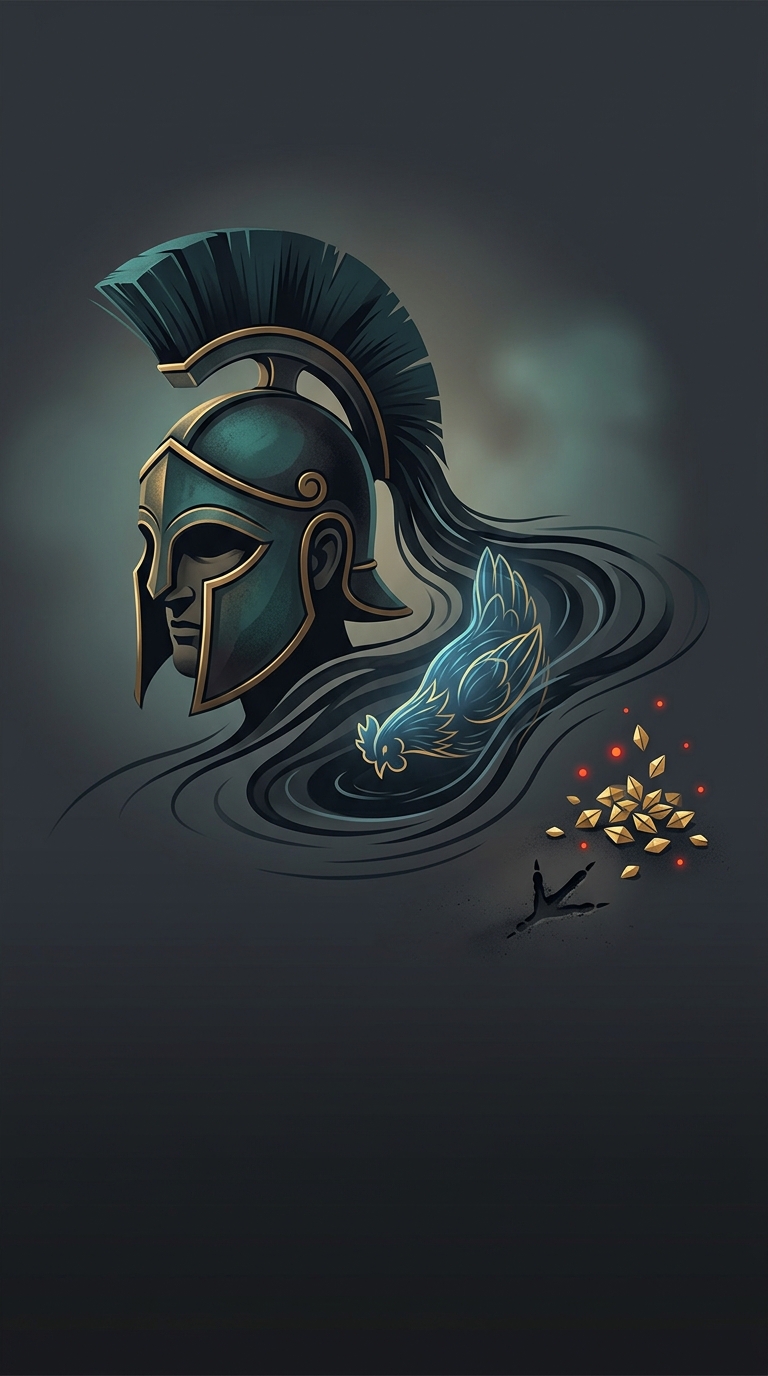
The best-known Roman story concerns Publius Claudius Pulcher before the Battle of Drepana in 249 BCE, during the First Punic War against Carthage. The chickens reportedly would not eat. Claudius is said to have thrown them into the sea, remarking that if they would not eat, they could drink. He then fought and suffered a disastrous defeat.
The episode is often blended with the letter-spelling form of alectryomancy, but the two practices should not be confused: the Drepana story is about refusing food, not chickens pecking letters. Its lasting force comes from the collision between ritual and command. The omen could be ignored; the fleet still had to sail, and the decision became memorable when the battle went badly.