What astrologers mean by a conjunction
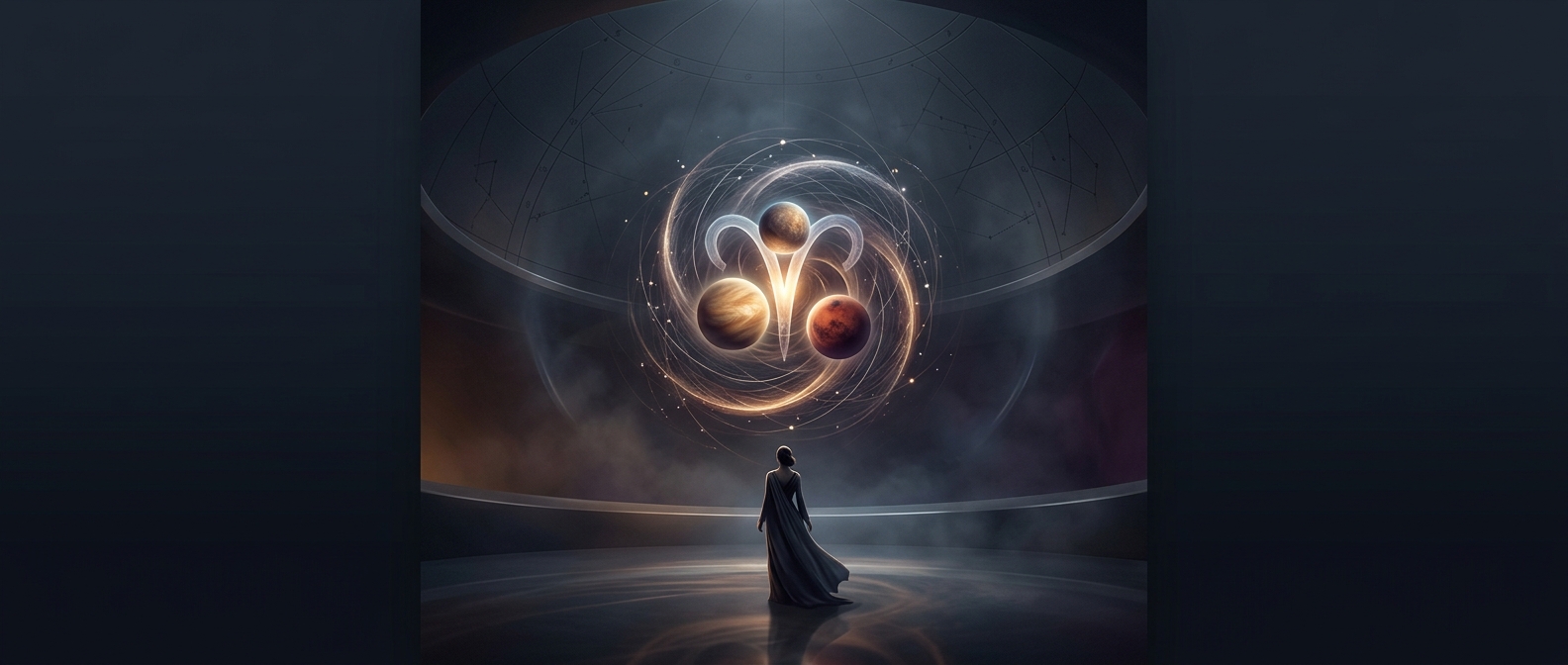
In an astrological chart, a conjunction occurs when two planets appear close together in the zodiac, measured by their positions along the zodiac’s circle. Astrologers treat that closeness as a reason to read the planets in relation to each other rather than as separate influences. The planets do not physically merge; the conjunction is an interpretive relationship within astrology.
How close they must be is described by an orb—the allowed distance between them. Astrologers differ on how wide an orb to use, so the same pair of planets may count as a strong conjunction in one reading and a weaker one in another.
The chart supplies the context
A conjunction’s meaning depends on which planets are involved. In astrological symbolism, each planet is associated with a different set of themes, so an astrologer considers what those themes might look like when closely linked. The sign and house—the chart area associated with a sphere of life—add further context. A conjunction is therefore not assigned one universal meaning just because two planets are nearby.
Astrologers may also consider whether the planets form relationships with other parts of the chart. That can change the emphasis of an interpretation: the conjunction might be read as an intense pairing, a source of tension, or a combination with more room to flow. The useful distinction is that “blending” describes the astrologer’s reading of symbolic themes, not a measurable force acting on a person.