How an Astrological Aspect Gets Its “Orb”
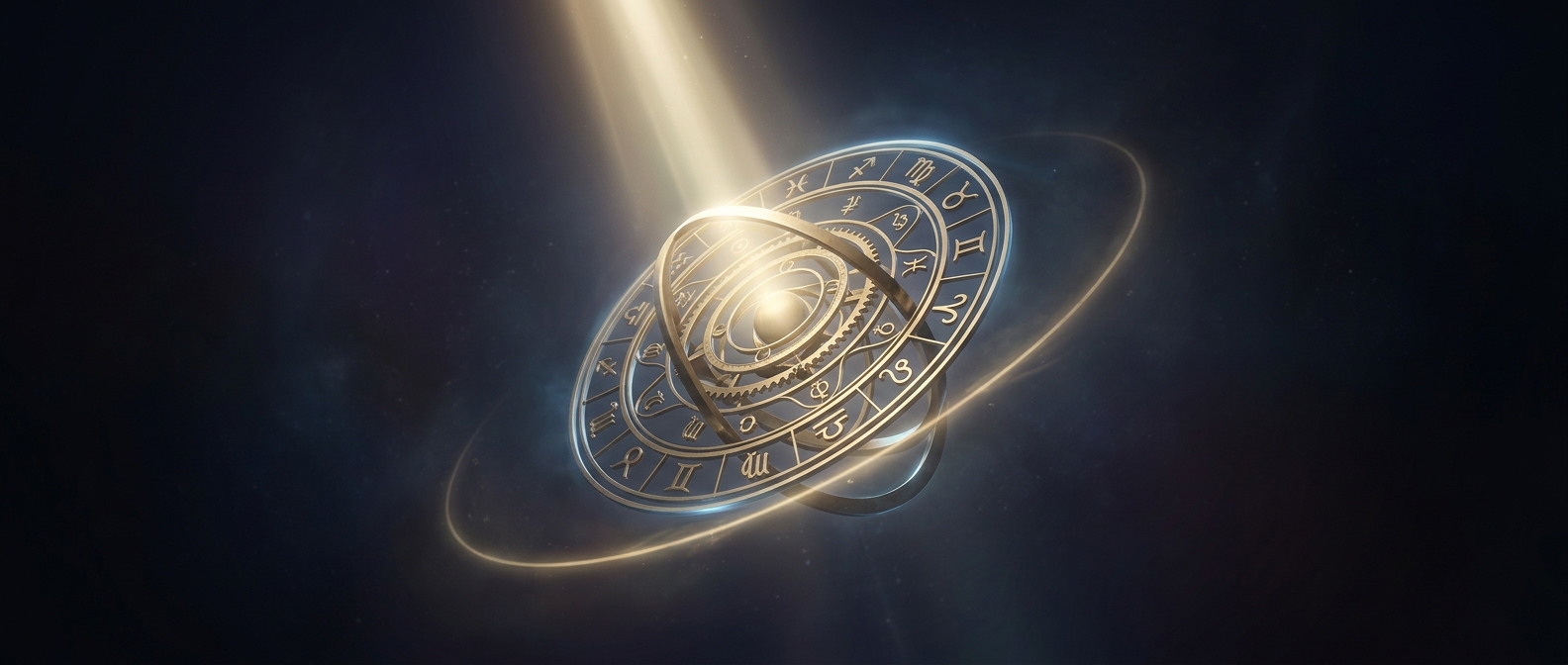
Astrologers compare the positions of planets around the zodiac, measured as angles. When two planets sit at a favored angle—such as 90 degrees, called a square—they are said to form an aspect. In practice, the planets rarely land on the exact number. An orb is the permitted gap between their actual angle and the ideal one.
That makes an aspect less like a switch that flips at one precise point and more like a zone. If a chart uses a wide orb, planets can count as connected even when they are several degrees from the exact angle. A narrow orb admits fewer connections.
The Choice Changes the Reading
There is no single orb limit used by every astrologer. Some allow more leeway for certain planets or aspects; others prefer tighter limits. So the same pair of planets may qualify as an aspect in one reading and not in another.
A wider allowance can make a chart feel densely connected, giving the astrologer more relationships to interpret. A stricter one can leave a leaner set of prominent aspects. The angle itself is measurable; deciding how far away still “counts” is an interpretive rule. That boundary can shape the story a chart appears to tell.