A story staged around the player
In many action games, a cutscene pauses play and shows the story from a separate camera. Half-Life instead made the player’s view the camera. When a scientist spoke, a creature attacked, or a disaster unfolded, the event happened in the space Gordon Freeman was already inhabiting. The player could look around and, in many moments, keep moving rather than watch a pre-edited sequence.
That approach depended on careful staging. Characters had to enter the player’s field of view, pause long enough for dialogue, and respond to events in a readable order. The game used triggers—specific places or actions that start a scripted event—to coordinate those encounters without switching to a cinematic viewpoint. Storytelling became part of navigating the facility, not a break from it.
The world had to carry the exposition
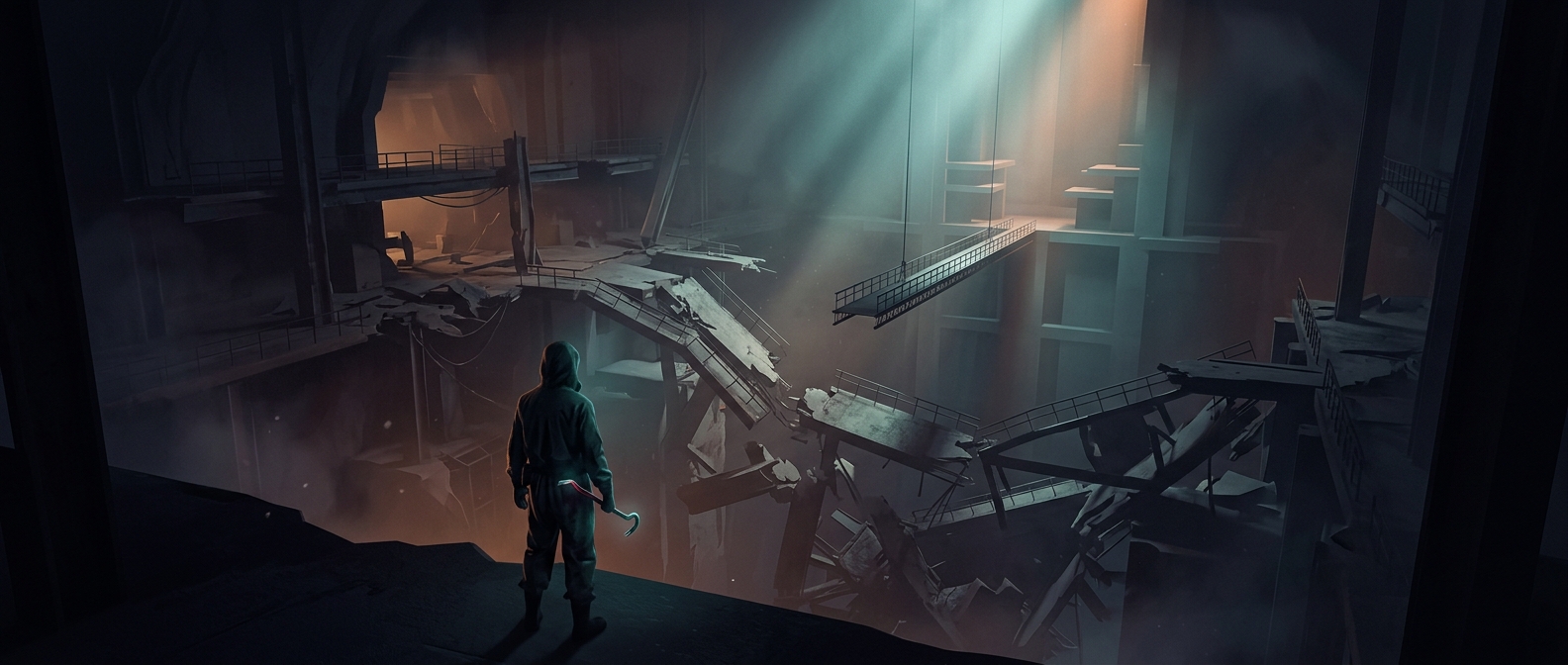
Without cutaways, the environment did more narrative work. Players encountered consequences in the rooms they crossed: damaged equipment, frightened workers, blocked routes, and signs of a crisis spreading through the research complex. Dialogue supplied context, but the setting let players see what had happened and decide where to look.
This also changed the rhythm of the story. A conventional cutscene can guarantee that every player sees a face, a gesture, or a precise camera angle. Half-Life gave up some of that control. A player might miss a detail while searching a room or watching an enemy. In return, events felt less like a presentation inserted between tasks and more like things happening around the player.
Silence made the player’s viewpoint the character
Gordon’s lack of spoken dialogue supported that design. He did not interrupt scenes with reactions that might conflict with a player’s own response, and the game could leave his personality relatively open. The tradeoff was that other characters often had to carry conversations while Gordon remained a silent presence.
The result was a first-person story built from movement, observation, and encounters rather than frequent cinematic handoffs. Even a modest action—turning toward a voice or choosing to keep walking—could feel like part of the scene because the game did not routinely take the viewpoint away.