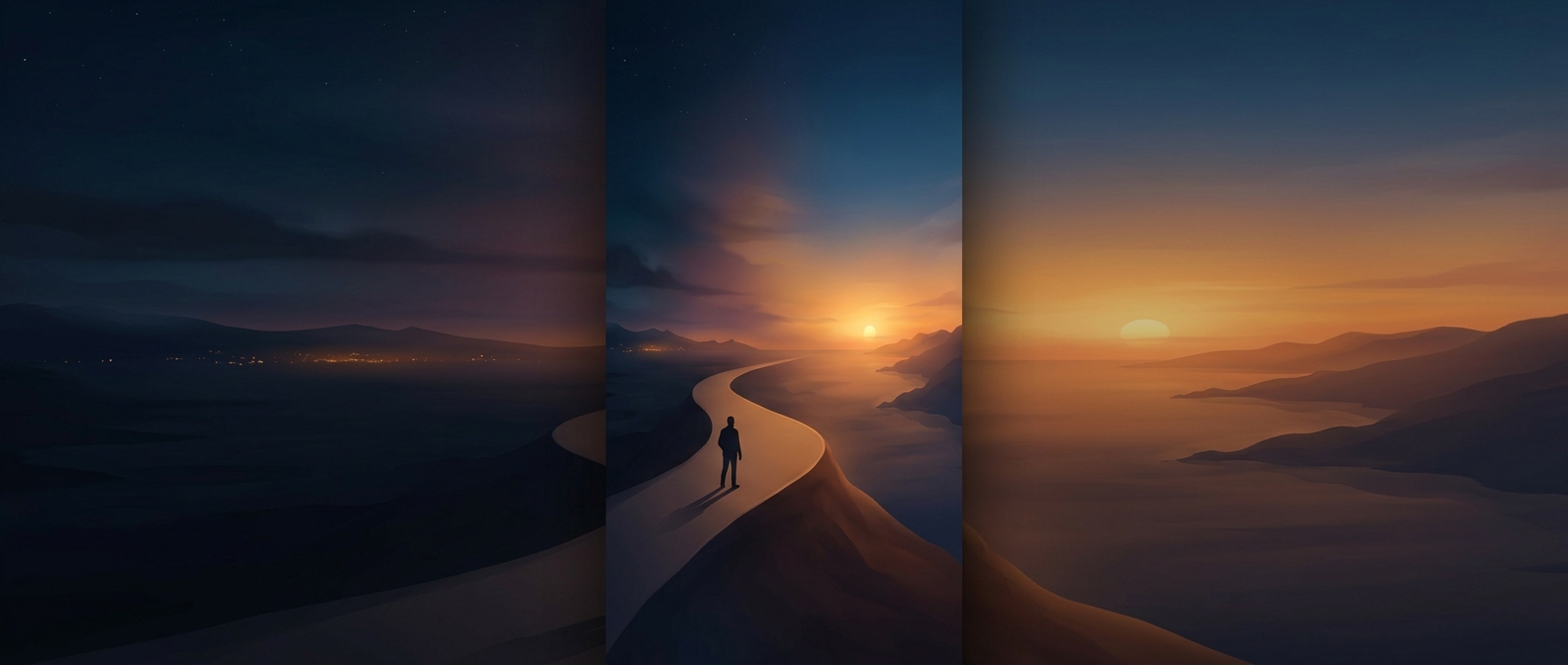
Why the sun disappears in polar winter
Earth’s axis is tilted as the planet travels around the Sun. In winter, the North Pole leans away from the Sun, so the Sun’s daily path can remain below the horizon for places within the Arctic Circle. The same pattern occurs around the South Pole during the Southern Hemisphere’s winter.
The farther a place lies toward a pole, the longer this sunless stretch can last. Near the polar circles it is relatively brief; closer to the poles, it can extend for months. This is called polar night—a period when the Sun does not rise above the horizon, not necessarily a period of unbroken blackness.
Twilight still shapes the day
Even when the Sun stays below the horizon, its light can reach the upper atmosphere and scatter toward the ground. Depending on how far below the horizon it is, that produces twilight: a dim glow that may brighten the landscape around midday. Weather, clouds, moonlight, and snow can all change how dark it feels.
For visitors, the difference matters. A winter day may offer a short window of blue or dusky light rather than a sunrise and sunset, while some stretches are much darker. Local schedules continue through both, but outdoor plans often depend on limited daylight, clear skies, and artificial lighting.
The light returns gradually as Earth’s tilt carries the region back toward the Sun. In places far north or south, that return can transform the landscape from prolonged dusk to continuous summer daylight—another consequence of the same tilt.