A Border That Becomes a Marketplace
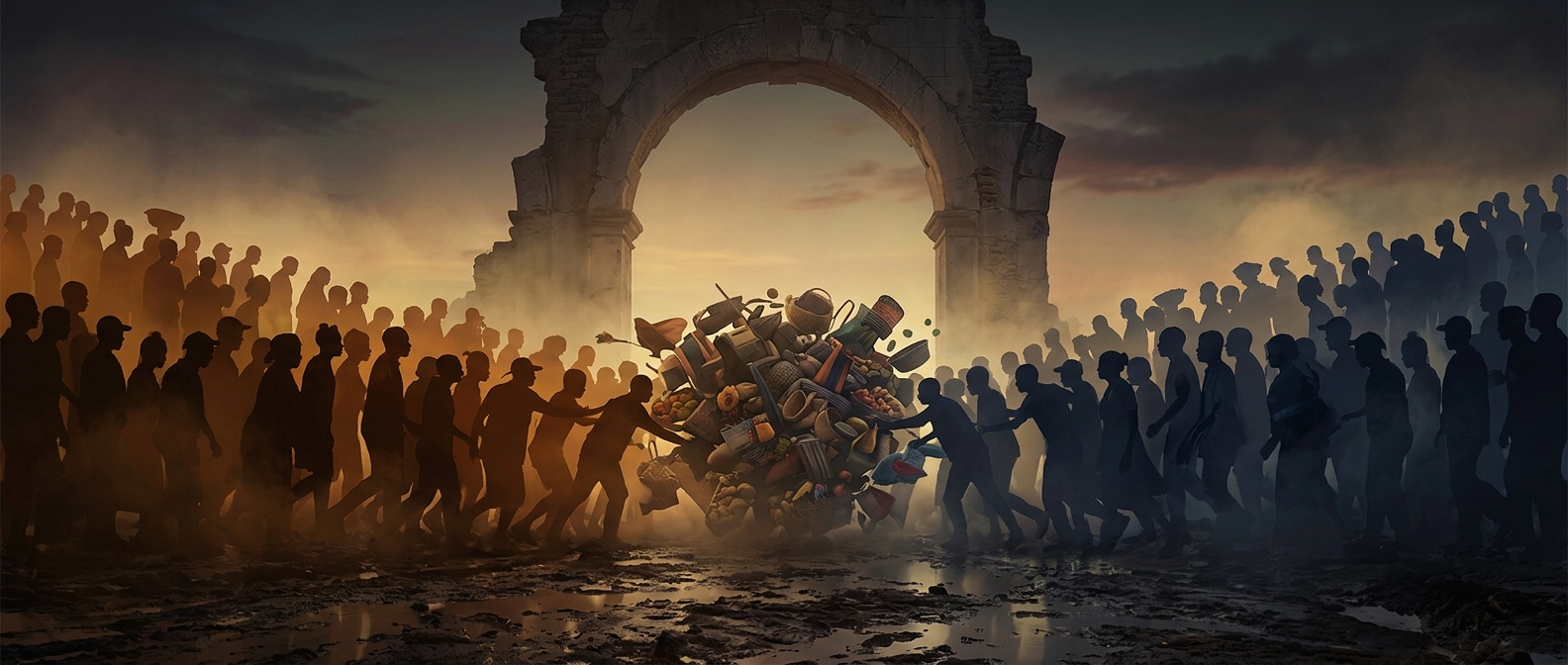
At the Dajabón crossing, the border is more than a line separating the Dominican Republic from Haiti: on market days, it becomes the setting for a large, temporary exchange. Merchants bring plantains, used clothing, livestock, and other goods into a shared commercial routine that draws thousands of people. The boundary does not disappear legally; its role changes in practice, from a barrier to a point of passage and trade.
That distinction matters. A border crossing is usually imagined as a place people move through to get somewhere else. Here, the crossing itself is part of the destination. Buyers and sellers meet because the two sides are close enough to trade, while the goods on offer reflect ordinary needs—from food to affordable clothing.
Trade on a Clock
The market’s schedule gives that exchange a clear shape. It operates twice a week, and the gates close by sundown. That daily cutoff turns the bustle into a bounded event: vendors and customers have a limited window to bring goods, make deals, and finish their journeys across the crossing.
The gates’ return to closure is a reminder that this is not a border erased, but one temporarily animated by commerce. For visitors, the striking detail is the contrast: a boundary that can feel fixed and official becomes, on market days, a crowded place of bargaining and movement—then falls quiet again when the trading window ends.