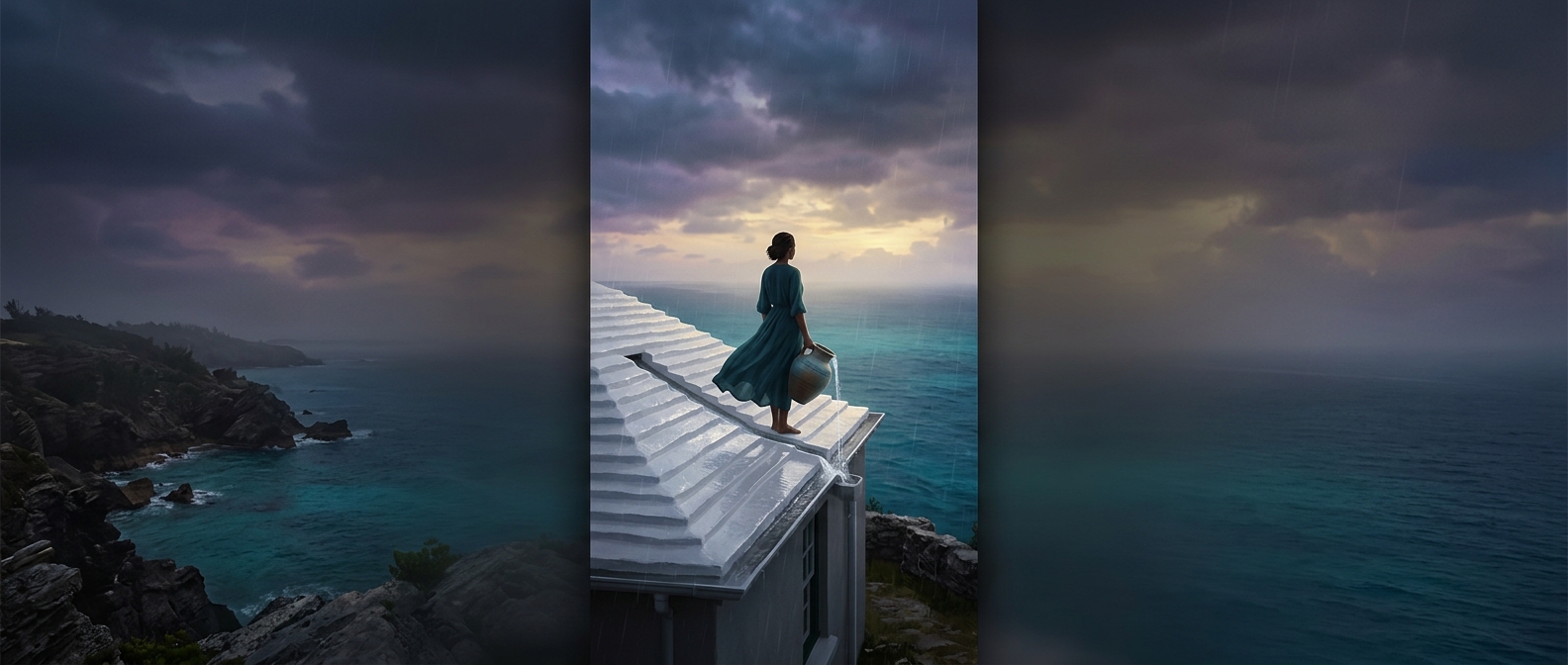
A roof becomes part of Bermuda’s water system
In Bermuda, a roof can do more than keep rain out: its shape helps direct rain toward storage. The island’s traditional white roofs are built in stepped, sloping terraces. Their surfaces guide runoff toward gutters and downpipes, which carry it below ground instead of letting it drain away.
The white finish is commonly made with limewash. Besides giving the roofs their distinctive appearance, a pale surface reflects sunlight. Roofs used to collect drinking water must also be kept clean: leaves, dust, and animal droppings can wash into the system with the rain.
Storing rain for dry spells
A cistern is a tank for storing water. In Bermuda, cisterns are often built beneath houses, where they can hold rain collected across wet periods for use when rainfall is scarce. That underground reserve matters because the island has no rivers or lakes to supply a steady alternative.
Collection is only the first step. Before water is used for drinking, it needs appropriate filtration and treatment; households also need to protect the roof, pipes, and cistern from contamination. The system therefore links a visible part of a Bermudian home—the white roof—to less visible infrastructure beneath it.
This arrangement turns rainfall into a household supply, but it also makes water security depend on upkeep and storage capacity. A clean roof and a well-maintained cistern can help carry a home through a dry stretch; neglect either, and the same rain-catching design can collect unwanted material along with the water.