A strip of sand is not a dependable home
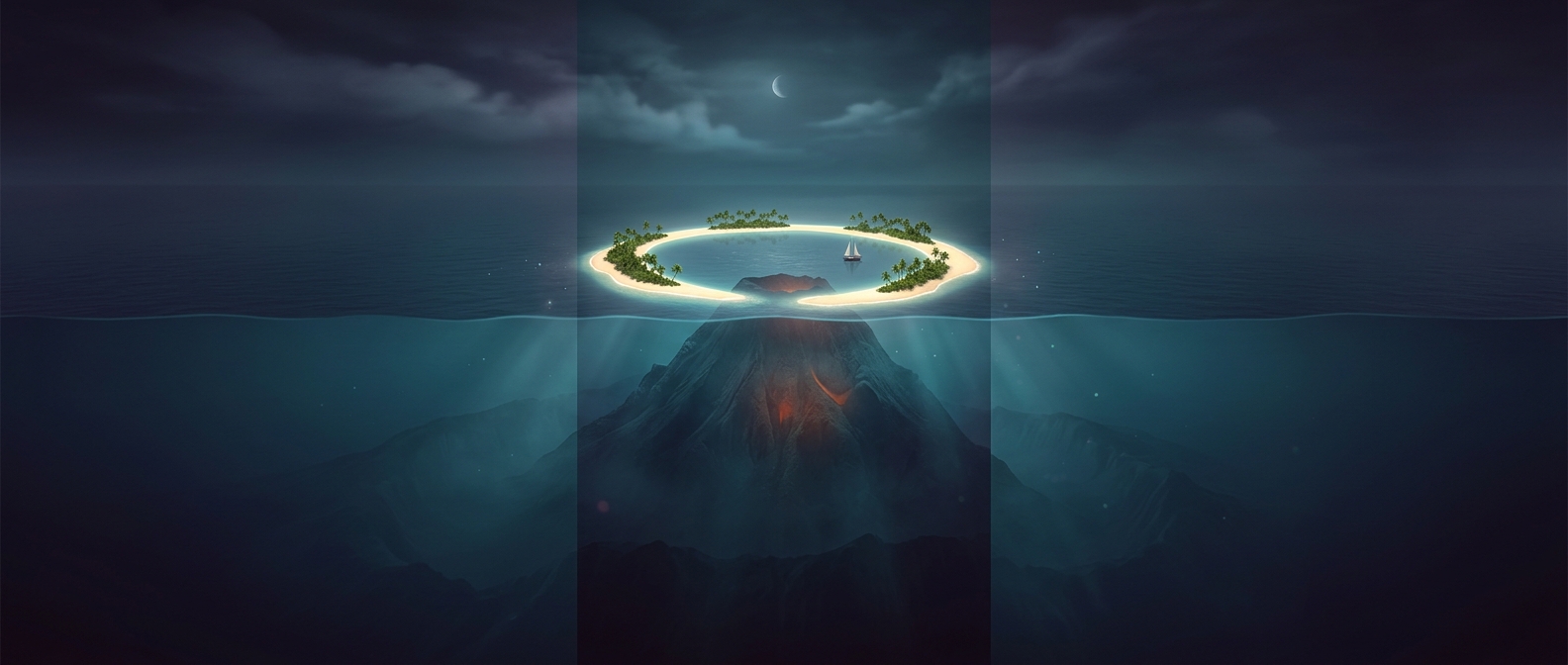
The Caribbean contains many small cays—low islands built from sand, coral fragments, and other reef debris. From a boat, a palm-lined cay can look like a ready-made village site. But its small size is precisely the problem: there may be too little firm ground, fresh water, or shelter to support people year-round.
Fresh water is the limiting resource
Rain can seep through sandy ground and collect above denser salt water, forming a shallow supply known as a freshwater lens. On a tiny cay, that lens is thin. A dry spell can shrink it, while a storm or rising seawater can contaminate it. Without a reliable source of drinking water, even a place with abundant fish and sunshine cannot sustain a permanent settlement easily.
The shoreline keeps moving
Sand cays are shaped by waves and currents, not anchored like solid rock. Storms can wash sand away, shift a beach, or flood the entire island. Reefs may reduce wave energy, but they do not make a low cay immune to erosion or storm surge. Buildings, roads, and wells all need stable ground—and the smallest islands offer little room to move them out of harm’s way.
People can visit, fish, or build temporary facilities on such places, especially when supplies arrive by boat. Permanent communities need more: dependable water, safe land, and regular access to food and services. A beautiful sandbar may be an excellent place to stop, but a poor place to rely on when the next dry season or storm arrives.