How a drifting shoreline became an island
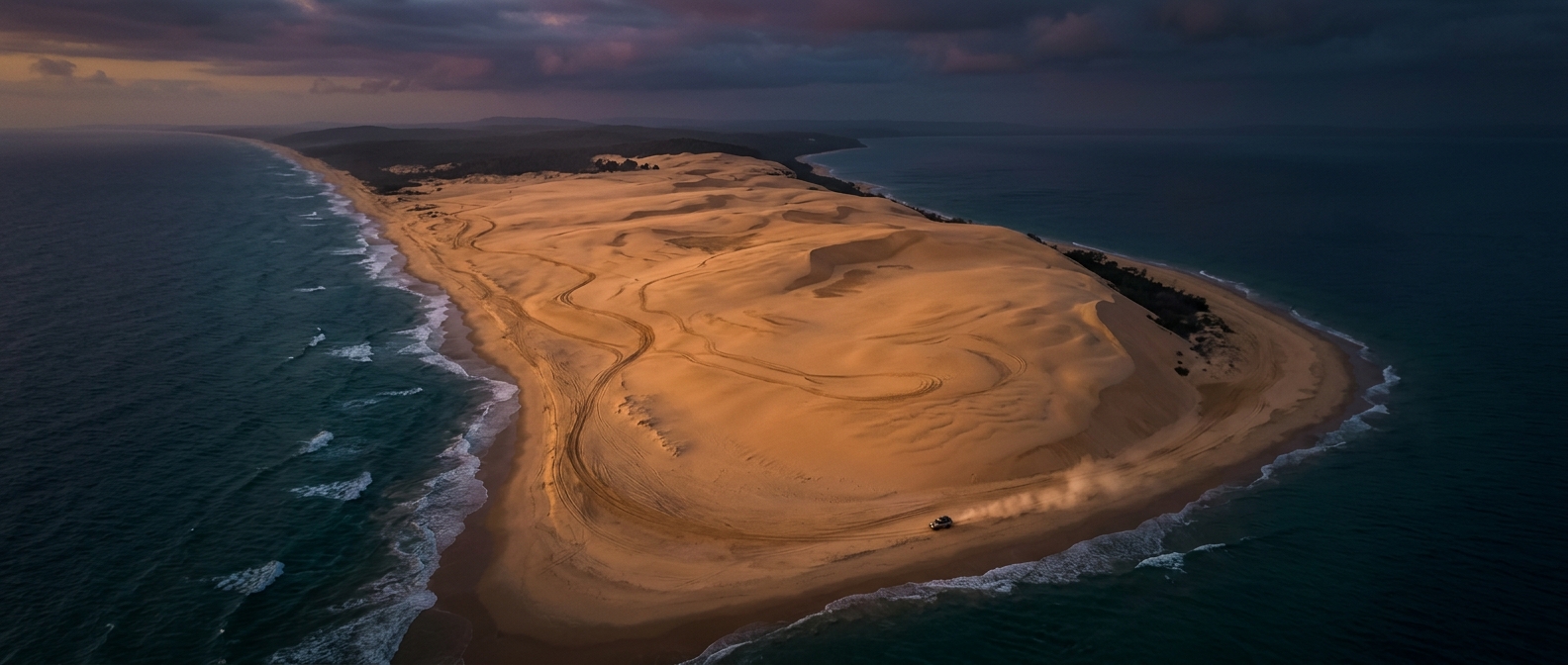
K’gari, also known as Fraser Island, is built from sand carried down from the Australian mainland. Rivers erode rock inland, and waves and coastal currents move the resulting grains along the shore. Over long periods, sand accumulates into dunes and broad ridges that rise above the sea. The island is not a single pile frozen in place: wind, rain, plants, and surf continue to reshape its sandy landscape.
What keeps the sand in place
The key is vegetation. Plants take root in the dunes, slow the wind at ground level, and hold sand with their roots. As leaves and other organic material decay, they add nutrients to soil that began as nutrient-poor sand. That gradual buildup allows vegetation to spread and, in sheltered areas, supports forests that can seem surprising on a sandy island.
The dunes also influence the island’s freshwater. Rain seeps into the sand, and some lakes form where a layer of accumulated organic matter slows water from draining downward. These “perched” lakes sit above the regional groundwater, held in place by a natural lining rather than by a rocky basin.
A landscape that is still moving
K’gari’s beaches, dunes, forests, and lakes are different expressions of the same shifting material. The sand can travel, but established plants and organic layers can stabilize particular places for long stretches. That contrast is part of what makes the island worth remembering: a forest may grow on ground that is, at its foundation, a landscape of grains.