How a volcanic island leaves a ring behind
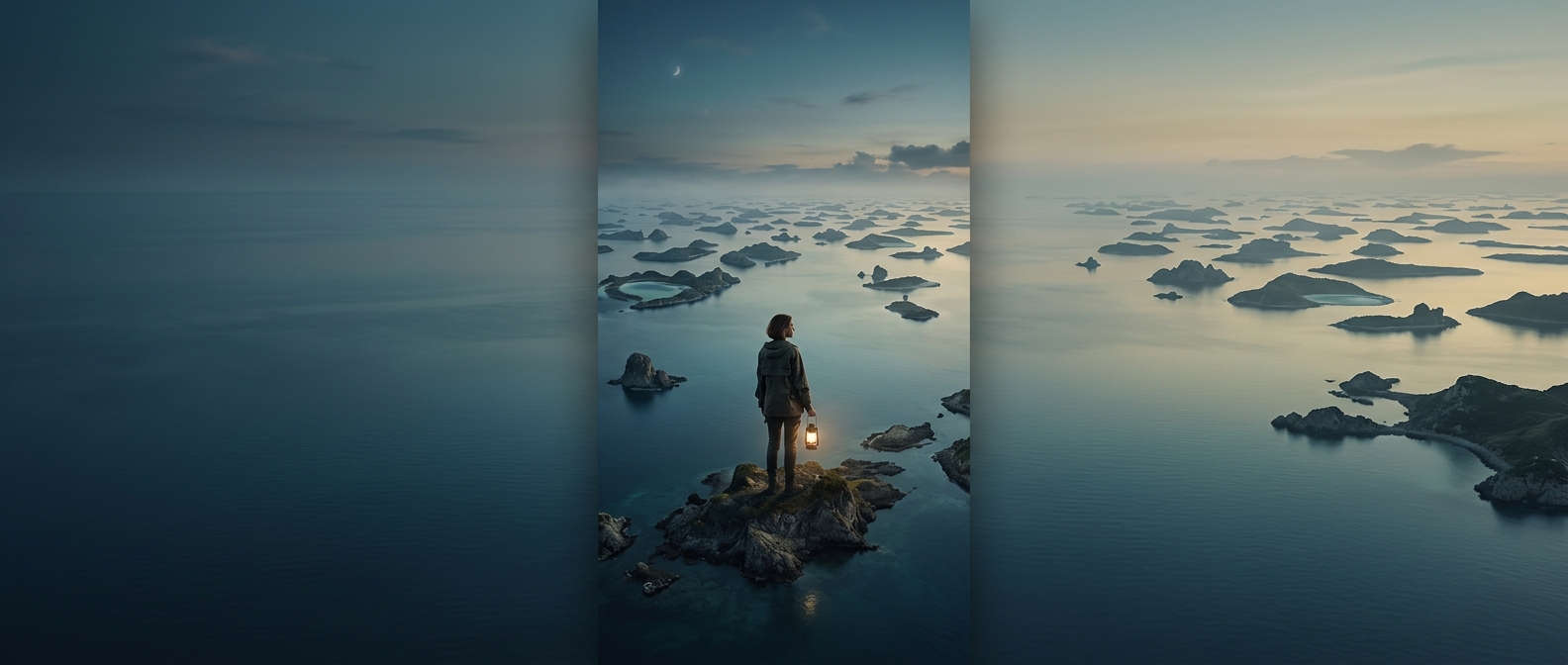
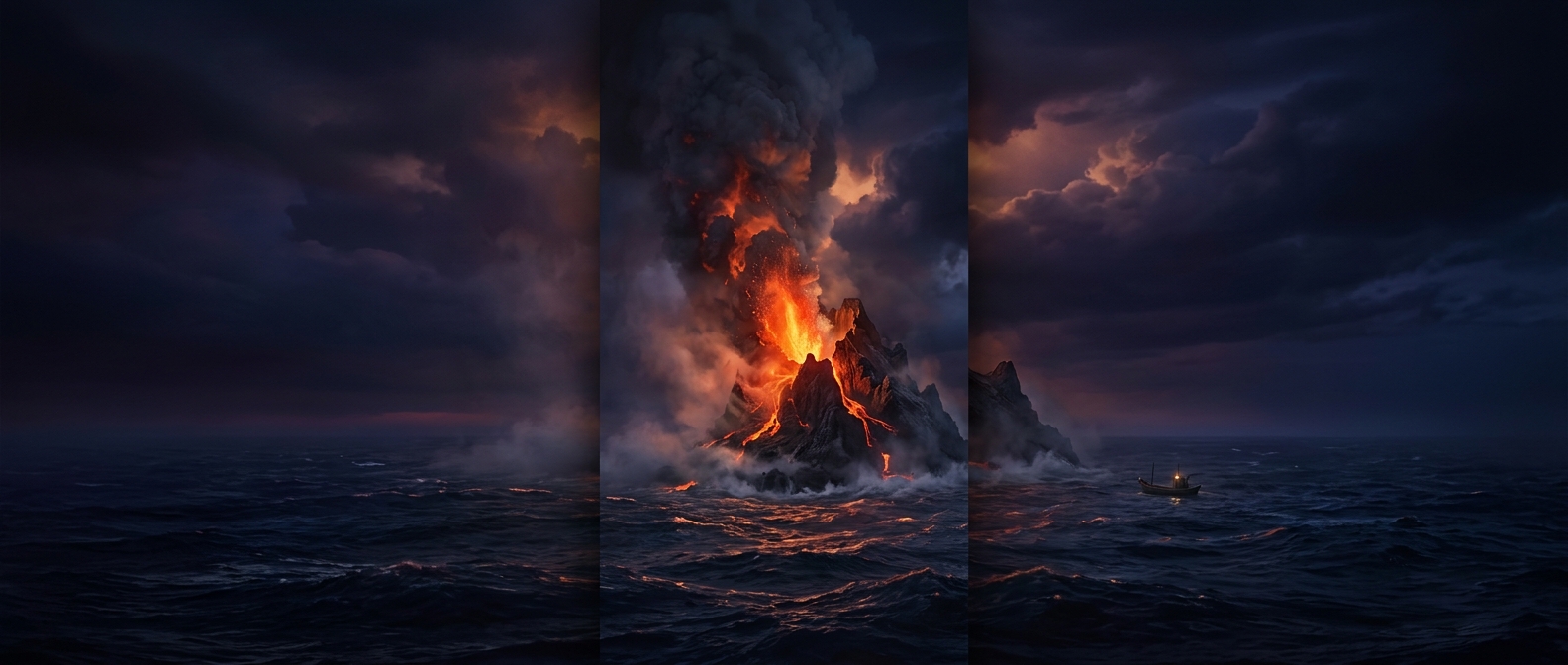
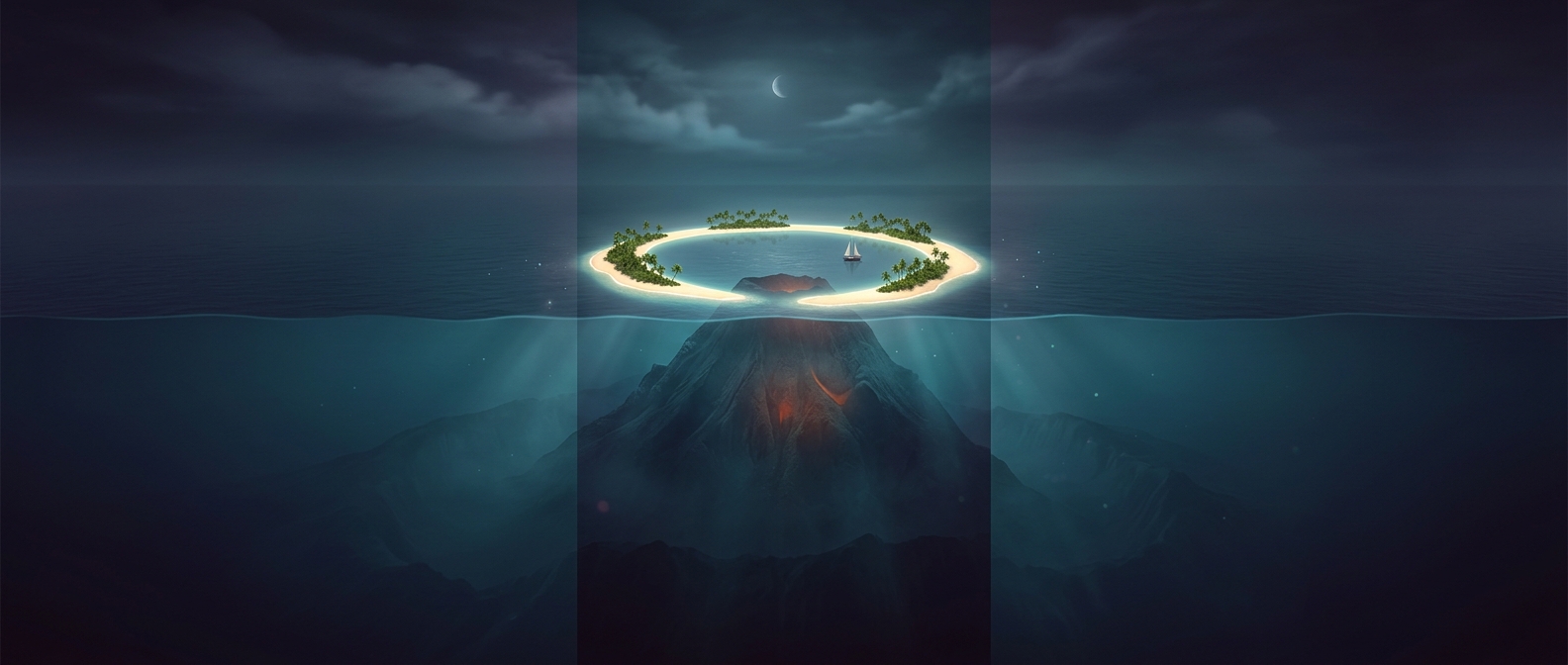
An atoll begins with a volcanic island rising from the seafloor. In warm, shallow water around its shore, reef-building corals grow outward, forming a fringe of hard limestone. Over time, the volcano becomes inactive and the island slowly sinks or wears down. If the reef keeps growing upward toward sunlight, it can remain near the surface even as the land beneath it disappears.
From island shore to open lagoon
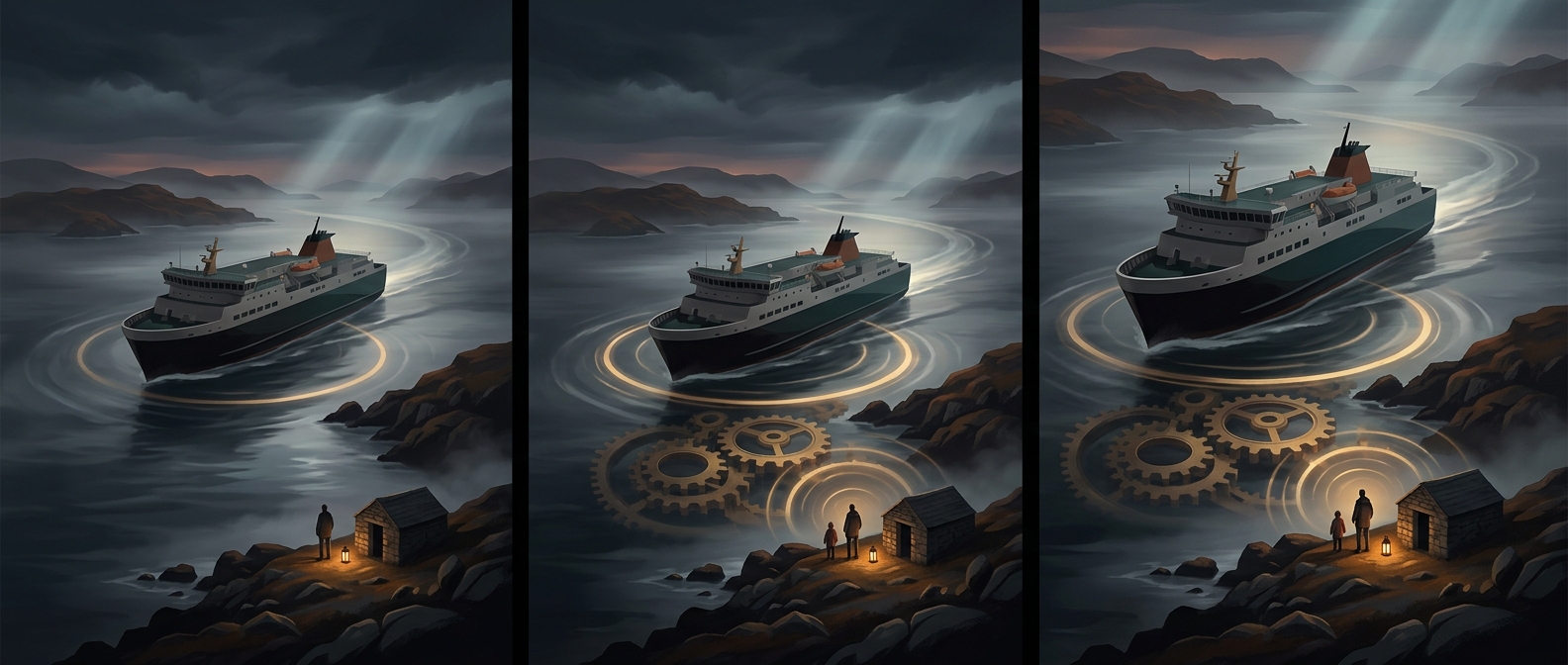
As the island shrinks below sea level, the reef that once hugged its coast becomes a barrier reef, separated from the former shore by a widening lagoon. Eventually, the volcanic peak may vanish beneath the water. What remains is a roughly circular reef enclosing the lagoon, often broken by channels that let seawater flow through.
The ring is not simply a beach made of sand. Its foundation is coral limestone, built by generations of reef organisms. Waves grind pieces of coral and shells into sand, then currents and storms move that material onto parts of the reef, where low sandy islets—called cays—may form.
Why the ring is visible from above
From a plane, the contrast makes an atoll look like a drawn circle: pale reef and sand around a darker lagoon. But its shape records a long change in elevation, not a single eruption or sudden collapse. The volcanic island supplied the original high ground; the living reef, repeatedly building toward the light, supplied the lasting outline.