How an underwater eruption reaches the surface
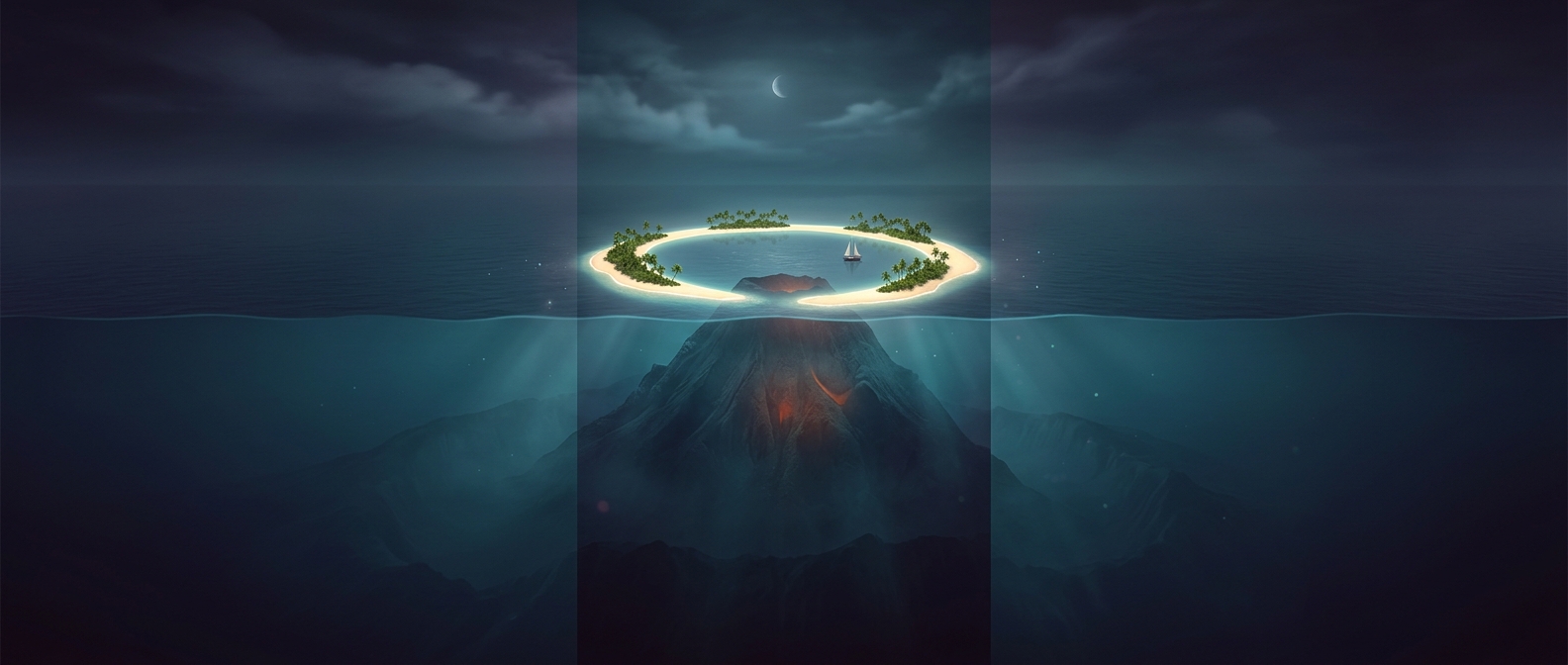
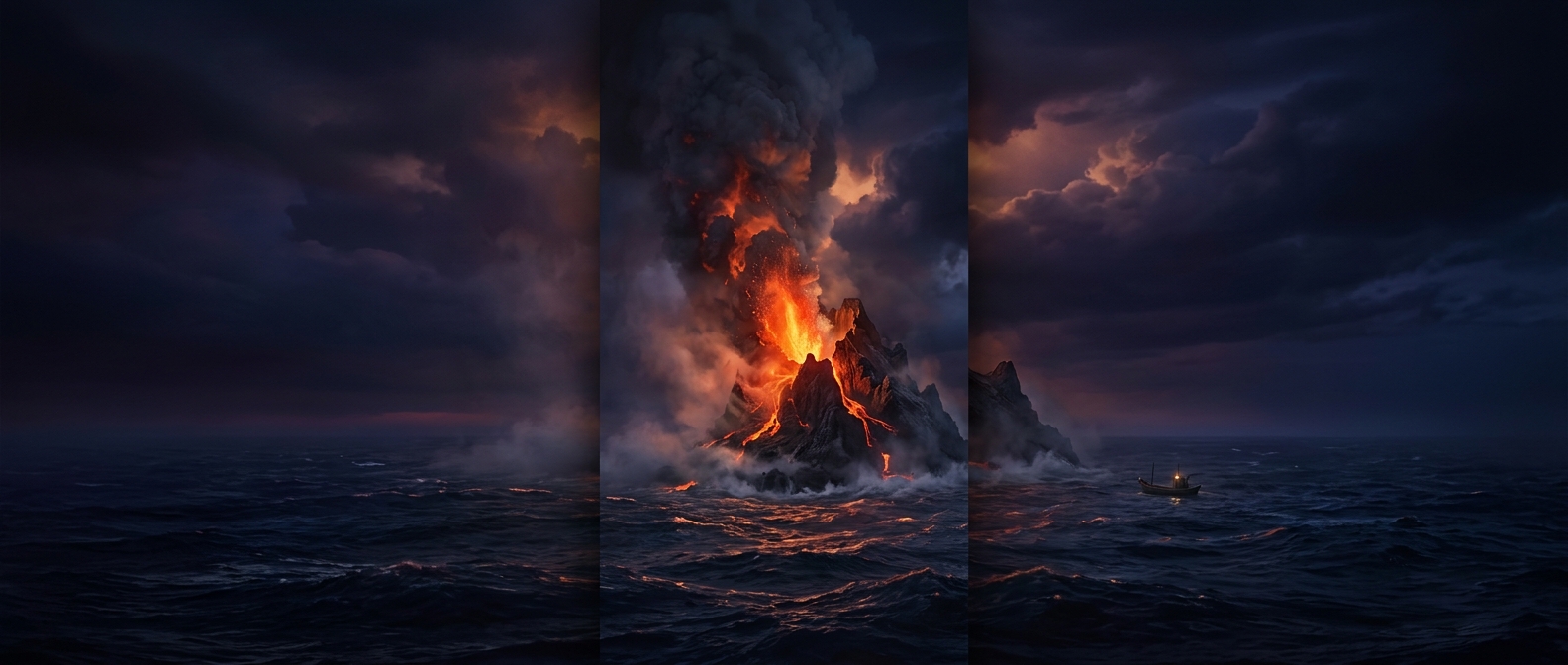
A volcanic island can begin as a mound growing upward from the seafloor. At first, an eruption may produce lava that cools quickly in seawater, forming rounded, glassy masses. If magma rises into shallow water, contact with seawater can also shatter it into fragments of ash and rock. Those loose deposits may pile up rapidly, carrying the growing mound above the waves.
The final stretch can happen remarkably fast. Once the mound nears the surface, repeated bursts of fragmented material can build a low cone until part of it stands in the air. From a boat or a nearby coast, the change may seem sudden: yesterday there was open water; today, dark volcanic ground is visible.
A new island is not necessarily a lasting one
The fresh land is often made largely of loose, newly deposited material rather than solid, established rock. Waves can undercut it, and rain and surf can wash fragments back into the sea. Continued eruptions may reinforce the island, but without them, erosion can shrink it or erase it.
That instability is part of the spectacle. A shoreline appearing on a map is not always the start of a permanent destination; it may be a temporary construction site where volcanic deposits are still being added to—or taken away by—the ocean.