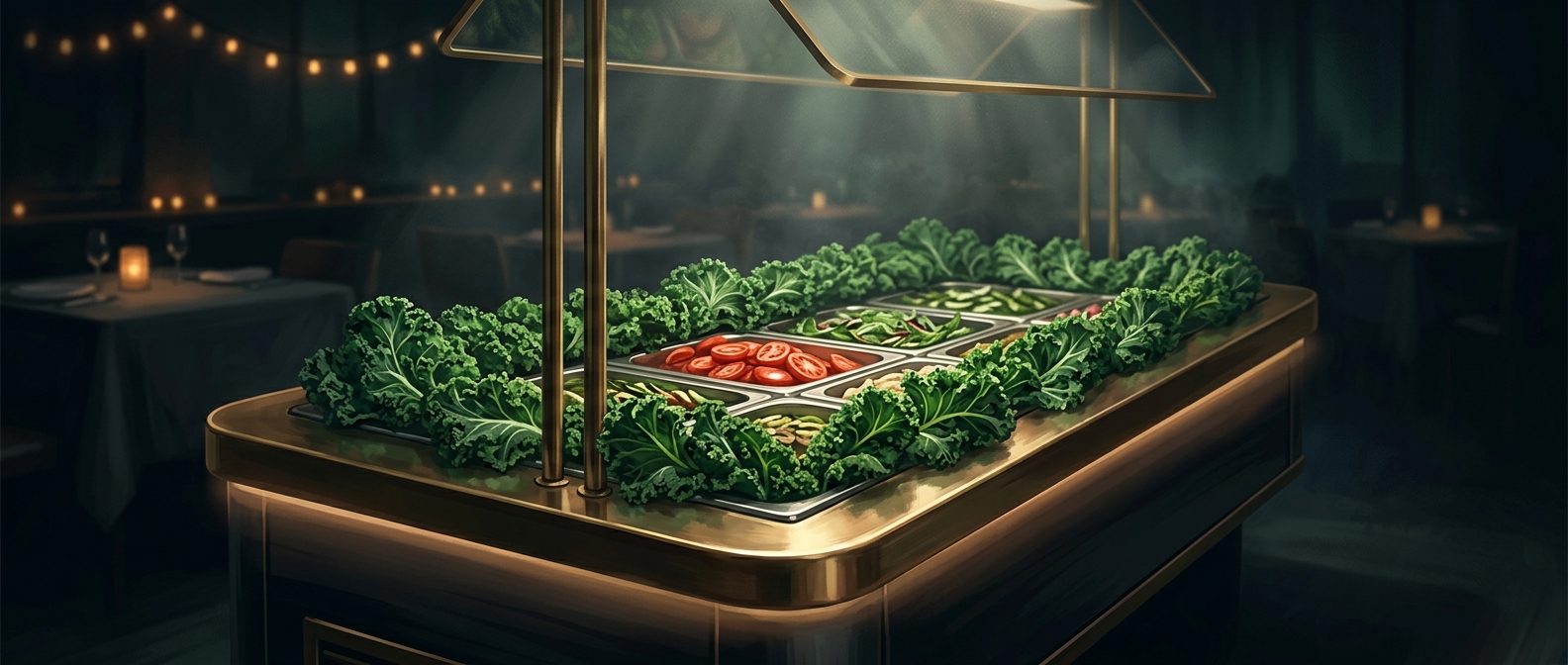
Kale’s job was to make the salad bar look abundant
Before kale became a familiar ingredient on restaurant menus, Pizza Hut bought it in large quantities for a different reason: it helped dress the salad bar. The leafy greens were used as a visual backdrop, making the display look fuller and fresher rather than serving as a featured food.
That role suited kale’s appearance. Its frilly leaves add volume and texture, so a relatively small amount can make the edges and gaps around bowls look lush. Unlike a simple garnish placed on one plate, greens spread across a display can shape how the whole counter looks to customers.
A food’s popularity can begin off the plate
A restaurant display is part of the meal’s first impression. A well-filled salad bar suggests freshness and choice; bare spaces or wilted-looking leaves can suggest the opposite. Kale could help create that impression even when diners came for other greens and toppings.
So Pizza Hut’s purchases weren’t evidence that kale was already a dining-room favorite. They show how a vegetable can become common in commercial kitchens before it becomes popular as something people actually want to eat: first as scenery, then as food.