How an iron lung replaced a weakened breath
Polio could paralyze the muscles that expand the chest, including the diaphragm, the broad muscle beneath the lungs. A person might be awake and alert but unable to draw enough air in. The iron lung worked around that failure by changing the pressure outside the body rather than forcing air down the throat.
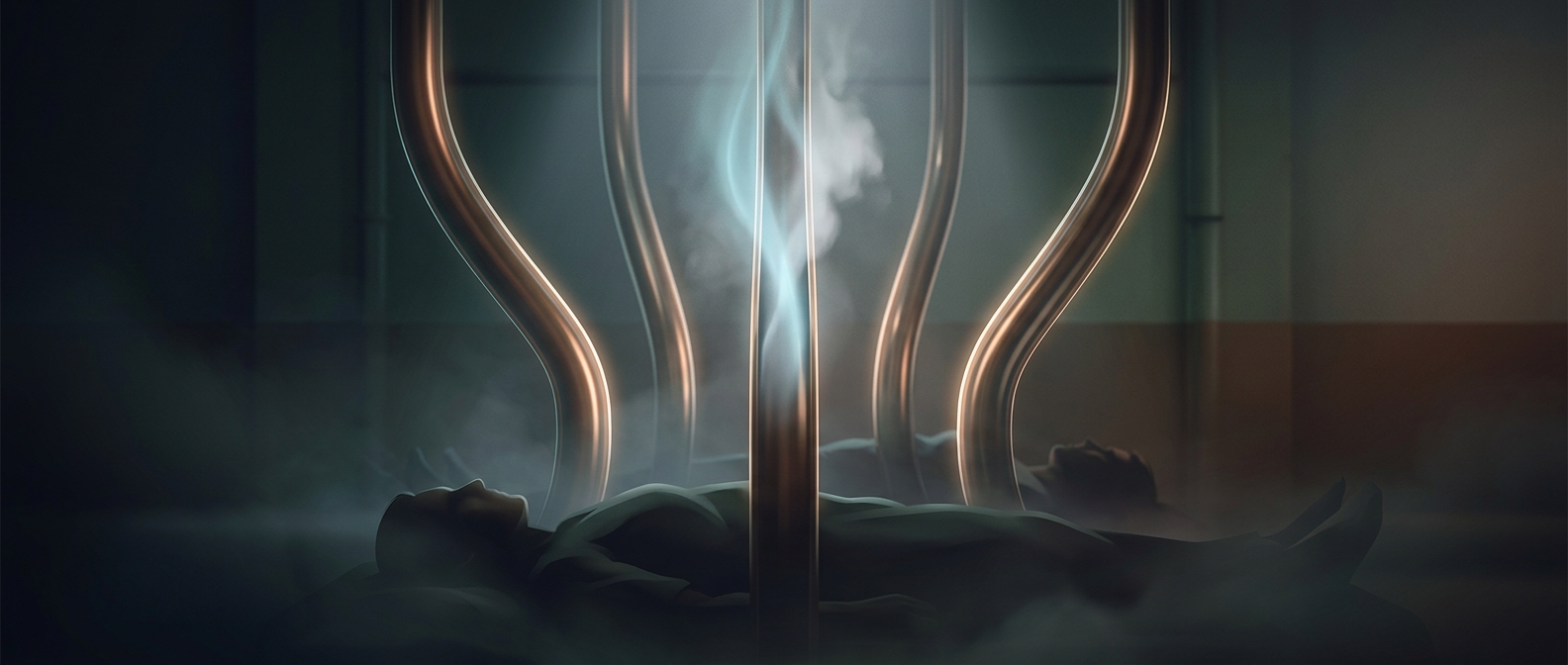
The patient lay inside a sealed chamber with the head outside and the neck fitted at an airtight opening. A pump repeatedly lowered and raised the air pressure inside the chamber. When pressure fell, the chest wall moved outward and the lungs filled; when pressure rose, the chest recoiled and air flowed out. The machine did not breathe for the lungs directly. It recreated the pressure changes that ordinarily help a person breathe.
Why the design mattered
This approach is called negative-pressure ventilation: “negative” describes the lower pressure around the body during inhalation, not a vacuum inside the lungs. In ordinary breathing, the diaphragm contracts and enlarges the chest cavity, lowering pressure within the lungs so air enters. The iron lung supplied the outside force when weakened muscles could not do that work.
Because the airway remained open to the surrounding room, the device could support breathing without a tube in the windpipe. But the patient had to remain inside the chamber, which made routine care and movement difficult. The machine also depended on a reliable seal around the neck and a steady power supply.
A different way to ventilate
Later breathing support often used positive pressure, pushing air into the lungs through a mask or breathing tube. That method and the iron lung solve the same basic problem—moving air when a person cannot breathe effectively—but apply force from opposite sides of the chest. The iron lung’s striking lesson is that breathing can be assisted not only by pushing air in, but also by changing the pressure around the body so the chest draws it in.