How Garrus Became a Romance Option
When the first Mass Effect took shape, BioWare gave players a small set of potential romantic partners. Garrus Vakarian—the turian officer who joins Shepard’s crew—was written as a trusted companion, not a love interest. His role was built around loyalty, shared danger, and a gradual friendship rather than courtship.
Players saw something else in that bond. Garrus was capable and dryly funny, but also socially awkward and unsure of himself. As Shepard’s teammate, he could be challenged, supported, and drawn into personal conversations. That made him feel like a character with room for a relationship, even though the game did not offer one.
Fan Demand Changed the Design
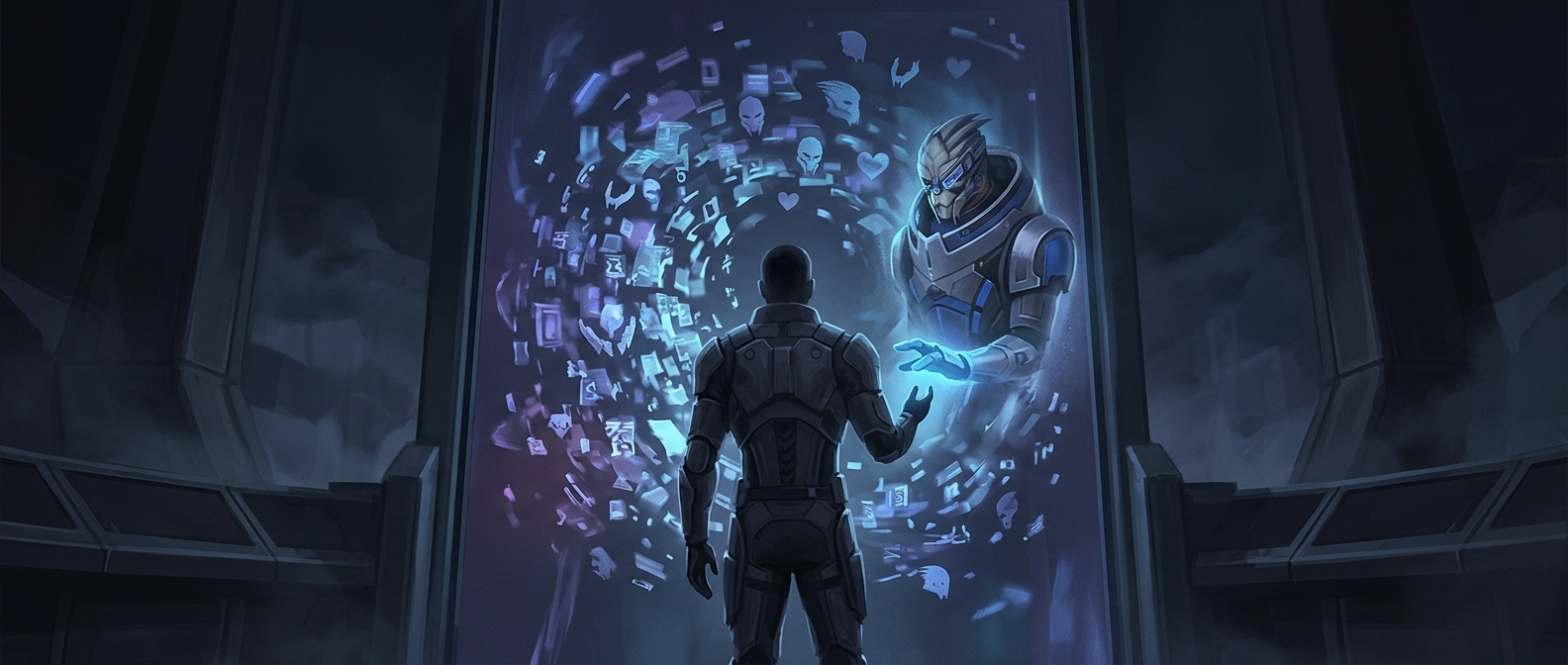
BioWare took notice of players asking to romance him. In Mass Effect 2, the studio made Garrus a romance option for a female Shepard. The change was more than adding a flirtatious line: it gave the relationship its own progression, with conversations that let Garrus work through the unfamiliarity and vulnerability of intimacy.
That approach suited the character. Rather than turning him into a polished romantic hero, the game made his awkwardness part of the story. The romance grew out of the established friendship, preserving the qualities fans had responded to while letting the connection become more personal.
A Companion Became Part of the Series’ Emotional Core
Garrus’s path from squadmate to romance option shows how player feedback can influence a game’s characters without replacing the original design wholesale. The developers expanded a relationship players already cared about, using its existing trust and banter as the foundation.
For fans, the payoff was not simply that the scarred sniper could be romanced. It was that a familiar crewmate’s bond with Shepard could change over time—and that the game treated that change as part of his character, not a switch flipped for convenience.