Mascots Perform for the Room, Not the Match
At a digital tournament, an oversized foam mascot has a different job from the players it represents. It gives the audience a moving, recognizable symbol to cheer for—especially in the gaps between rounds, when a team logo on a screen may not do much to animate the room. A costume’s exaggerated size and shape make it readable from far away, even when spectators are packed together.
That visibility has a tradeoff: the same bulk that makes a mascot easy to spot can obstruct someone’s view. In a venue where the central screen carries the game for much of the audience, a mascot crossing the wrong sightline can briefly hide the action. The costume is both a piece of showmanship and a physical object competing for space.
Two Audiences, Two Kinds of Attention
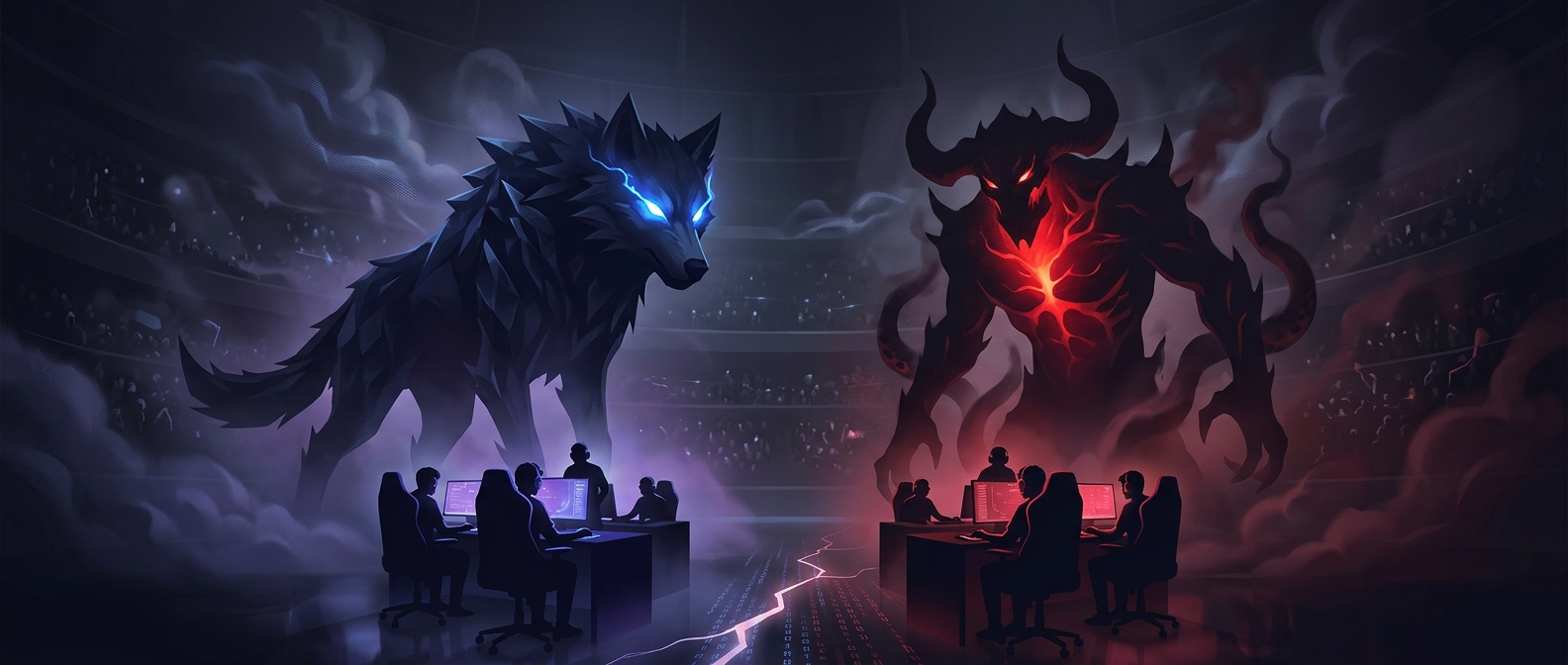
The players onstage are working under a different set of demands. Their attention is on the game, where a distraction can interfere with communication or a decision made in seconds. The mascot is there to engage the crowd, not to become part of the players’ immediate task. That separation helps explain why a performer can be a major presence in the arena while the competitors appear to ignore it.
The contrast is part of the spectacle: the crowd gets a theatrical, oversized emblem, while the match stays focused on small details on a screen. A mascot’s success is measured in the room’s energy; the players’ attention has to remain on the next play.