What vitamin A actually does in the eye
Seeing in dim light depends partly on rhodopsin, a light-sensitive pigment in the eye’s rod cells. The body needs vitamin A to make this pigment. When vitamin A is seriously lacking, rods cannot work normally, and adapting to darkness becomes difficult—a condition known as night blindness.
That link is real, but it does not mean more carrots produce sharper night vision. If someone already gets enough vitamin A, extra intake cannot make the eye’s light-detecting system more capable than normal. Dark adaptation also takes time: after entering a dark room, the rods gradually become more sensitive.
A wartime cover story with a real nutrient behind it
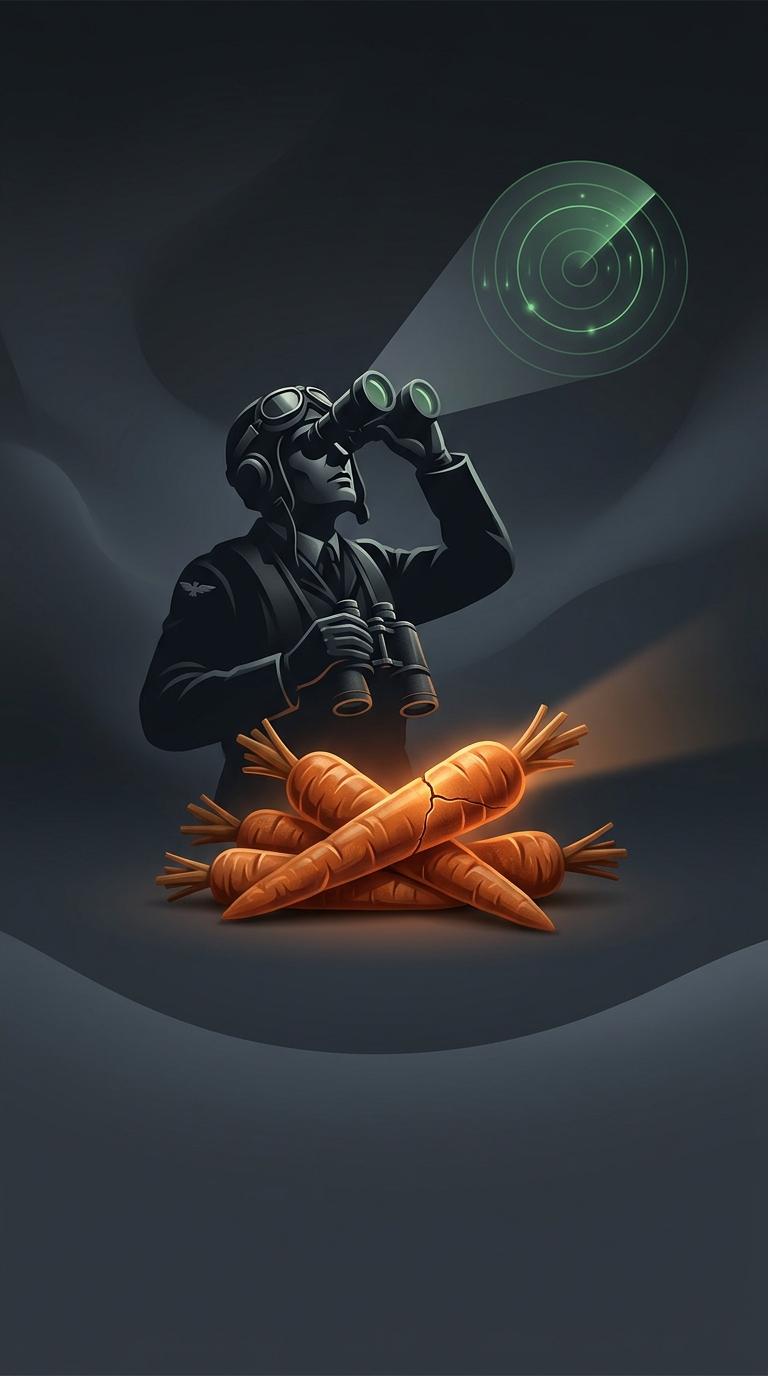
During the Second World War, British publicity credited pilots’ supposed ability to spot enemy aircraft at night to their carrot-rich diets. The story helped conceal the role of radar, which let operators detect aircraft even when they could not see them. Carrots were also promoted as a practical food during wartime rationing, so the explanation had a convenient everyday appeal.
The cover story worked because it stretched a modest truth into a dramatic one. Vitamin A supports normal vision, and too little can impair sight in dim conditions; neither fact means carrots grant extraordinary vision. The wartime tale made that distinction easy to miss—and memorable enough to survive long after the radar secret mattered.
Why the myth still sounds plausible
A person with a deficiency may benefit from correcting it, but that is restoring normal function, not gaining a superpower. For everyone else, eating more carrots will not reveal objects hidden in darkness. The lasting trick of the story is that it attached a plausible nutrient to an invisible technology: the carrots were easy to picture, while radar was the part wartime Britain wanted kept out of sight.