Why Birch Bark Comes Away in Papery Layers
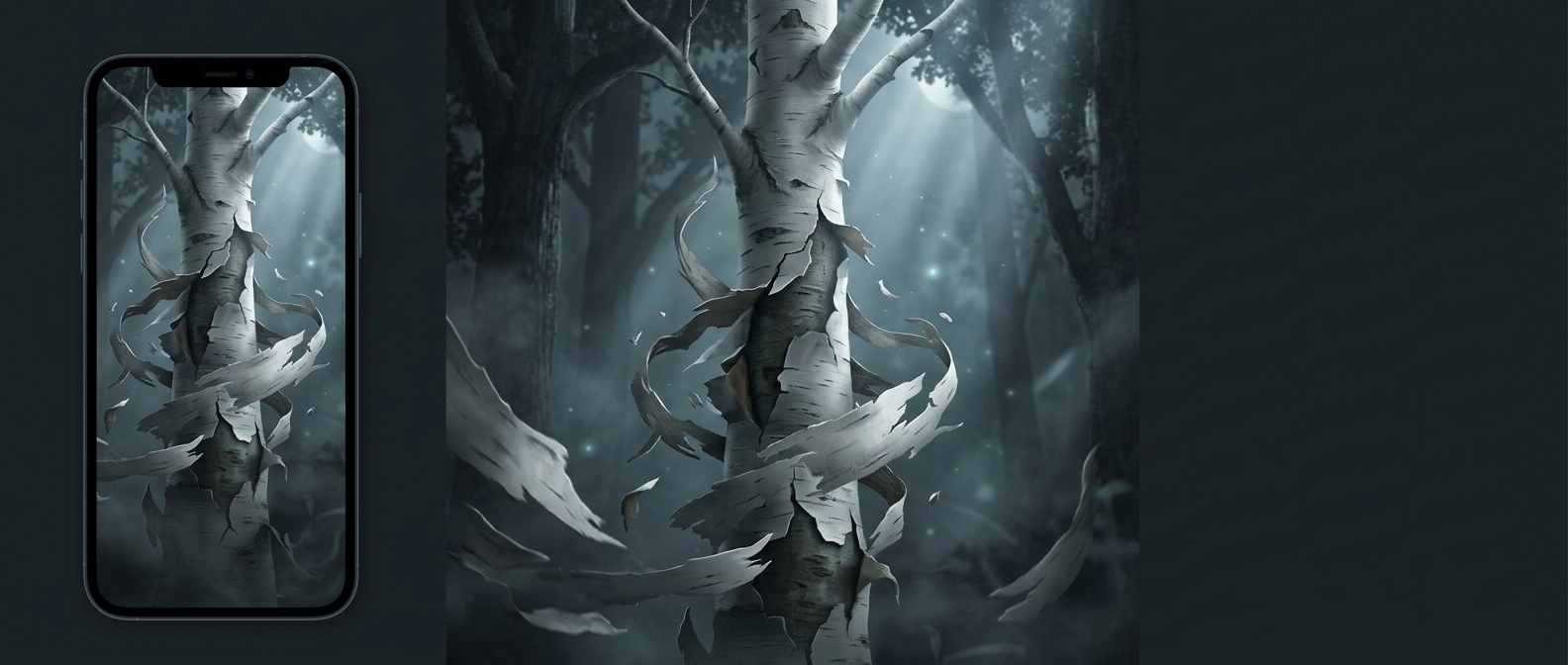
A birch’s peeling bark is part of how its trunk grows. The trunk expands as new wood forms beneath the bark, while the outermost layers are made of cells that are already dead. In many birch species, those layers separate into thin sheets rather than remaining as a deeply fissured, tightly attached covering. Wind, weather, and contact can then lift the loose edges.
That shedding can carry away lichens—organisms that grow on the bark’s surface—as well as small insects or other debris caught in the outer layers. It is a surface-cleaning side effect, not a guarantee that the tree is free of pests: many organisms can remain in crevices or on bark that does not peel away.
A Moving Surface, Not a Fresh Start
The pale, smooth trunk visible beneath a peeling sheet is newer outer bark, not exposed living wood. The living tissues that transport water and sugars lie farther inside, protected by layers of bark. This arrangement lets the tree renew its outer covering as it grows without leaving its essential tissues unprotected.
So the familiar curls of birch bark are less a dramatic act of defense than a byproduct of the tree’s growth and bark structure—with the useful bonus that some surface hitchhikers may leave along with them.