A sundial needs a moving source of light
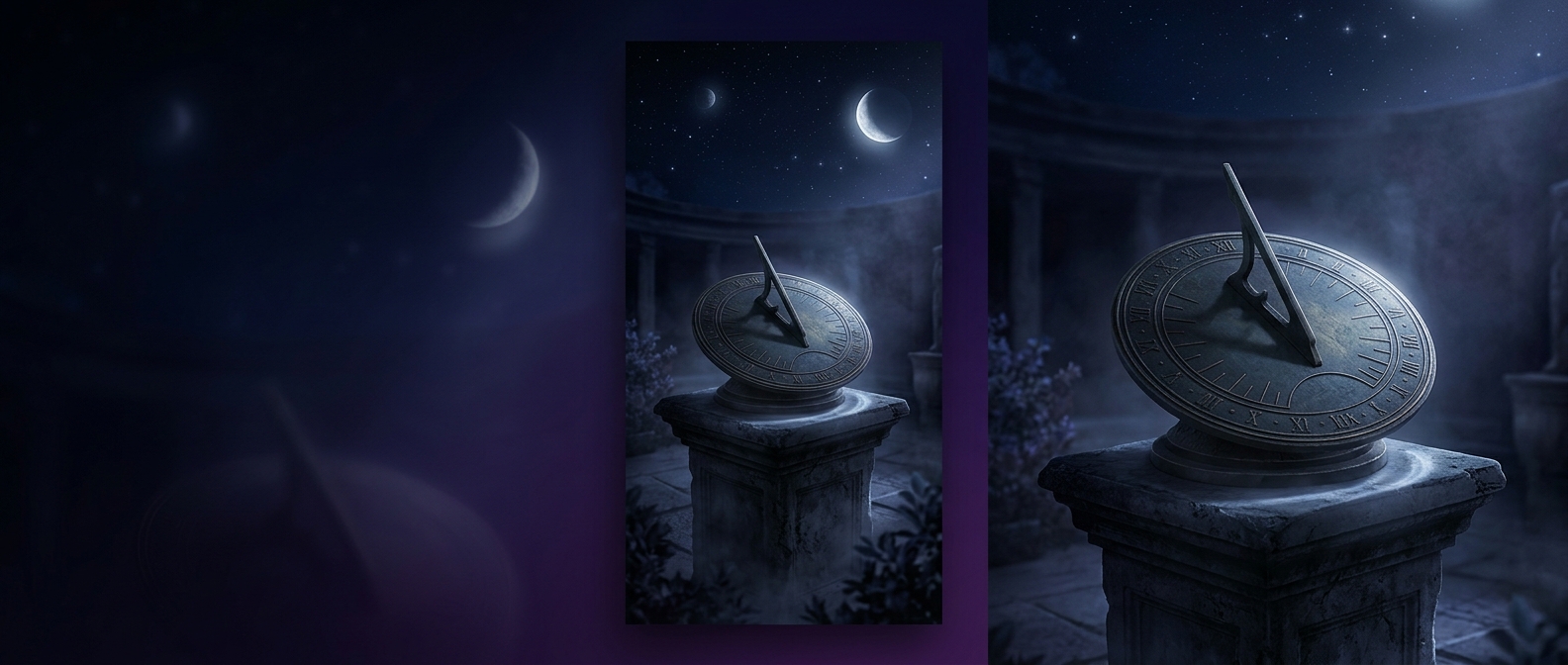
A sundial does not keep time by counting seconds inside the device. Its upright pointer, called a gnomon, casts a shadow across a marked surface. As Earth rotates, the Sun appears to move across the sky, and the shadow shifts in a predictable direction. The dial’s markings translate that position into an estimate of local solar time.
That makes the shadow more than a display: it is the sundial’s input. Indoors, sunlight usually cannot reach the dial directly, so there is no usable shadow. At night, the Sun is below the horizon, leaving the gnomon with no sunlight to redirect.
The dial depends on place and season
A sundial’s markings are designed for a particular orientation and location. The pointer must be aligned with Earth’s axis, and the dial’s layout accounts for the Sun’s changing path through the seasons. Even outdoors in clear weather, a sundial may not match a clock exactly: it tracks solar time, which varies slightly from the uniform time used by modern clocks.
Clouds can weaken or erase the shadow, while buildings or trees can block it. These are not minor inconveniences to an otherwise self-contained clock. They interrupt the natural signal the instrument reads.
A clock that reveals its own limits
A mechanical clock continues through darkness because stored energy drives its hands; a sundial has no comparable reserve. Its simplicity is also its constraint: it needs the sky to supply both the light and the changing geometry that make a reading possible. When the Sun returns to view, the shadow resumes its course—but the dial cannot tell how much time passed while it was gone.