How fire releases a sequoia’s seeds
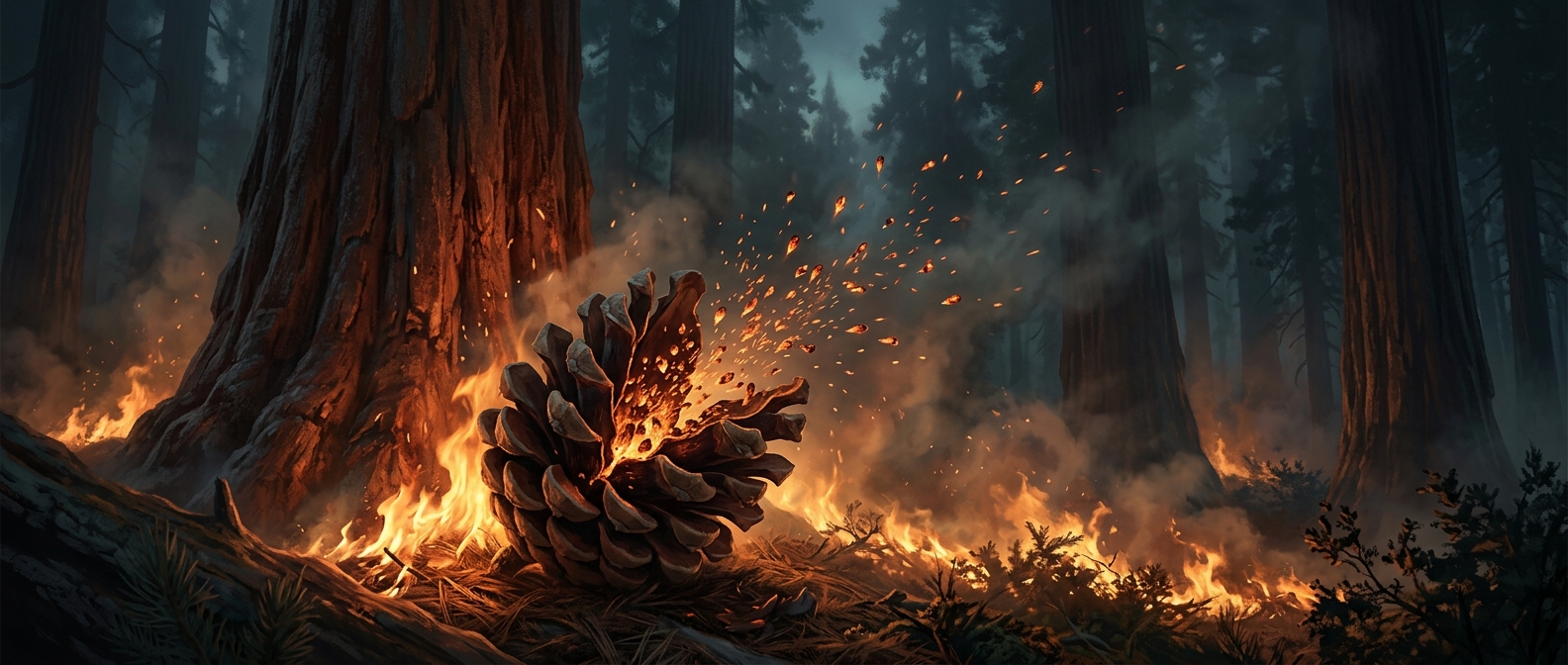
A giant sequoia cone can remain closed on a tree for years. In some cones, sticky resin holds the scales—the small, overlapping plates that protect the seeds—together. When heated, the resin dries and the scales can open, allowing seeds to fall. The fire does not need to burn the cone itself: heat can do the unlocking while the seeds are still attached high above the flames.
A seed needs more than an opening
Releasing seeds is only one part of the process. A dense layer of plants on the forest floor can shade young sequoias and compete with them for water and space. Fire can thin that growth, expose mineral soil, and return nutrients to the surface. The result is a patch of ground where tiny seedlings have a better chance to take root and reach sunlight.
This is why fire’s effects matter as a sequence: it can help free seeds, then alter the ground they land on. The same event can create both the seed supply and a more favorable seedbed.
The useful fire is a particular kind
That benefit does not mean every fire helps every sequoia. The outcome depends on how intensely and where a fire burns: enough heat can open cones and clear competing plants, while severe burning can damage trees and the conditions seedlings need. In a suitable fire, a mature sequoia’s cones can release seeds into a newly opened forest floor—putting the next generation within reach of light, soil, and space.