Why a car can taste like a mineral source
Moose are herbivores, and the plants they eat can be relatively low in sodium. Sodium is an essential mineral: animals use it to maintain fluid balance and help nerves and muscles function. In winter, when accessible forage is limited, a salty residue can become especially appealing.
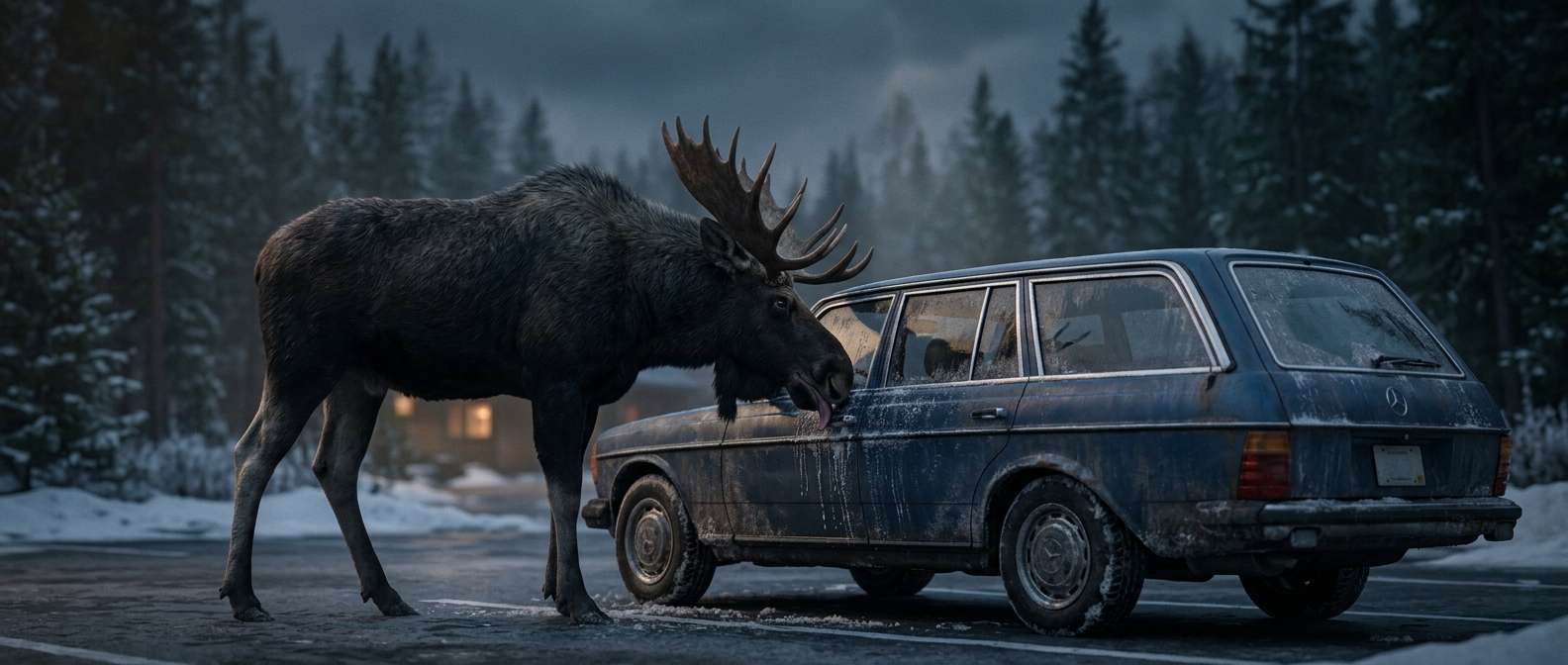
Road crews spread salt to lower the freezing point of water and reduce ice on roads. Passing vehicles pick up salty spray, which can dry on body panels and collect around lower parts of the car. To a moose, those deposits offer a concentrated taste that ordinary browsing may not provide.
A roadside snack with a traffic-sized risk
The moose is seeking the salt left behind, not trying to eat metal or rubber. But parked cars often sit close to roads, and an animal focused on licking residue may be slow to notice an approaching vehicle. Moose are large and difficult for drivers to avoid, particularly in winter conditions.
That makes the attraction more than a curiosity: salt applied to make roads safer can draw wildlife toward the same roads. A car can briefly serve as an unintended mineral lick, bringing a moose into a place where both the animal and passing traffic are at risk.