Why the Mesh Can Become a Climbing Route
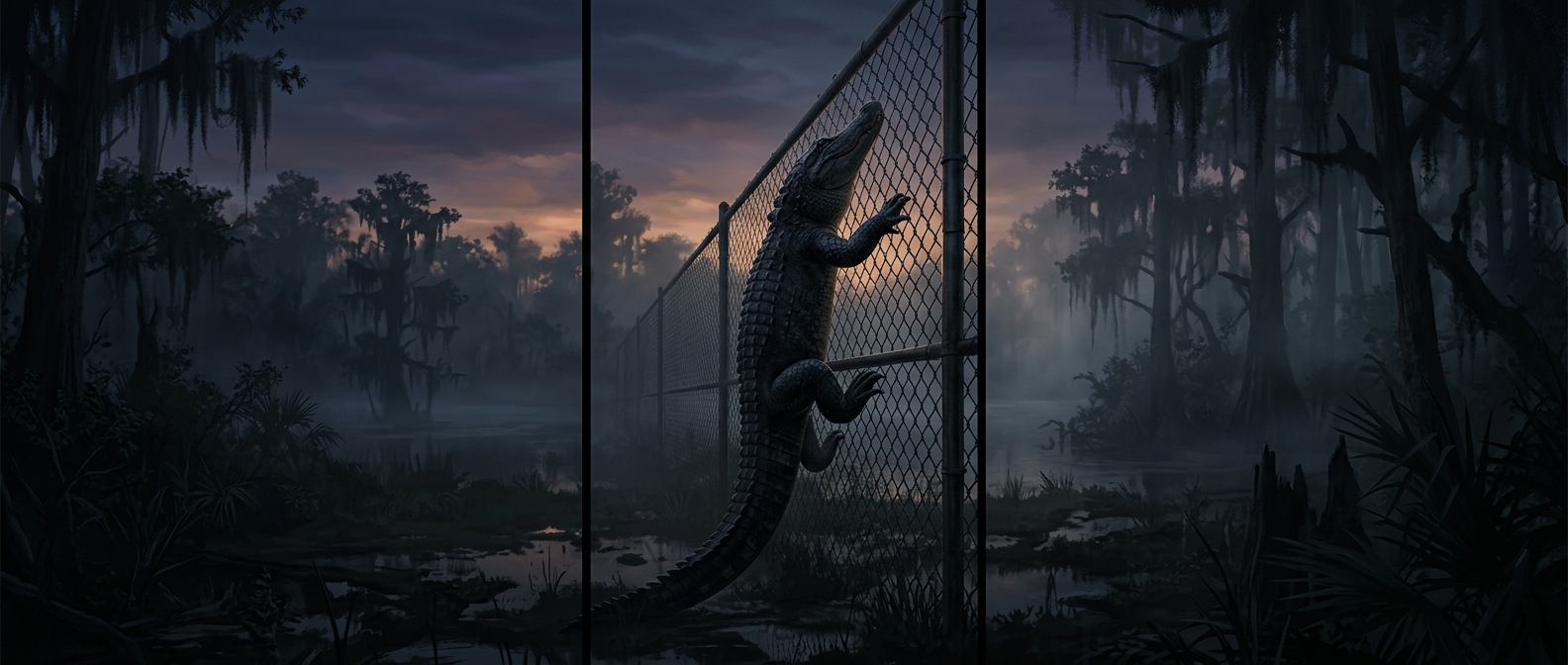
A chain-link fence is built from connected wires, leaving openings that provide more than a view through the barrier. An alligator can catch its claws in the mesh, brace its limbs against the wires, and haul its body upward. The same rough structure that helps a person grip the fence can give the animal footholds.
Climbing takes effort: an alligator must coordinate its legs and use its body to press and pull against the fence. The mesh does not guarantee that every animal will climb, or that every fence will be crossed, but it offers a way up that a smooth wall does not.
A Barrier Is Only as Good as Its Weak Points
A smooth surface is harder to climb because it gives claws little to catch. But changing the surface alone does not make a fence reliably alligator-proof; gaps at the bottom, weak sections, and openings around gates can still undermine it. The practical lesson is that a fence’s appearance or height is not enough to judge how well it will keep an alligator out: its footholds and weak points matter, too.