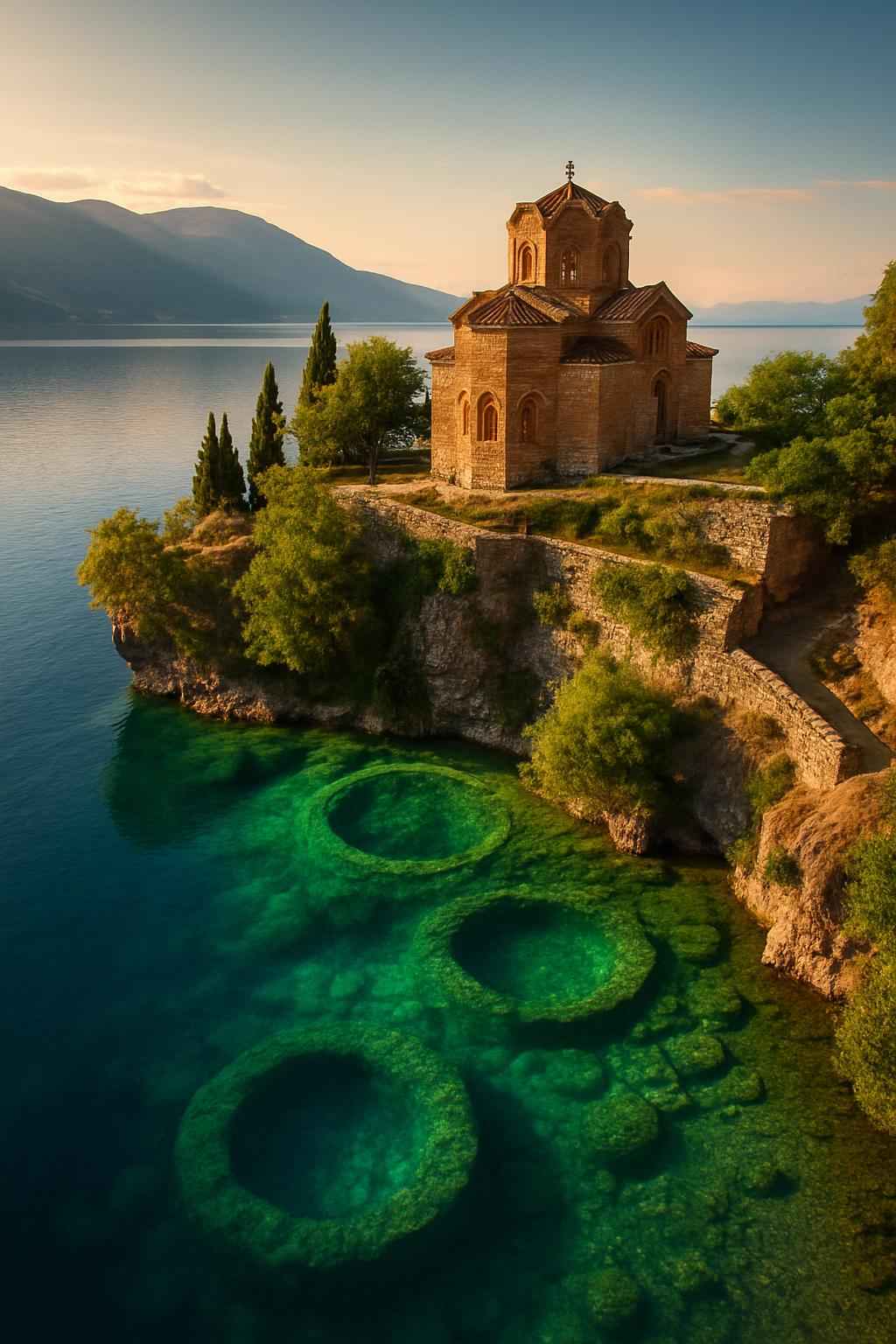
The rock beneath Lake Ohrid helps explain its clarity
Some of Lake Ohrid’s springs are fed by water that seeps into the ground around nearby Lake Prespa and travels through the mountains before emerging along Ohrid’s shore. The route runs through karst—cracked, soluble rock such as limestone, where water can pass through fissures and underground channels rather than only over the surface.
As it moves through the rock, the water is naturally filtered of many suspended particles. When it wells up through the lakebed, its movement can be visible in the clear shallows: small bubbles and ripples mark water arriving from below. The springs are not merely picturesque features at the edge of the lake; they are part of the system that continually supplies it with water.
A shoreline shaped by water from out of sight
The underground connection makes Ohrid’s setting more intricate than a lake fed only by rain and rivers. Water entering one basin can reappear in another, after a journey hidden beneath the mountains. Around the southern shore, especially near the springs by the Monastery of Saint Naum, that unseen process becomes something visitors can watch from above the surface.
The clarity also matters below the waterline. Lake Ohrid is known for distinctive aquatic life, including species found nowhere else, and its ecosystem depends on the conditions of this deep, old lake. The springs offer a small, visible clue to the larger story: what happens in the surrounding uplands can travel underground and shape life in the lake.