A campaign office that could sleep
Early traveling caravans were horse-drawn wagons, not the motorized holiday vehicles the word often brings to mind today. For politicians touring rural districts, the wagon solved a practical problem: a journey could take them beyond the reach of convenient lodging, and arriving in a village did not guarantee a comfortable room for the night.
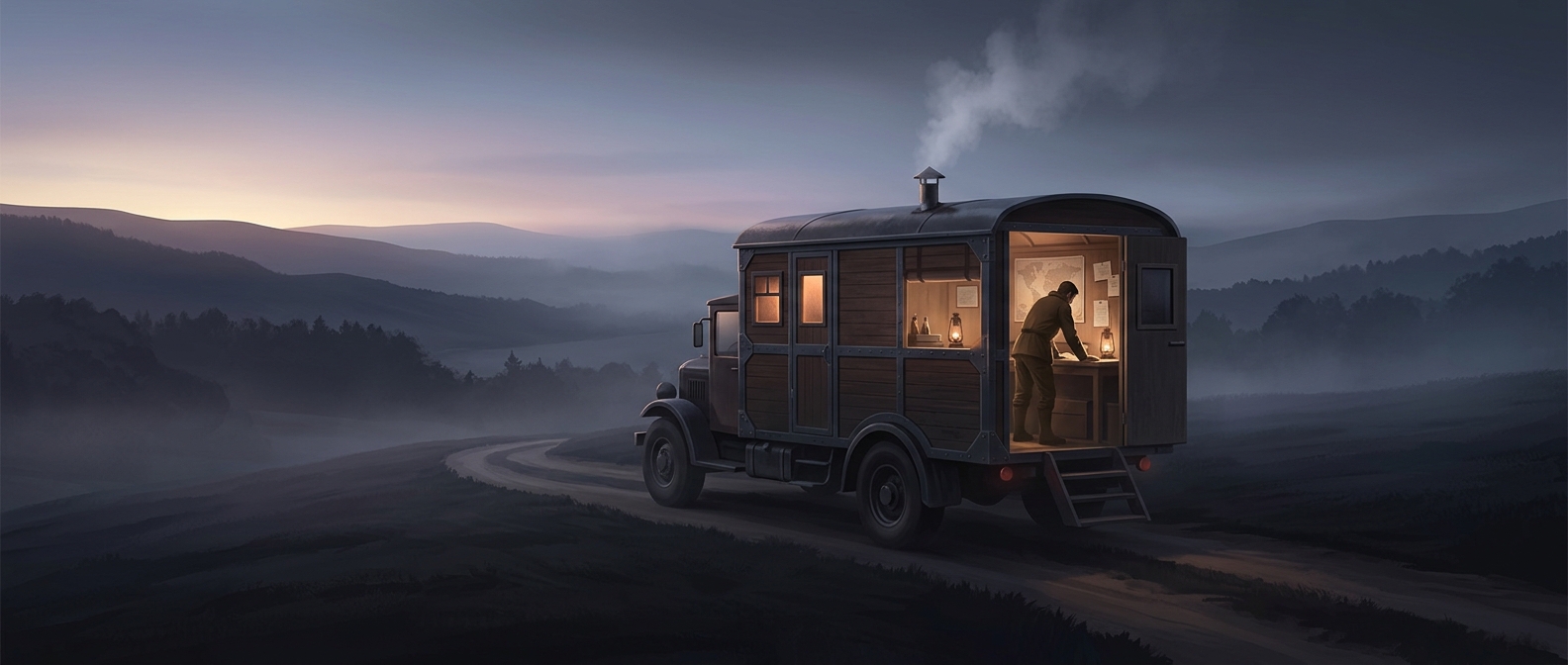
A caravan carried a place to sleep along with the supplies needed for the trip. Instead of finding shelter after each day on the road, a politician and traveling companions could stop where the route or schedule required. That made it easier to string together visits across the countryside, where meeting people meant traveling from one small community to another.
From public business to private recreation
The wagon’s usefulness came from combining transport and accommodation. It did not make rough roads disappear or make travel effortless; it made overnight stops less dependent on inns and other lodging. That distinction mattered on tours planned around reaching scattered communities rather than staying in one town.
As road travel later became associated with family holidays, the caravan took on a more recreational identity. But its earlier appeal was already recognizable: bring shelter with you, and the countryside becomes easier to cross. The original traveler could finish a day of political visits without having to sleep outdoors—or find a bed nearby.