A shared activity changes the feel of a delay
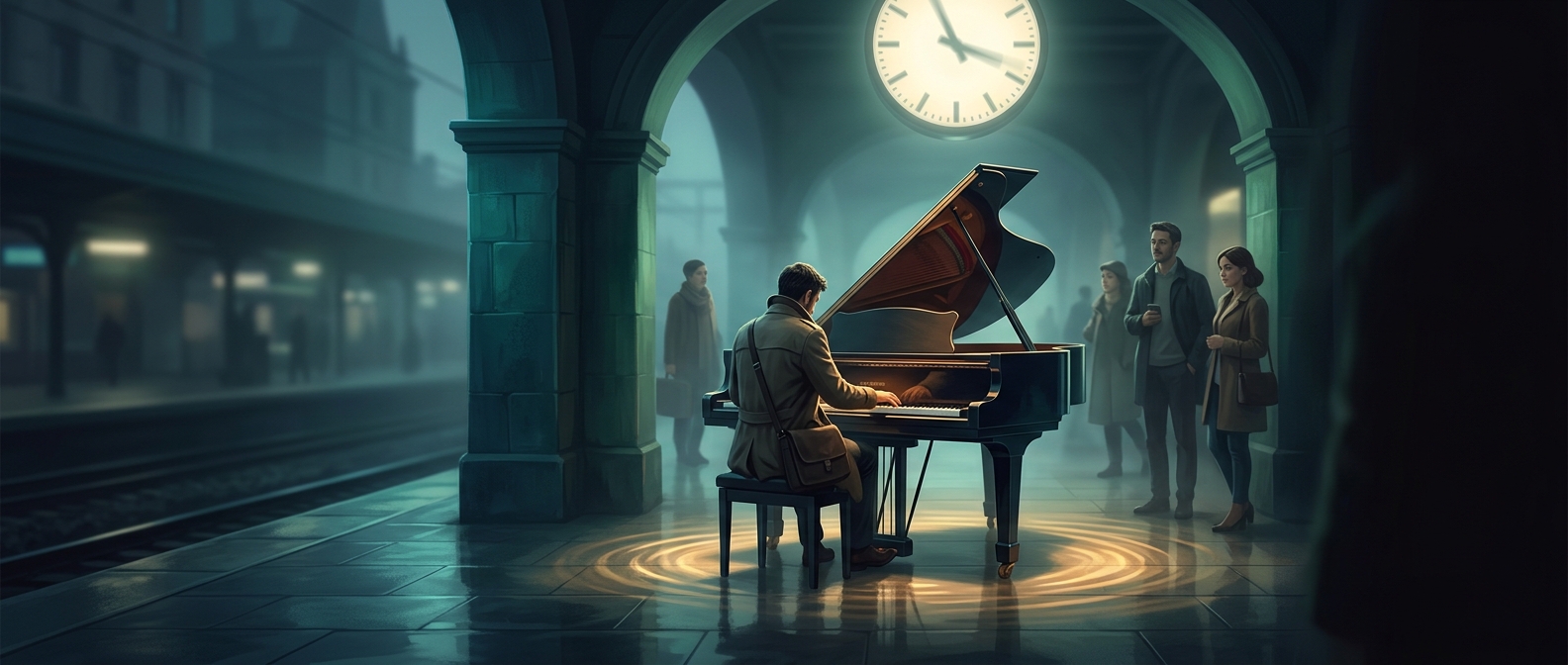
When trains stop running, passengers lose more than time: they lose a clear sense of what happens next. A piano cannot restore the service or explain the delay, but it can give people nearby something immediate to do. One person plays; another listens, recognizes a tune, or joins in. Attention shifts, briefly, from the disruption to a small event the waiting crowd can share.
That shift matters because frustration is social. In a crowded station, people watch one another for cues about how serious a situation is. A tense, aimless wait can make irritation feel contagious. A visible activity offers a different cue: the space is still being used for something ordinary and cooperative. It does not guarantee calm, but it can make waiting feel less like being trapped alone among strangers.
Why a battered piano fits a station
An upright piano is conspicuous and requires no sign-up or explanation. It can invite participation without asking passengers to buy anything or commit to a scheduled event. Its worn appearance can also make it seem available rather than precious—an instrument to try, not a display to avoid touching.
The idea has limits. A piano cannot address a dangerous crowd, replace clear information, or help everyone: some passengers may not want the noise, and others may simply want quiet. Its usefulness depends on the setting and the moment. But during an ordinary disruption, even a few minutes of shared music can turn a platform from a place where people only wait into a place where, briefly, they do something together.