Why Matte Paint Loses the Mirror Image
A glossy car surface behaves like a tiny mirror. Its clear outer layer is smooth enough that incoming light bounces away in an orderly direction, preserving recognizable images of windows, trees, and overhead lamps. That clean reflection is what makes glossy paint look bright and deep.
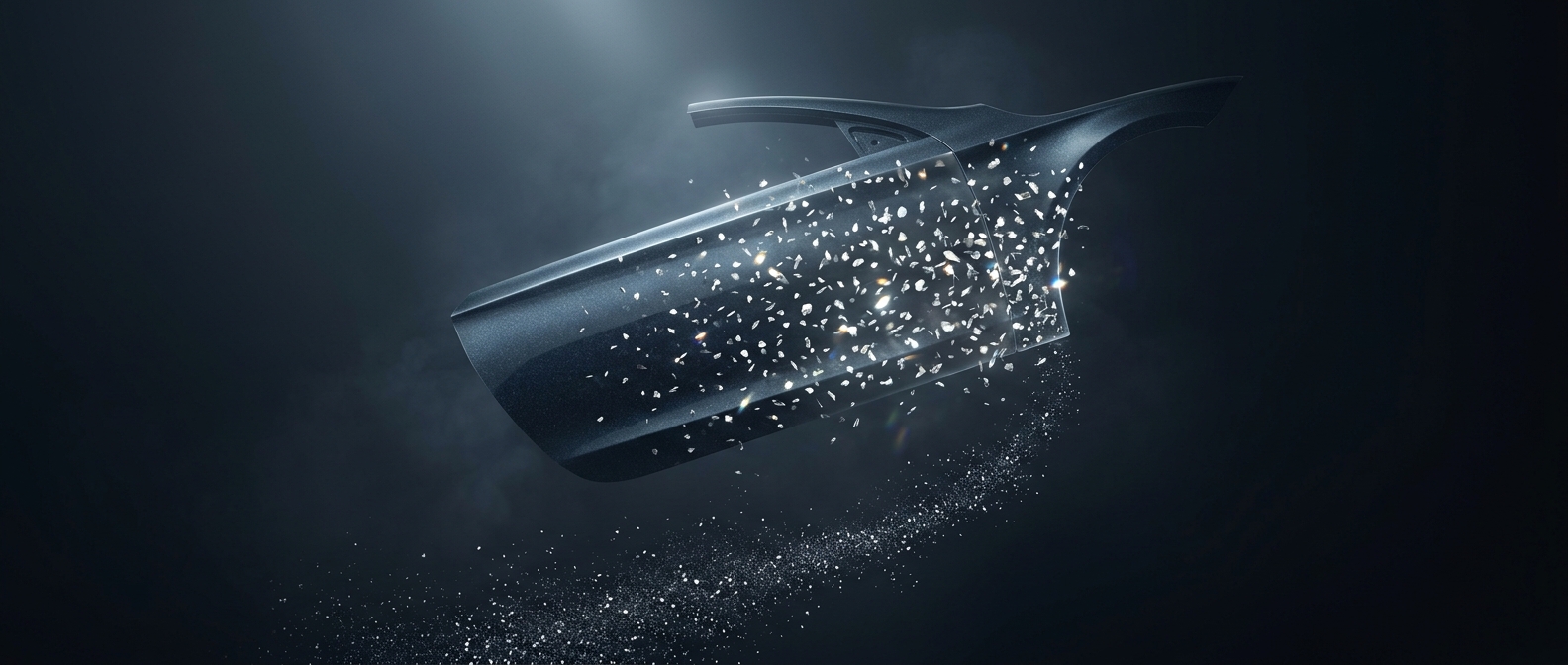
A matte finish changes the surface at a scale too small to see. Its texture sends reflected light in many directions instead of concentrating it into a sharp image. The color remains visible, but highlights soften and reflections blur, so the bodywork looks flatter and can seem to absorb light. It is not simply a dark coating: the defining change is how the surface redirects light.
The Finish Changes the Care Tradeoff
Matte appearance can come from the texture of the clear protective layer or from a coating formulated to create that effect. Either way, the surface has to retain its distinctive texture; polishing it smooth can create shiny patches that stand out against the rest of the panel.
That makes repairs and routine cleaning less forgiving than on ordinary glossy paint. Abrasive polishing, for example, may remove a mark from gloss by restoring a smooth surface, but on matte paint it can erase the very texture that scatters reflections. A scratch or uneven repair can therefore remain visible even when the color matches. The same choice that keeps sunlight from forming a crisp image also makes the finish harder to restore uniformly.