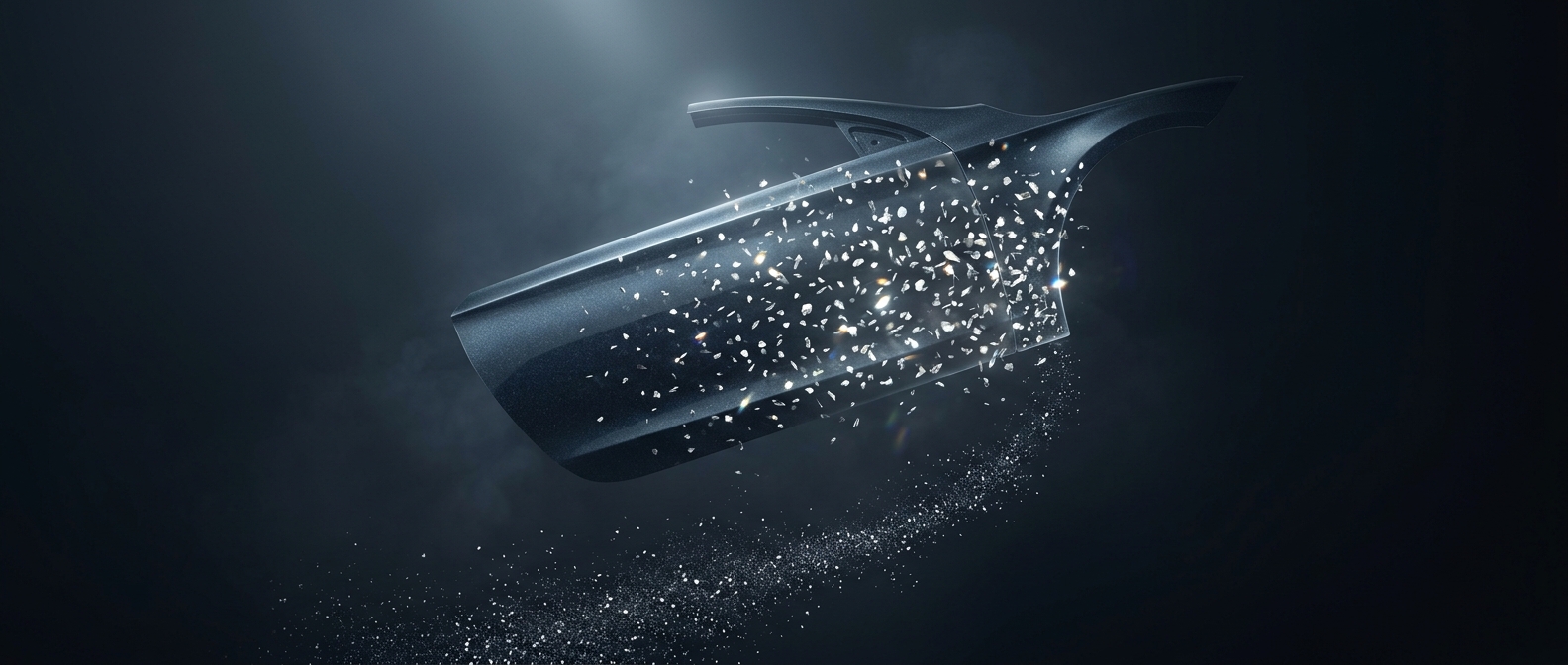
How Aluminum Flakes Make Paint Look Metallic
In metallic automotive paint, tiny, thin aluminum particles are suspended in colored paint. The surrounding liquid carries the color; the flakes act more like miniature reflective surfaces. As light enters the coating, some reflects from those surfaces and travels back toward the viewer, giving the finish a brighter, more luminous look than a flat pigment alone.
Why the Color Shifts as You Move
The flakes do not all sit at exactly the same angle. Their orientation, along with the angle of the light and the viewer, determines how much reflected light reaches the eye. From one position, many flakes may catch the light and make a panel look bright; from another, fewer do, so it appears darker. This is an angle-dependent effect, not a change in the paint’s underlying color.
The size and distribution of the flakes also influence whether a finish looks softly metallic or shows more distinct points of sparkle. A transparent protective layer over the color helps give the surface its smooth appearance while light passes through to the reflective particles beneath.
Why Repainting Can Be Tricky
The flakes’ arrangement matters as much as the paint formula. Spraying technique can affect how they settle, so a newly painted section may look different from the rest of a car even when the color is nominally the same. That is why matching metallic paint involves judging the finish from several angles: the repair must reproduce not just a shade, but the way the flakes reflect light across the panel.