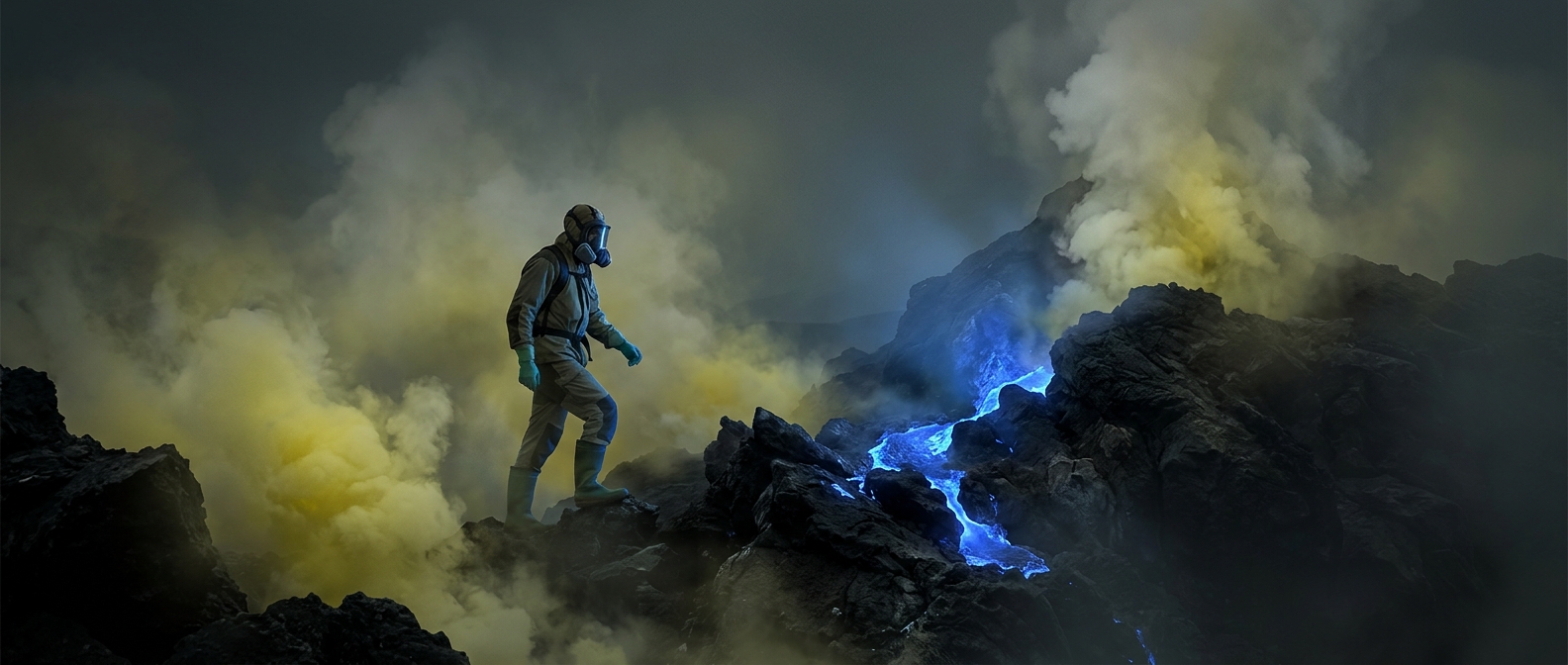
Why Ijen’s flames appear only after dark
The blue glow is real fire, but it is easy to miss in daylight. Sulfur burns with a blue flame when hot sulfur vapor escaping from cracks meets oxygen in the air. Against a dark crater, that flame stands out; under sunlight, it is largely washed out. That is why visitors make the steep descent at night, when the unusual color becomes visible.
A flame that can look like flowing lava
Heat from the vents can melt sulfur, which then runs over the rocks as a bright liquid before cooling into solid deposits. The moving material can seem like blue lava from a distance, but the glow comes from burning gas—not molten rock. The blue color marks combustion, while the glowing streams trace where hot sulfur is traveling.
The view comes with a changing hazard
The same vents release sulfur dioxide, a poisonous gas that can irritate and injure the lungs. Gas masks help protect visitors, but conditions in a crater can shift as fumes move, making the route a demanding environment rather than a guaranteed safe viewing platform. The night hike is therefore part of the spectacle and part of its cost: visitors descend toward the source of the fire, where the vivid glow and the hazardous gases come from the same openings.