Why the Game Gear needed so much power
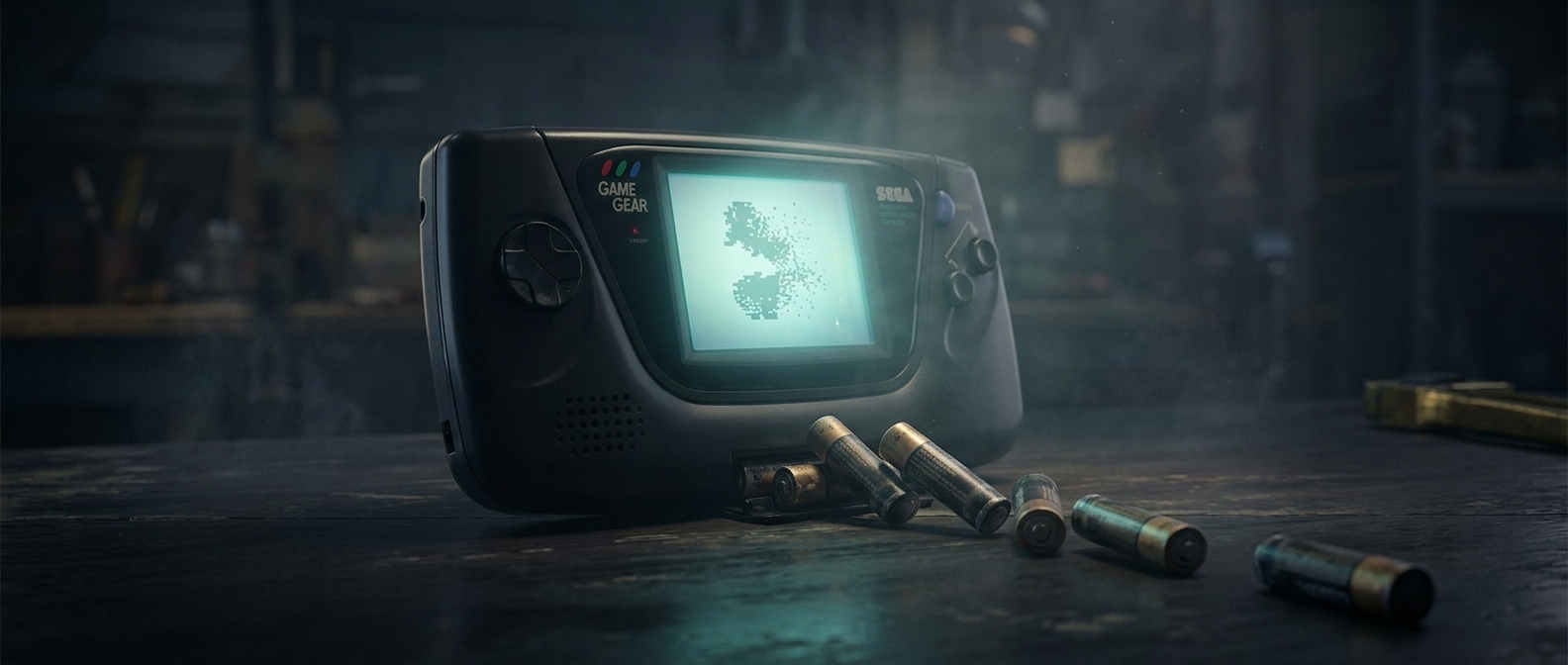
The Sega Game Gear was built to make handheld games look more like their console counterparts: its screen displayed color and was lit from behind, so players could see the image in dim surroundings. That convenience came with a steady electrical cost. The screen’s backlight had to stay on while the game was running, and the system also had to power its processor, sound, and controls.
A backlit screen shines light through the display toward the player. That is different from a screen that mostly relies on surrounding light, which can use less power but is harder to see in the dark. In the early 1990s, putting a bright, color display into a portable machine meant accepting a much heavier battery burden than a simpler monochrome handheld imposed.
Portability came with a tradeoff
The Game Gear’s six AA batteries supplied the energy for that richer display, but they added weight and made long stretches away from a wall outlet costly. The system could also be powered with an adapter, useful at home or wherever electricity was available; on a road trip, spare batteries became part of the packing list.
That tradeoff shaped what “portable” meant. The Game Gear offered a vivid screen that could be played in more lighting conditions, but it asked players to carry not just the console and games, but a continuing supply of power. A color display made the handheld feel closer to a home system—and made the next battery change part of the journey.