Why Nixon’s Face Looked Different on Television
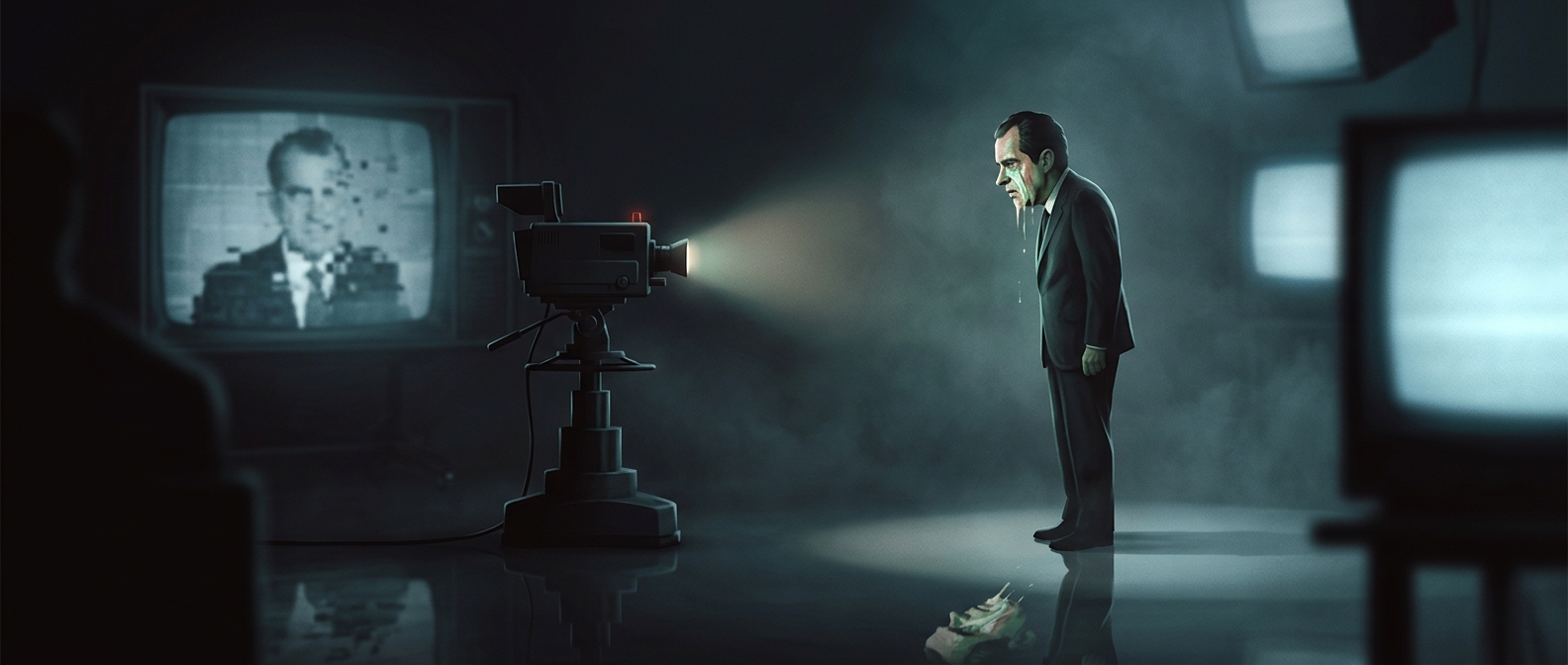
Television turned an ordinary grooming choice into a visible part of the 1960 presidential debate. Nixon had a dark beard shadow that showed under the studio lights. Rather than rely on the professional makeup offered for the broadcast, he used Lazy Shave, a drugstore product intended to hide stubble. The product did not hold up well under the heat and glare of the lights, leaving him looking sweaty and uneven on camera.
That mattered because early television rewarded more than a strong argument. A viewer could see a candidate’s complexion, expression, and apparent composure in close-up. Nixon had also recently been ill and was recovering from a knee injury; against the lights and the camera, his discomfort became part of the impression he made. The broadcast did not change his words, but it changed what millions of viewers could notice while he spoke.
One Debate, Two Kinds of Audience
Radio listeners received the candidates’ voices without those visual cues. Reports of audience reactions often contrasted radio listeners’ preference for Nixon with television viewers’ preference for Kennedy, whose appearance seemed more composed on screen. That contrast is difficult to reduce to makeup alone: the candidates’ delivery and the medium itself also shaped how people experienced the debate.
The episode showed campaigns that television was not simply a bigger radio. Under studio lights, grooming and presentation became part of political communication—and a product chosen to solve one small camera problem could create a much larger one.