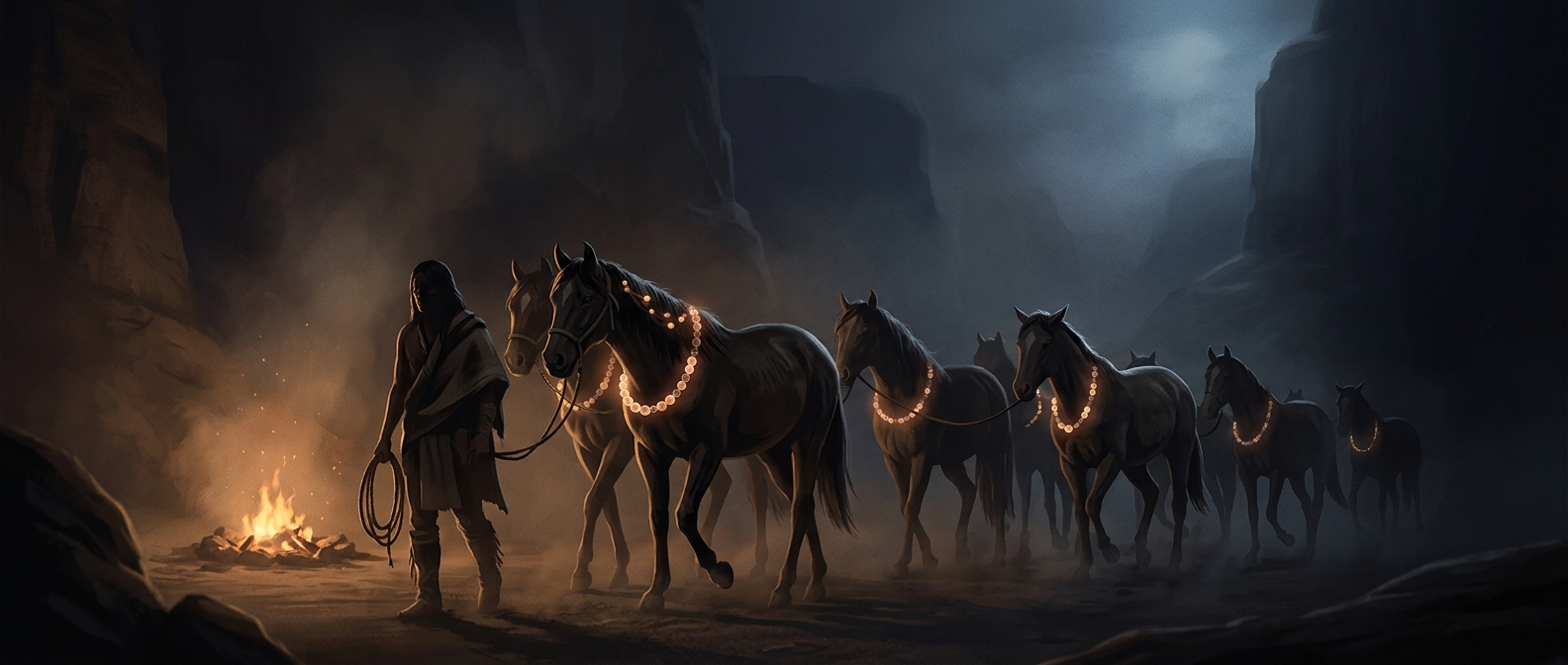
A horse was wealth that could move
For Apache communities, a horse was more than a valuable animal: it was a working asset. It could carry a rider and supplies across long distances, help people move camp, and support hunting, trade, and raiding. A person who owned more horses had greater practical reach—and more resources to lend, exchange, or give.
Horses spread into the Southwest after the Spanish brought them to the Americas. As Spanish and Mexican settlements raised livestock, raiding could bring Apache groups horses and other animals. Those animals then entered wider networks of exchange. Raiding was not simply the taking of a symbol of status; it could add useful animals to a community’s economy.
From exchange to influence
Horses could serve as a medium of exchange, though not as standardized money. Their value depended on the animal and the circumstances. They might be traded for goods, given as bridewealth—a marriage-related transfer between families—or used to build alliances and meet obligations. Because a horse was both valuable and useful, transferring one could carry social meaning as well as economic weight.
Ownership also shaped political influence. A leader able to provide horses or organize access to them could help others travel, trade, or mount expeditions. That made wealth visible in relationships: influence rested partly on the ability to share resources and attract support, not just on possessing animals privately.
Why the horse mattered beyond its price
Horses changed what people could do with distance. They made movement faster and expanded the reach of trade and raids, while also creating new demands: animals needed grazing and care, and acquiring them could bring conflict with neighboring communities and colonial authorities. A horse’s value came from what it enabled—and from the relationships its owner could build by giving or exchanging it.