A President’s Small Gesture, Seen by a Whole Ballpark
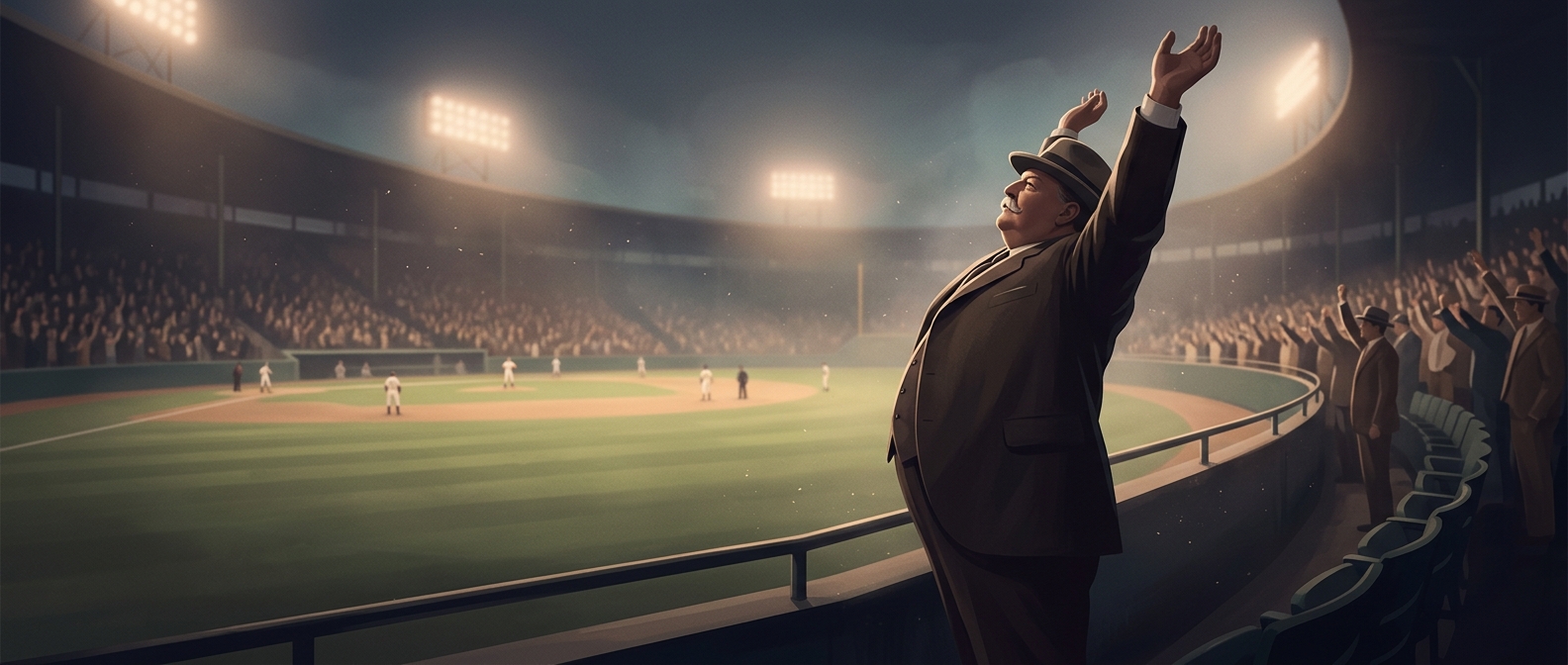
The Taft story turns on a simple feature of live crowds: people often take their cue from someone nearby. If a president rose from an uncomfortable seat during a lull in the game, spectators might have stood because they assumed the moment called for it—or because they wanted to acknowledge him. Once thousands were on their feet, the action could look like a shared custom rather than a response to one man.
That is the appealing logic behind the tale, not proof that Taft invented the stretch. The story is usually told as a possibility, and a crowd’s sudden movement does not by itself establish how a lasting tradition began.
How a Moment Can Become a Ritual
A seventh-inning pause gave spectators a natural opening to move without missing much of the game. If standing spread through the stands, it offered a practical benefit—relief from sitting—as well as a social one: everyone could join in, whether or not they knew what had prompted the first person to rise.
Repeated over time, an improvised response can acquire its own meaning. The original reason fades, while the action remains easy to recognize and repeat. In this telling, Taft’s stature may have helped turn an ordinary stretch into a memorable crowd-wide moment. The tradition’s charm lies in that possibility: a president seeking room to move may have helped make standing together part of watching baseball.