Before the racket, the shuttle was the challenge
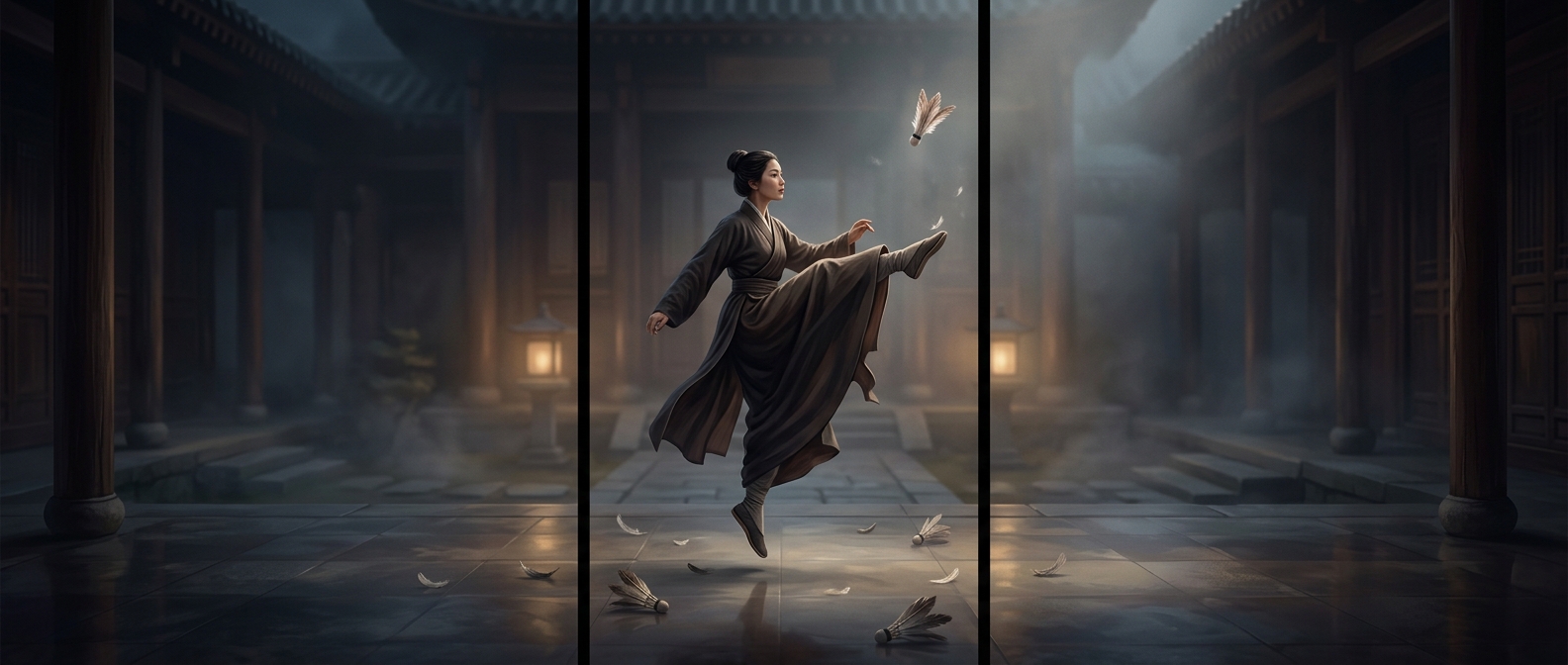
A feathered shuttlecock is difficult to control: unlike a ball, it slows quickly and tends to turn cork-first in flight. In games played with the feet, that awkward flight becomes the point. Players keep the shuttle airborne by tapping it back with a foot, testing balance, timing, and touch rather than the power of a kick.
That kind of play belongs to the wider history of shuttlecock games. It helps explain why the shuttle itself could be the focus before badminton settled into its familiar racket-and-net form. But the history is not a simple sequence in which one established version of badminton merely swapped feet for rackets. Different games used the same basic object in different ways.
What the racket changed
A racket gives players a longer, more precise striking surface. That makes it easier to send the shuttle across a marked court and sustain exchanges over a net. Once play depends on placing shots into an opponent’s side—not simply keeping the shuttle aloft—the game rewards a new set of skills: controlled clears to the back of the court, short drops near the net, and quick changes of direction.
The transition from foot play to racket play was therefore more than a change in equipment. It changed the problem players were trying to solve. The shuttlecock’s flight stayed distinctive; the racket turned that flight into a contest of placement and tactics.