Why a Smooth Rink Needed a Machine
Skating wears down ice unevenly. Blades carve grooves and scrape off fine shavings; over time, the surface becomes rough enough to slow skaters and make falls more likely. Before mechanized resurfacing, crews had to scrape and clean the ice by hand, then spread water and wait for it to freeze. The work took long enough that a rink could lose valuable time between sessions.
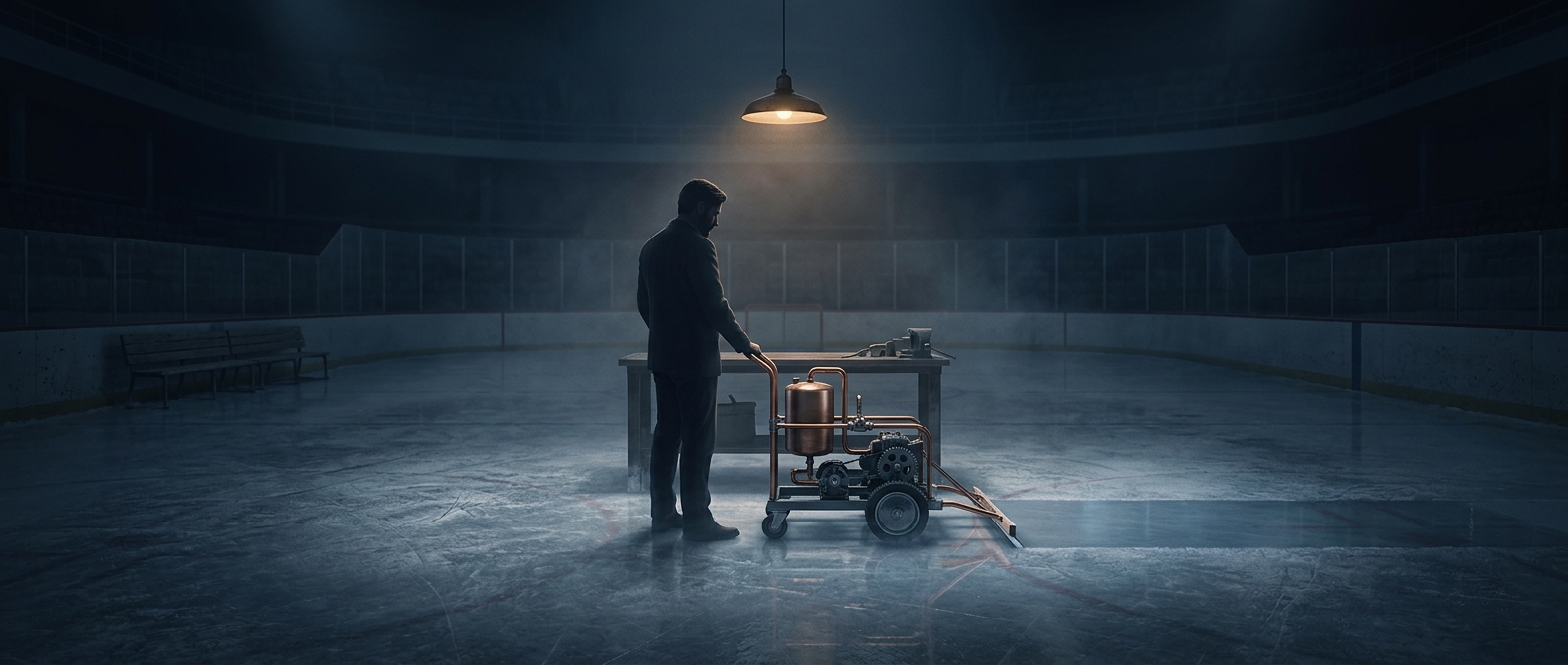
Frank Zamboni’s machine joined those tasks into one pass. A cutting blade shaved away the damaged top layer, while the machine gathered the loose ice. It then left a thin film of water behind. As that water froze, it filled small cuts and bumps, restoring a smoother surface.
A Rink Problem Became a Lasting Design
The important idea was not simply to drive across the ice, but to make the whole repair process move with the vehicle: remove the rough layer, clear it away, and prepare the surface for fresh ice. That combination turned a labor-intensive interval into a much shorter reset between skating sessions.
The machine’s practical success carried its inventor’s name far beyond his local rink. “Zamboni” became the everyday word many people use for an ice resurfacer—a reminder that a familiar piece of arena equipment began as a solution to the time and labor required to keep one rink skateable.