How a walking race became an arena spectacle
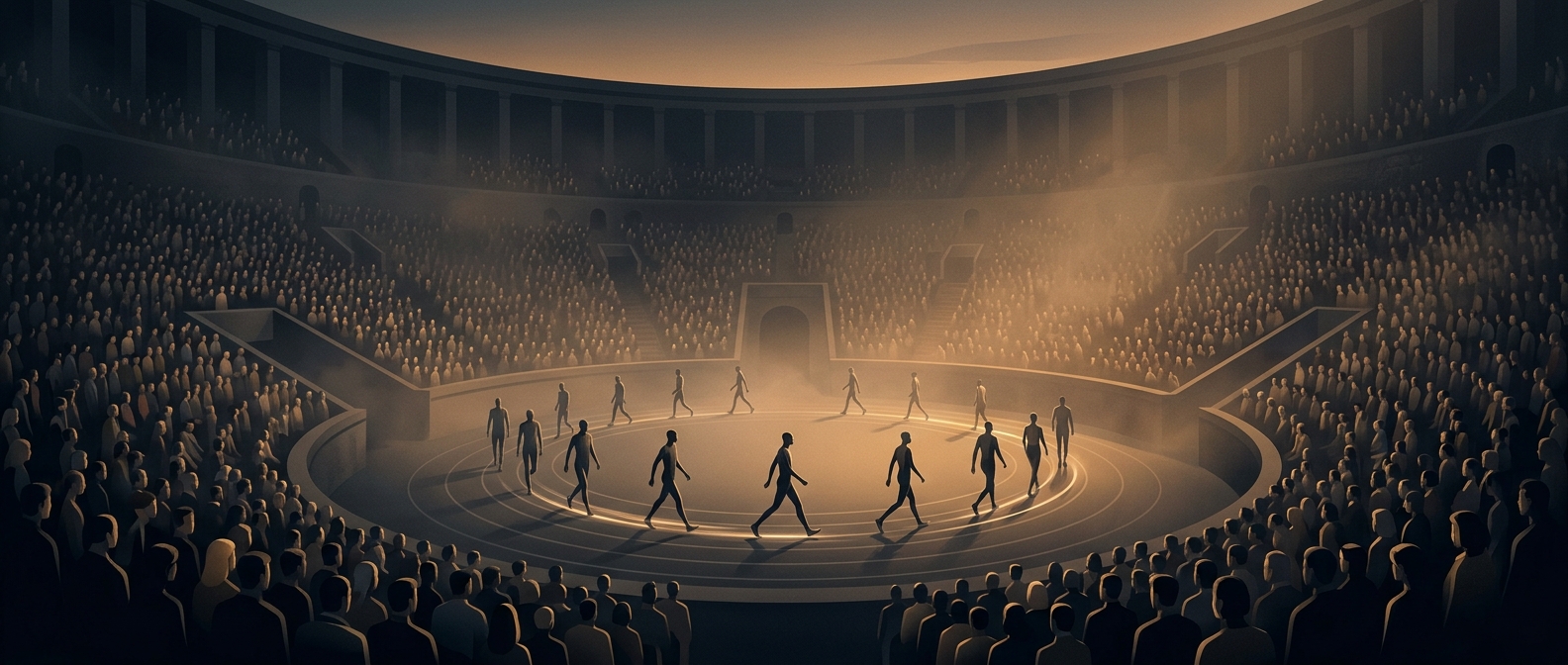
In the 19th century, these contests belonged to pedestrianism, the era’s popular sport of competitive walking and long-distance foot racing. Indoor tracks let organizers stage events in cities and keep the action close to spectators. Instead of racing from one town to another, athletes circled a track, accumulating distance lap by lap.
Some contests lasted for days. In “go-as-you-please” races, competitors could choose when to walk, run, rest, and eat; the challenge was to cover the greatest distance before time ran out. That made pacing as important as grit. A fast start might win early applause but leave a racer exhausted, while measured effort could pay off hours later.
The race was also a test of attention
The format turned endurance into a visible contest of strategy. Spectators could watch a leader gain a lap, see a tired athlete slow down, and follow the changing standings without needing to understand complicated rules. Because the race lasted so long, audiences could arrive and leave while the contest continued—a sporting event stretched across ordinary hours rather than decided in a brief burst.
That duration also shaped the drama. Each lap was modest, but thousands of laps could separate a champion from the rest. The crowd was not just waiting for a finish; it was watching bodies negotiate fatigue, recovery, and the temptation to push too hard. The remarkable feat was measured in miles, but its tension came from the next circuit.