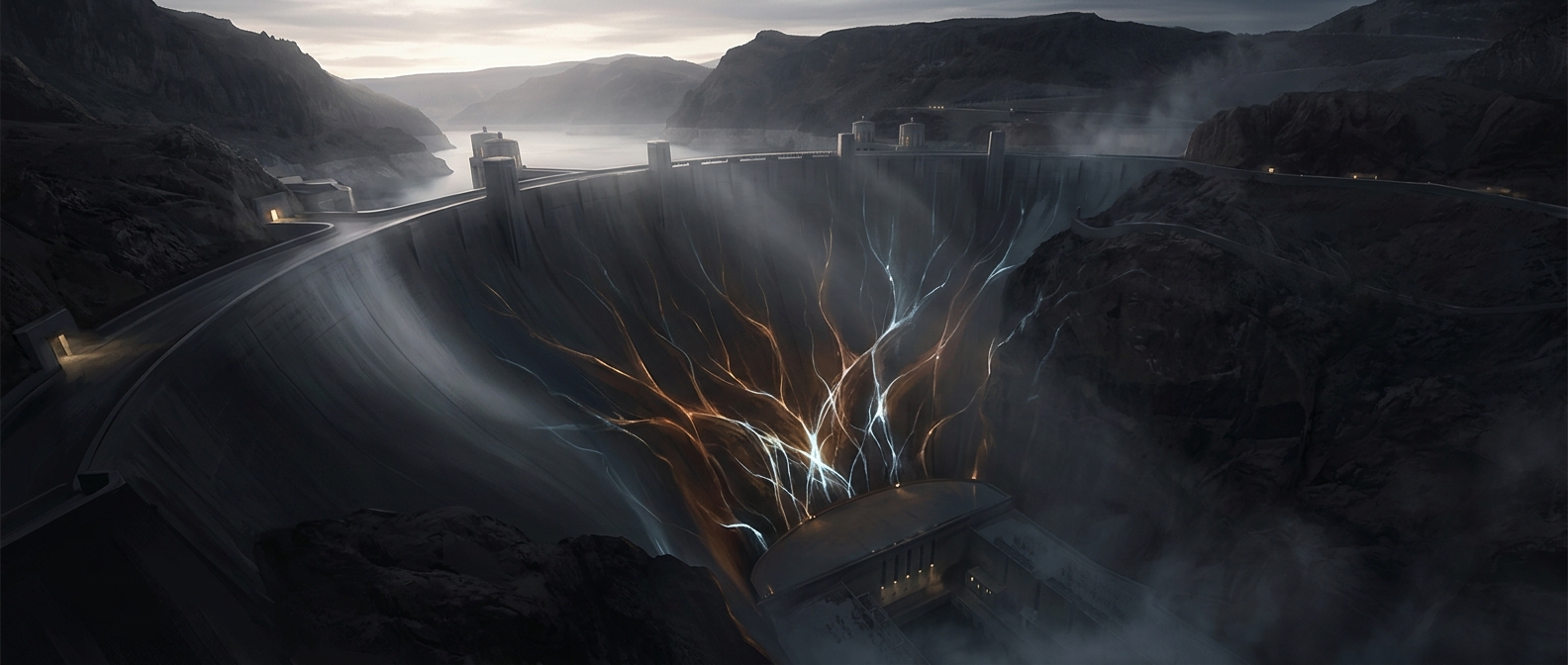
Why Hoover Dam’s concrete had to cool from the inside
Concrete hardens through a chemical reaction between cement and water. That reaction releases heat. In a small pour, the warmth escapes quickly; inside Hoover Dam’s vast concrete mass, it could become trapped. The exterior would cool and shrink while the core stayed hot and expanded, putting the concrete under stress and risking cracks.
The builders therefore did not pour the dam as one giant block. They placed it in separate sections and threaded cooling pipes through them. Chilled water carried heat away from the interior, helping the concrete cool in a controlled way. Once the sections had cooled, crews filled the pipes and gaps between blocks with grout, binding the structure together.
Cooling was part of the construction schedule
Without active cooling, the dam’s center would have taken an extraordinarily long time to shed its heat naturally. The pipes made it possible to manage that slow process on a construction timetable rather than waiting for the massive core to cool on its own. They were not simply a way to make the concrete harden faster: they helped limit the temperature differences that could damage it.
“Curing” can describe concrete’s continuing hardening, but the dramatic delay at Hoover Dam was chiefly about removing heat from the enormous mass—not about crews still pouring or cooling it today. The remarkable engineering detail is that the dam’s construction depended on treating its interior like a heat-management problem, with a network of pipes built into the concrete itself.