The Challenge Was Keeping Water Moving
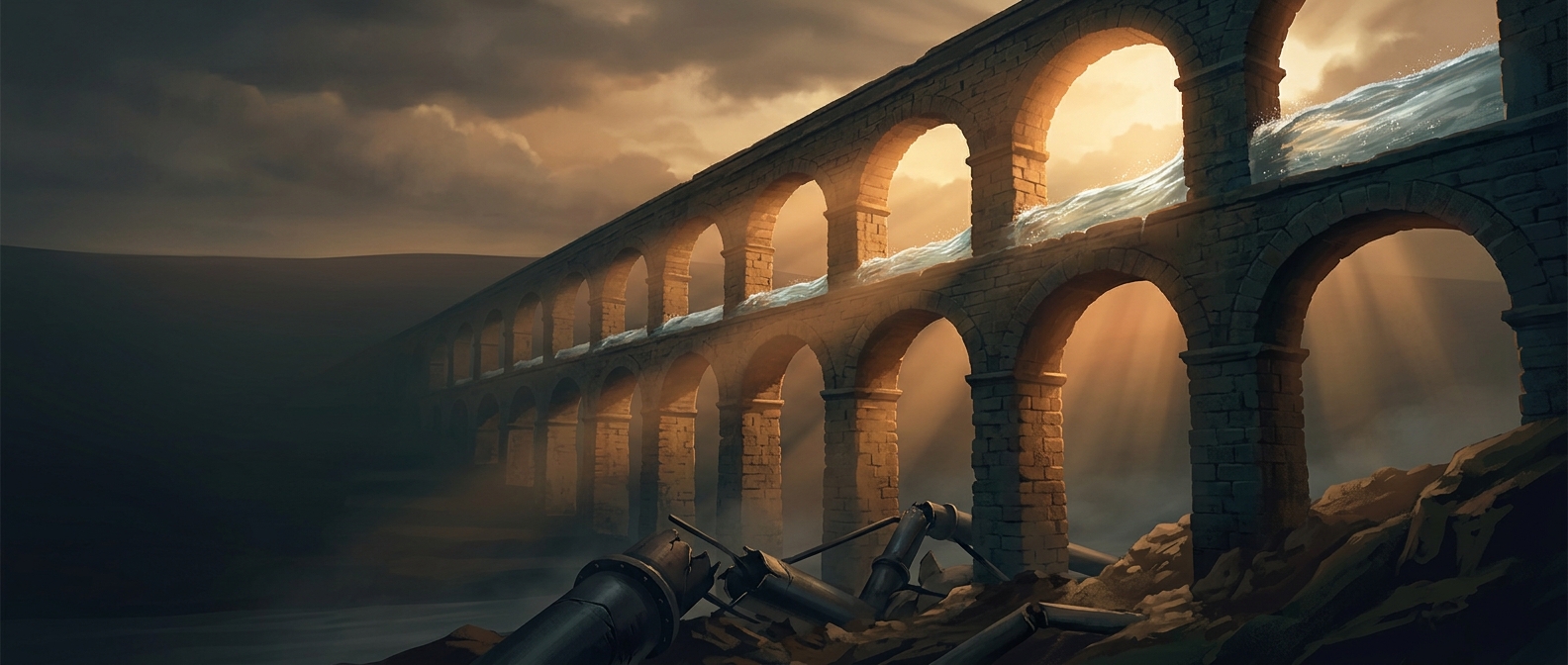
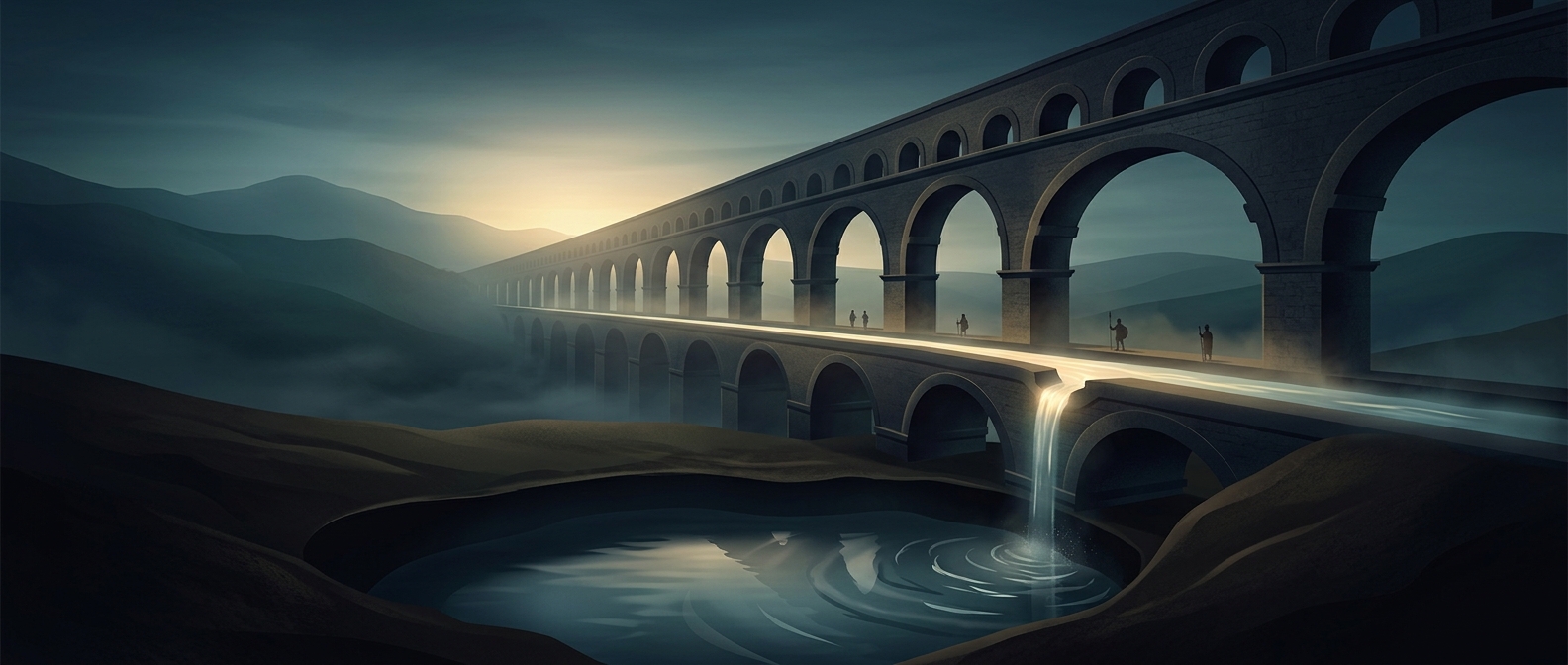
A water channel could not simply run downhill in a straight line: hills and valleys lay between many sources and the cities that needed them. Roman builders traced routes that followed the land’s contours, cutting tunnels through some obstacles and carrying channels across others on bridges or raised arcades. The goal was a continuous, controlled descent—not the fastest possible drop.
Too little slope could leave water sluggish or stagnant; too much could make it rush, erode the channel, and complicate delivery. Surveyors used sighting and leveling instruments to establish the route’s elevation over long distances. The channel itself was often lined to limit leakage, while accessible sections and settling basins helped crews manage sediment and repairs.
From Source to City Street
Once the water reached a city, it could pass through a distribution structure and be directed into different branches. That made the aqueduct more than a long bridge: it was part of a system linking a distant source to public fountains, baths, and other users. Some urban delivery used pipes, where water pressure mattered; the long approach channel, however, depended on gravity and a carefully chosen slope.
The route’s engineering shaped daily life at its destination. A city could draw on water from beyond its immediate surroundings, but only as long as the channel stayed clear, intact, and at the right grade. In a gravity-fed system, a small elevation error far upstream could become a shortage at a fountain downstream.