A Scoring System Built Around a Real Basket
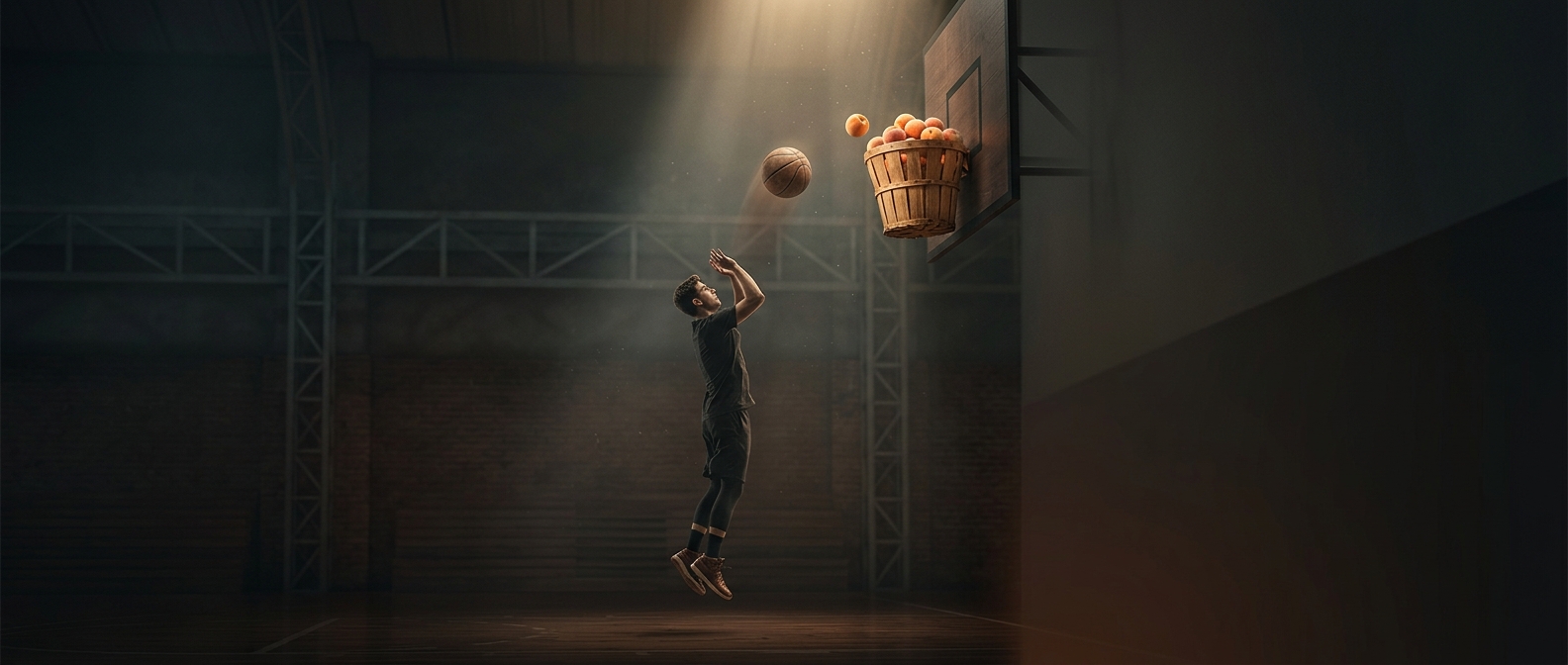
In 1891, physical-education instructor James Naismith needed an indoor game for students at a YMCA training school in Springfield, Massachusetts. He hung two peach baskets high above the gym floor and used a soccer ball. The goal was simple: put the ball into the opposing basket.
But a peach basket was a container, not the open ring modern players recognize. Its solid bottom made each successful shot a small interruption in the game. Someone had to get the ball out before play could resume, often by climbing up to it.
Why the Basket Changed the Game
The awkward retrieval was more than a comic inconvenience. It limited how quickly teams could restart and made scoring depend on access to the elevated goal. The basket’s height also shaped the basic challenge: players had to arc the ball upward rather than simply carry it into a target.
As the game spread, equipment adapted to play more smoothly. The closed-bottom baskets gave way to goals with openings, so the ball could fall through and be recovered from below. Backboards later helped keep shots in play and provided a surface players could use to bank the ball toward the hoop.
The original setup shows how much of basketball’s familiar structure grew from a practical experiment. The elevated target survived; the part that required a ladder did not.