A path turned into a launching mechanism
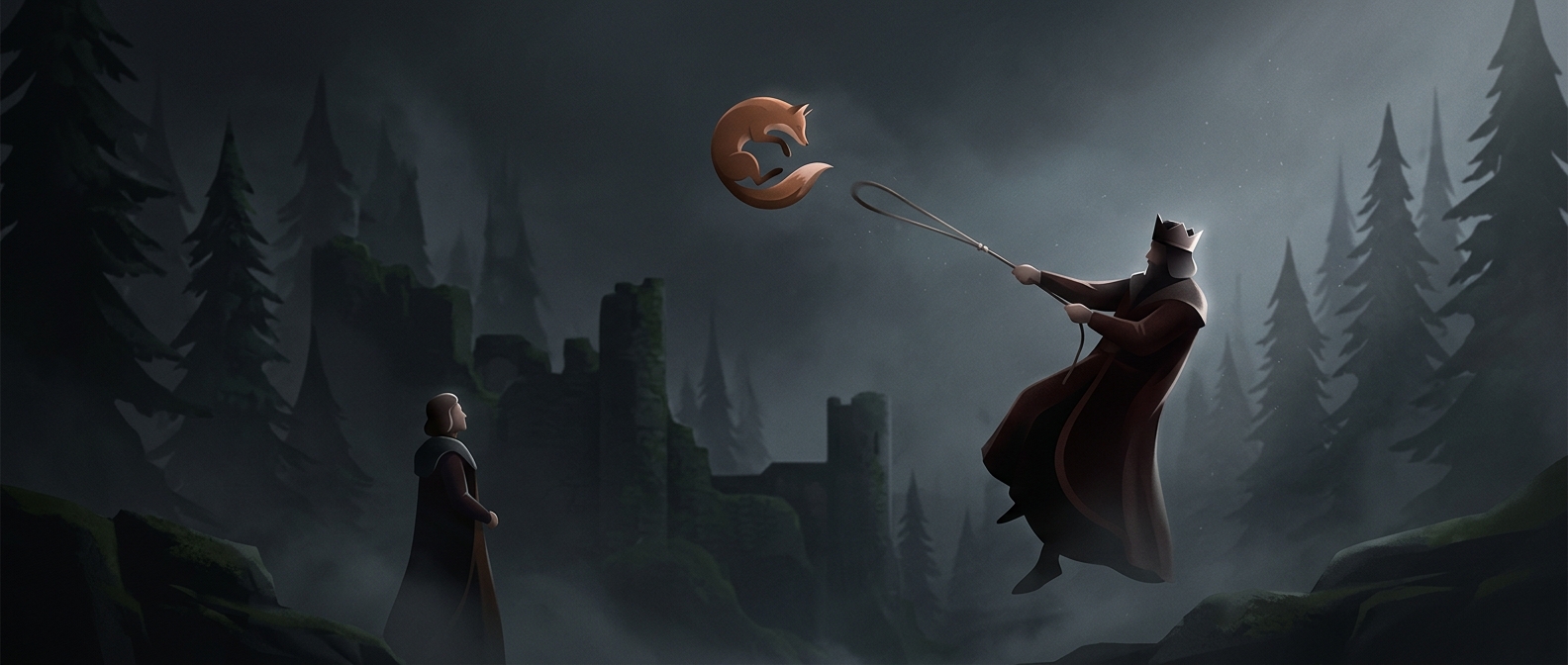
The trick depended on timing, tension, and an animal moving at a run. Nobles stretched a long sling across a path so that a fox crossing it would press against the taut material. As the sling gave way and sprang back, it transferred force to the fox, flinging it upward. The people holding the sling supplied the tension; the fox’s own movement helped trigger the launch.
That made the setup less like a catapult, which stores energy in a rigid frame, and more like a crude spring activated by a moving body. The path funnelled the animal toward the stretched sling, while the sudden rebound turned an ordinary crossing into a violent spectacle.
Entertainment built around impact
The amusement lay in watching the fox fly and land, not in any contest of skill between animal and handler. What might sound like a clever mechanical stunt was therefore also an act of deliberate cruelty: the fox had no control over the apparatus and risked being badly injured by the launch or the fall.
The arrangement reveals how aristocratic leisure could turn a simple physical principle—tension released at the right moment—into public entertainment. Its mechanism was straightforward. Its human cost was borne by the animal.