Why a Wooden Bat Begins as One Piece
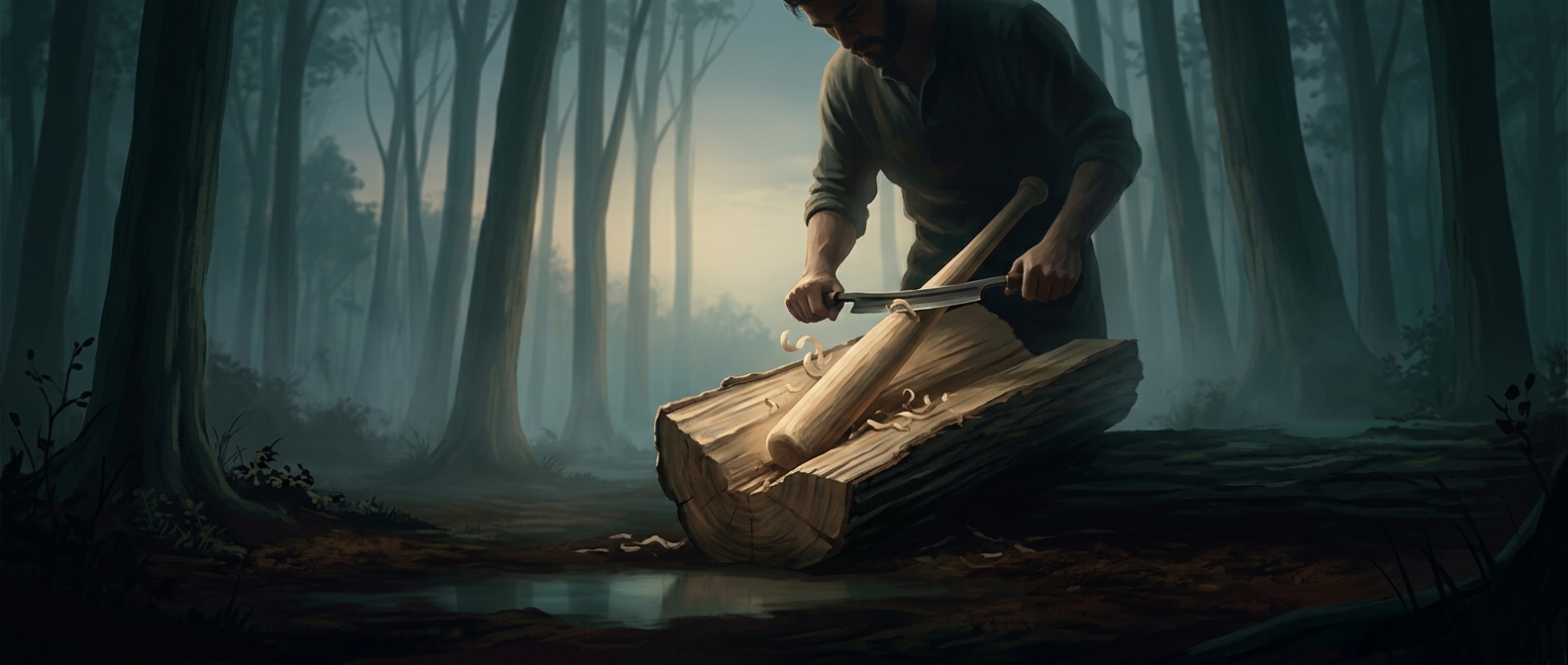
A traditional wooden bat is shaped from a single block of wood, often called a billet. On a lathe—a machine that spins wood while a cutting tool shapes it—the billet is pared into a narrow handle and a wider barrel. Because both parts remain connected through continuous wood fibers, the bat can bend slightly under impact without relying on a joint or fastener that might loosen.
That construction makes the wood’s grain more than a visual feature. Grain is the direction in which the fibers run, and a bat is strongest when those fibers extend lengthwise from knob to barrel. A crooked grain can create a weak path through the wood, so selecting and orienting the billet matters before shaping even begins.
The Tradeoff Hidden in the Wood
Ash became a familiar bat wood in part because it combines useful strength with some give. That flexibility helps it absorb the shock of contact, but it also means a bat can gradually show wear or eventually split. Harder woods such as maple can feel more rigid; when they fail, the break may be sharper and send pieces outward.
A one-piece bat therefore makes the material’s structure part of its performance. The same continuous fibers that let the bat transmit force from barrel to handle also determine how it bends, wears, and breaks. Even a finished bat’s smooth surface conceals a decision made at the start: the grain must be aligned well enough to carry the force of a swing.