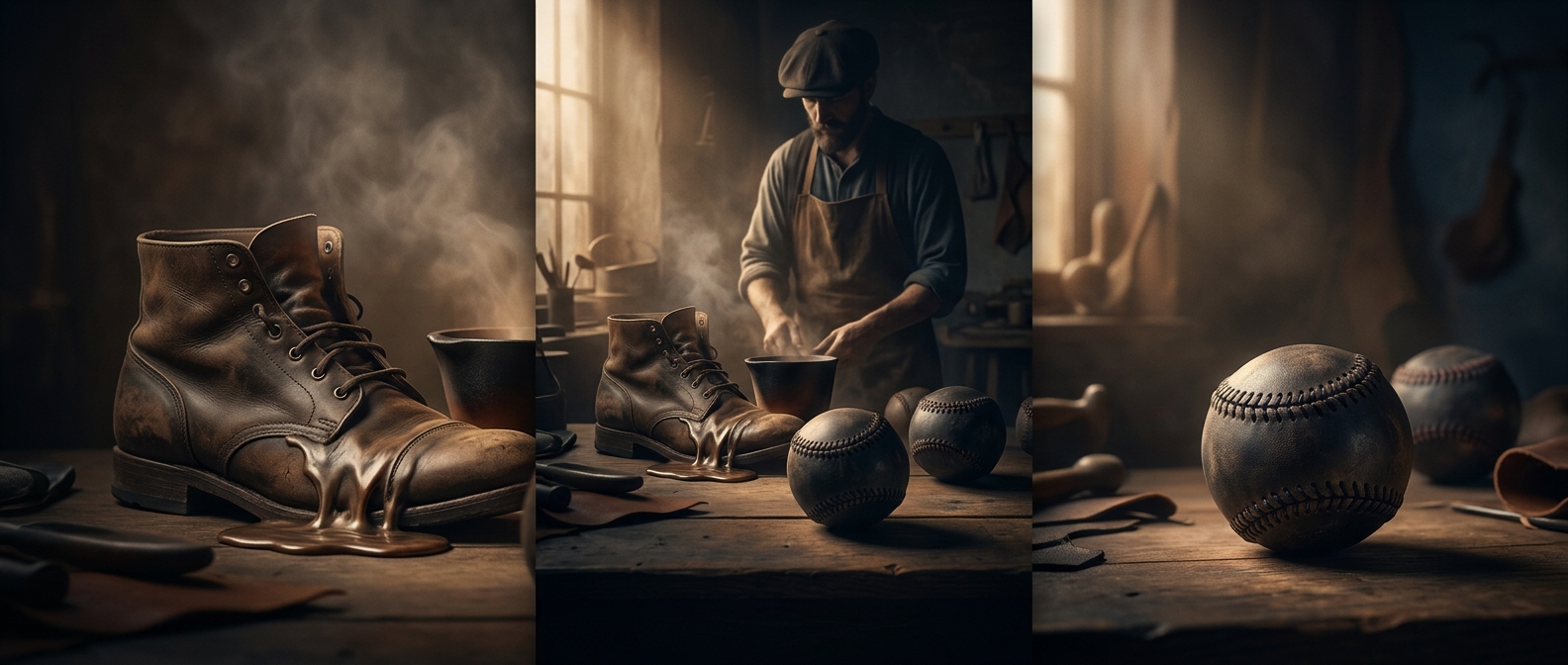
A ball built from whatever rubber was available
In early baseball, the ball’s core could begin as salvaged rubber rather than a uniform manufactured part. Galoshes—rubber overshoes worn to protect shoes from wet streets—could be melted down and packed into a compact center. Makers then wound yarn around that core and covered the outside with scraps of material.
That construction turned discarded footwear into playing equipment, but it also made the ball’s behavior depend on its ingredients. Worn galoshes did not necessarily yield rubber with the same feel or resilience as newer ones. Differences in the amount and condition of the rubber, as well as in how tightly the yarn was wound, could change how lively the finished ball felt.
Why the core changed the game
A baseball’s core is not just a base for its cover: it helps determine how much energy the ball returns when it hits a bat or the ground. A more resilient core can produce a livelier rebound; a less consistent one makes that response harder to predict. With reused materials and hand assembly, two balls could differ even if they looked similar.
That variation put a piece of the game’s equipment supply inside the game itself. The ball was not yet simply a standardized object taken from a box; its materials and construction could shape the action on the field. The surprising part is how directly a worn pair of overshoes could help decide whether a hit skipped sharply or died sooner.