Renaissance calcio made the route to goal physical
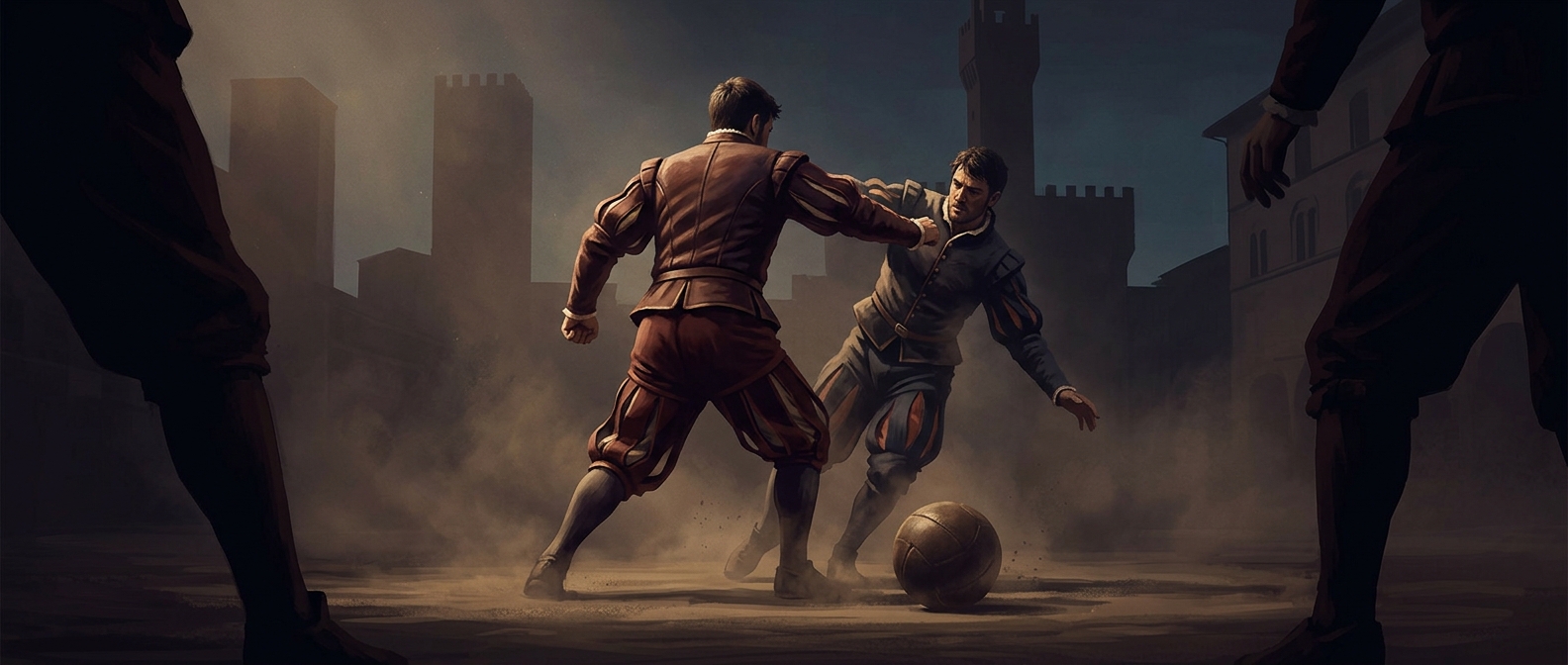
The game behind this description was calcio, a form of football played in Renaissance Italy. Its basic aim was recognizable: move a ball into the opponents’ scoring area. But unlike modern soccer, the contest did not treat body-to-body struggle as a foul by default. Players could use force to disrupt opponents and open space for an attack, including punches, headbutts, and grappling.
That changed what “getting the ball forward” meant. A player trying to advance could be met not just by a defender blocking a pass, but by opponents trying to stop the player outright. Teammates therefore had to create a path as well as move the ball. The scoring objective remained, but the means of reaching it made the game a test of physical confrontation too.
A different idea of fair play
The contrast with modern football is not simply that Renaissance players were rougher. The games operated with different expectations about which forms of contact belonged inside the contest. In calcio, violent physical challenges were part of the way teams competed; they were not automatically outside the rules in the way a punch would be in soccer today.
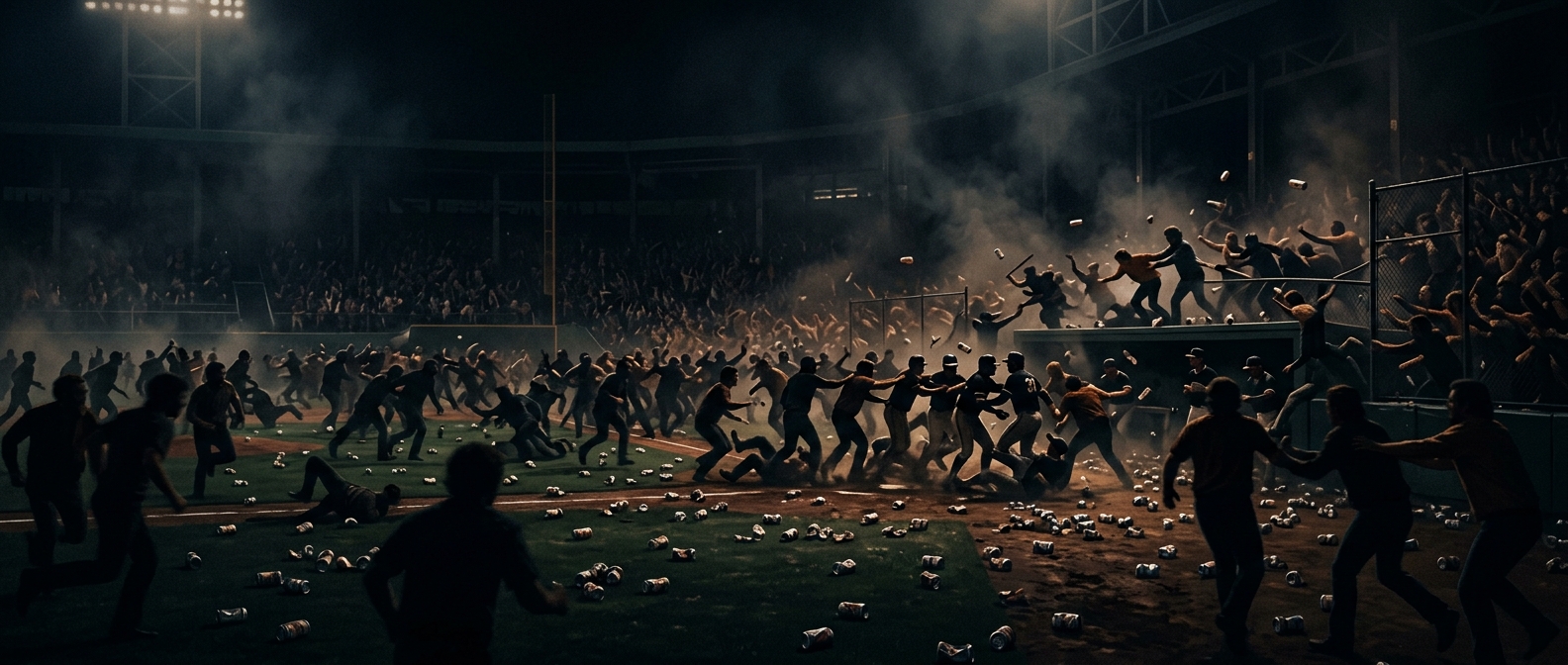
That helps explain why the game sounds less like a familiar match with a few extra fouls and more like a hybrid of ball sport and organized brawl. The ball gave the struggle a direction and a goal. The struggle, in turn, determined who could reach that goal. A route to score might have to be cleared with a pass—or with a headbutt.