A Lion in the Emperor’s Private Rooms
Rudolf II’s reported lion was more than an exotic pet. In an early modern royal court, a dangerous animal could serve as a living display of wealth and authority: keeping a lion required space, food, and people able to handle it. The animal made power visible in a way a painting or sculpture could not.
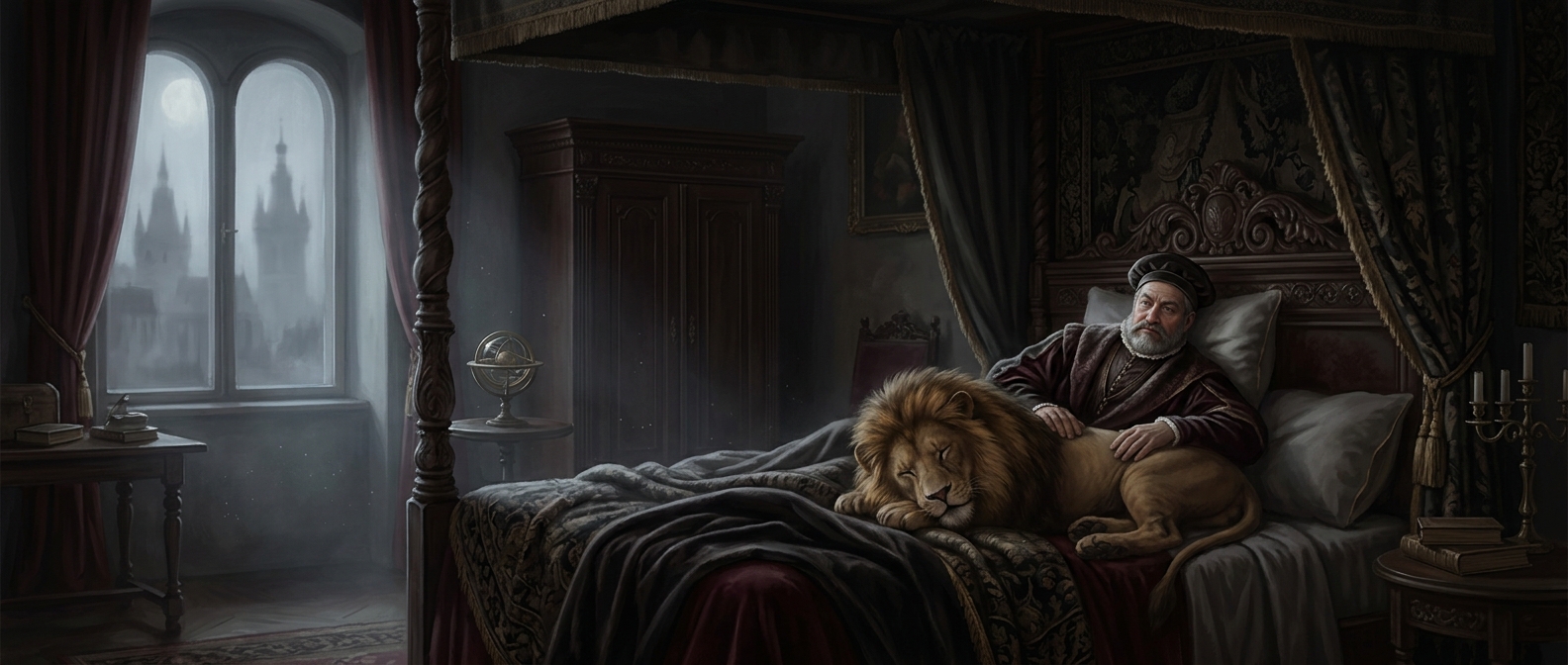
Rudolf, who ruled the Holy Roman Empire and made Prague a major court center, was known for collecting rare and unusual things. A lion in his personal quarters would have brought that collecting impulse into an unusually intimate setting. His bedroom was not simply a place to sleep; it was part of the ruler’s private world, where access itself marked status.
What “Untethered” Would Have Meant
If the account is accurate, leaving the lion untethered made the arrangement especially striking. A chain or cage creates a clear barrier between people and a powerful animal. Without one, safety would have depended on trained handlers, the lion’s behavior, and the room’s layout—details the brief report does not establish.
That uncertainty matters: the story does not tell us how often Rudolf shared the room with the lion or what precautions were used. But its enduring force comes from the contrast it suggests: an emperor bringing a creature associated with raw danger into the most private space of his court. The bedroom became not just a place of rest, but a stage for displaying command over the extraordinary.