When Obedience Mattered More Than What Guards Saw
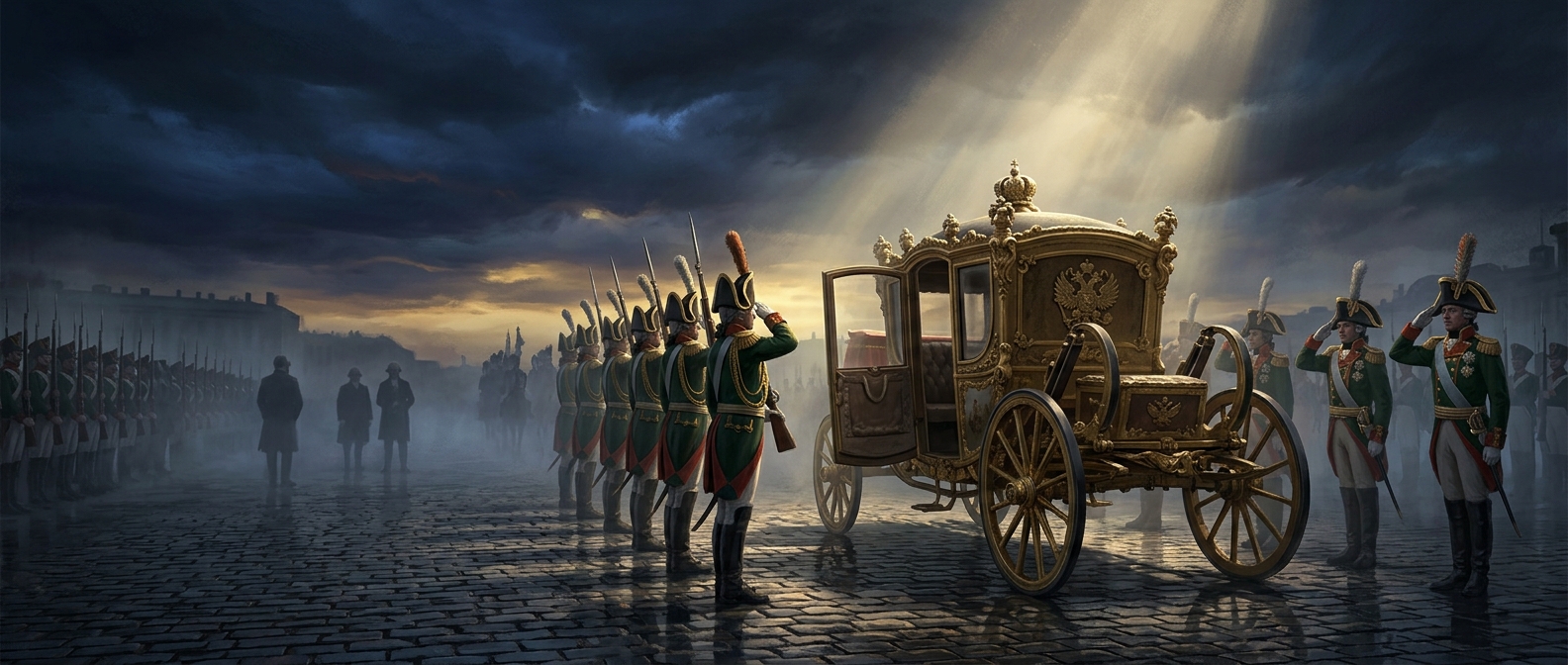
Paul I’s order turned a familiar military gesture into a test of discipline. A salute normally acknowledged a person of rank; here, the carriage was empty. The guards were not being asked to identify who deserved respect. They were being told to follow the command, and objecting could bring punishment.
That distinction matters in a court organized around visible rank and strict obedience. A guard who paused to question the order would be asserting his own judgment over the ruler’s. Saluting the carriage, by contrast, showed that he understood the chain of command—even when its demand seemed absurd.
The Empty Carriage as a Test of Authority
The episode’s force lies in the mismatch between the gesture and its apparent object. No passenger was present to receive the salute, yet the order still carried Paul’s authority. The carriage became a stand-in for the power behind the command, while the threat of punishment made that power tangible.
For the guards, the practical lesson was stark: at court, deciding whether an order made sense was not their role. The empty carriage made that rule impossible to miss.