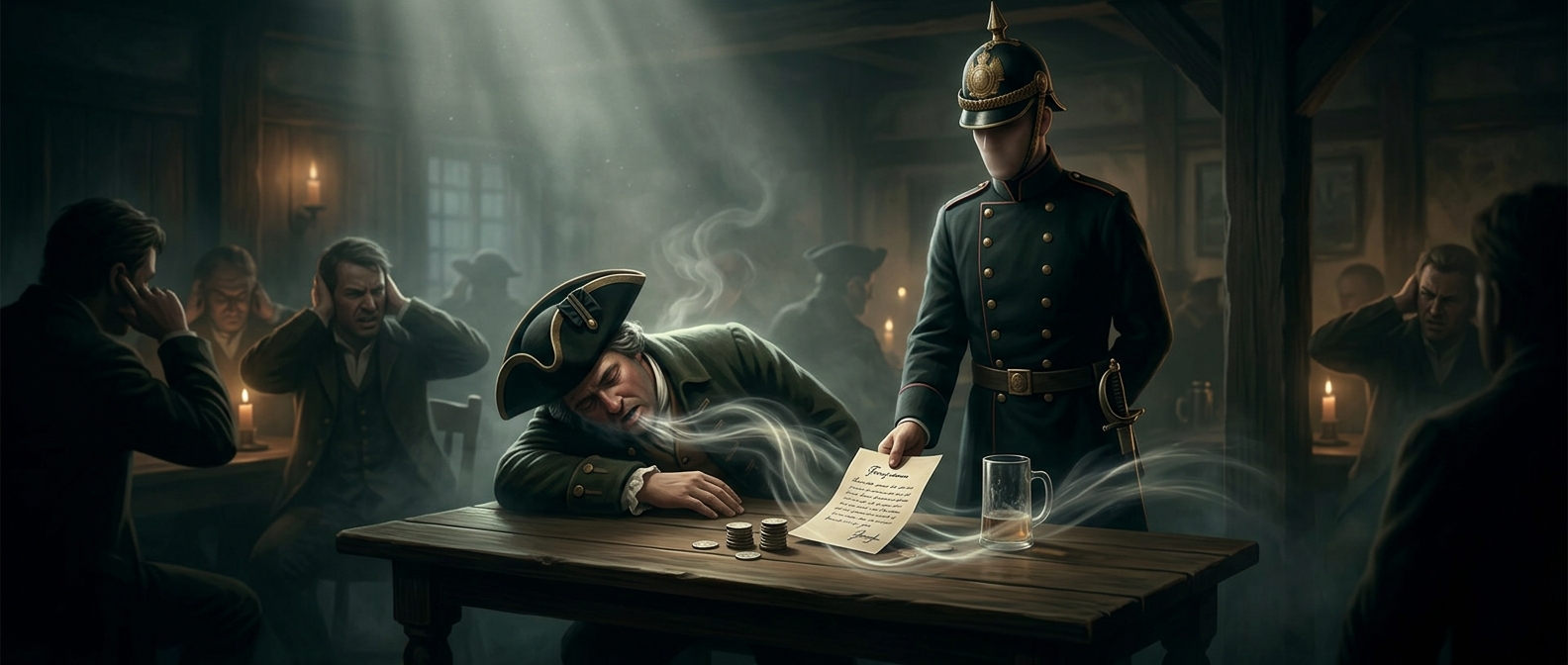
When a Tavern’s Noise Became a Public Offense
An 18th-century tavern was more than a place to buy a drink. It was a shared room where customers gathered, and its business depended on people being able to talk, drink, and stay awhile. In that setting, one patron’s loud snoring could become a problem for everyone else—and for the tavern’s orderly use.
The fine turned an ordinary bodily act into a matter of public conduct. The issue was not that the man had fallen asleep; it was that his noise disturbed other customers. A court could treat that disruption as something the community was entitled to address, rather than a private inconvenience for the people sitting nearby.
The Boundary Was the Disturbance
The episode captures a practical boundary in shared public life: customers could expect a tavern to be lively, but not so disruptive that they could no longer enjoy it. Enforcing that boundary helped preserve the room as a place for socializing and business. Even a sound as involuntary as snoring could cross it once it interfered with everyone else’s use of the space.