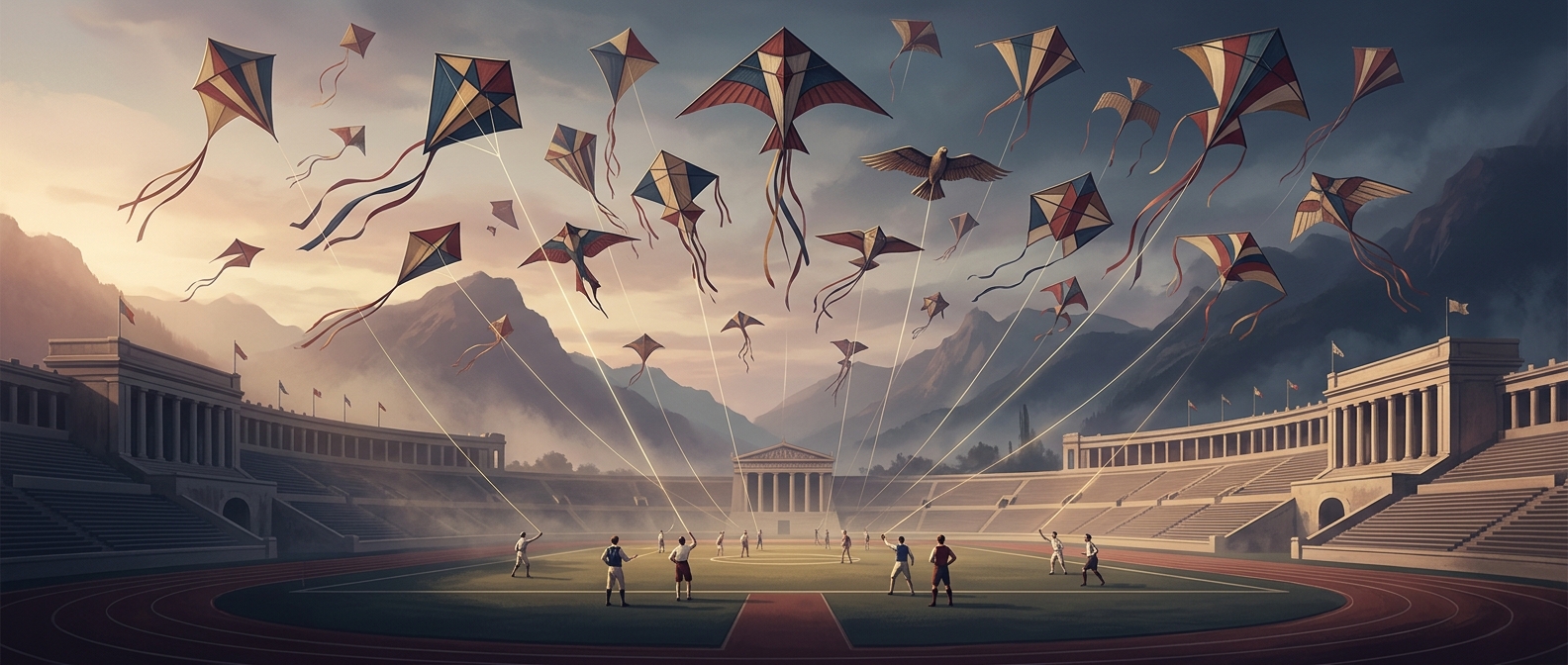
When the Olympics Took Flight
At the 1900 Paris Games, “sport” reached well beyond the familiar contests of a modern Olympics. The Games ran alongside the Paris Exposition, a vast world’s fair, and the two programs became entangled. Competitions involving new machines and forms of flight could sit beside athletics, even when they looked more like public demonstrations or engineering tests than today’s tightly standardized events.
Kite flying fit that moment. A kite was not just a toy: it was a way to explore how a light structure could catch wind, stay aloft, and respond to changes in its surroundings. A competition could therefore showcase both piloting skill and practical design. Wind, balance, and construction all mattered; a kite that pulled hard but could not remain stable was no triumph.
A Different Idea of Olympic Competition
The Paris program had no single, familiar template for what counted as an Olympic event. Because the Games were woven into the fair, activities were spread across a long schedule and a broad range of venues. Later accounts grouped some of these contests under the Olympic banner, though their status and organization do not always match modern expectations.
That blurred boundary is part of the story. Kite flying shows how the 1900 Games reflected an age fascinated by technology and the possibility of human flight. Before aviation became an established competitive field, even a kite could make wind itself part of the contest.