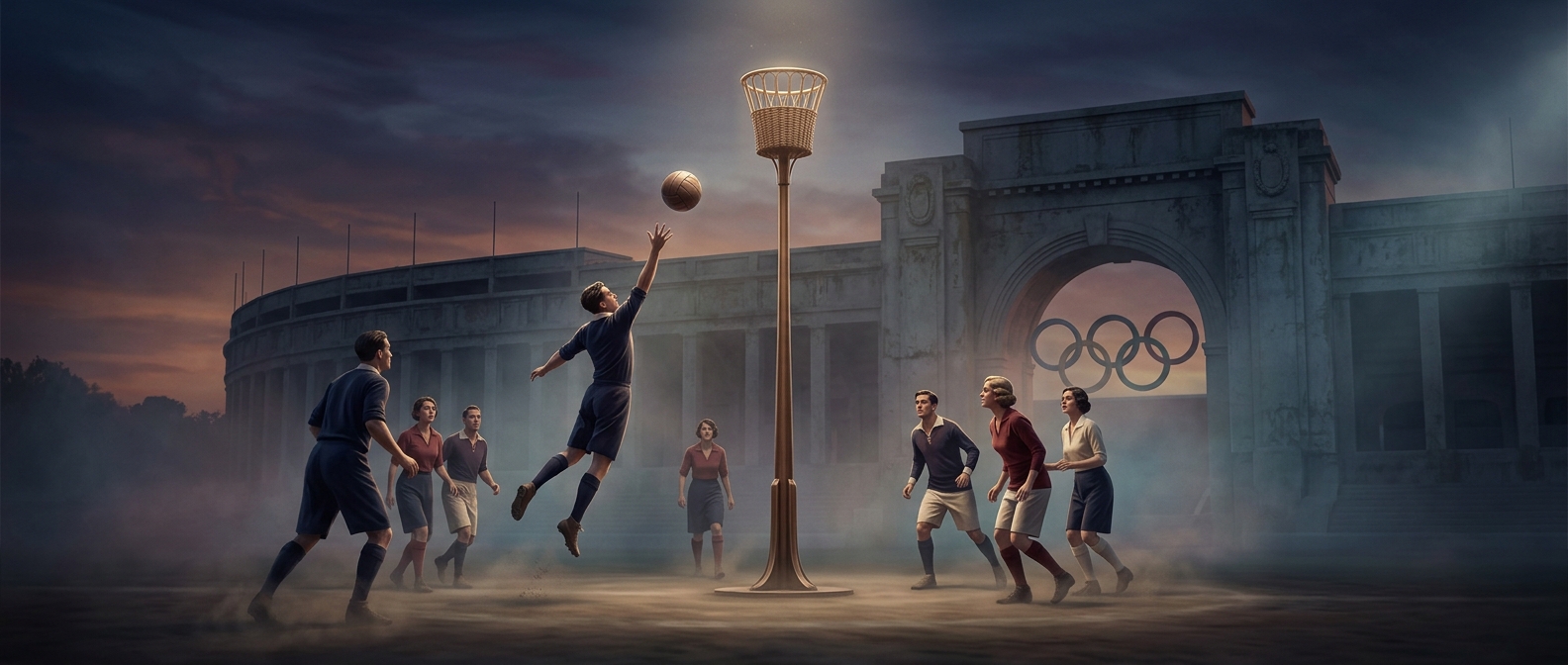
A team sport built around passing
Korfball’s rules made the mixed lineup part of the game’s structure, not just a spectacle. Players advance the ball by passing rather than dribbling, and opponents may not use physical contact to stop them. That shifts the contest toward finding an open teammate, moving into space, and defending without tackling.
In the form of korfball shown at Antwerp, men and women played on the same teams. The format made cooperation across the lineup visible: a player’s route to a scoring chance depended on teammates creating and using space, not on one person carrying the ball through a defense.
What a demonstration meant at the Games
Korfball appeared at the 1920 Antwerp Olympics as a demonstration, not as a medal event. Olympic demonstrations gave sports a chance to be seen by an international audience without making them part of the official competition. The setting put korfball’s unusual combination of rules and mixed teams on display alongside the Games’ established contests.
That is why the demonstration was notable beyond the score. Viewers were seeing a game in which men and women shared the court under rules that discouraged both solo ball-carrying and bodily confrontation—a different idea of team play made legible in the middle of the Olympics.