The “figure” was a track in the ice
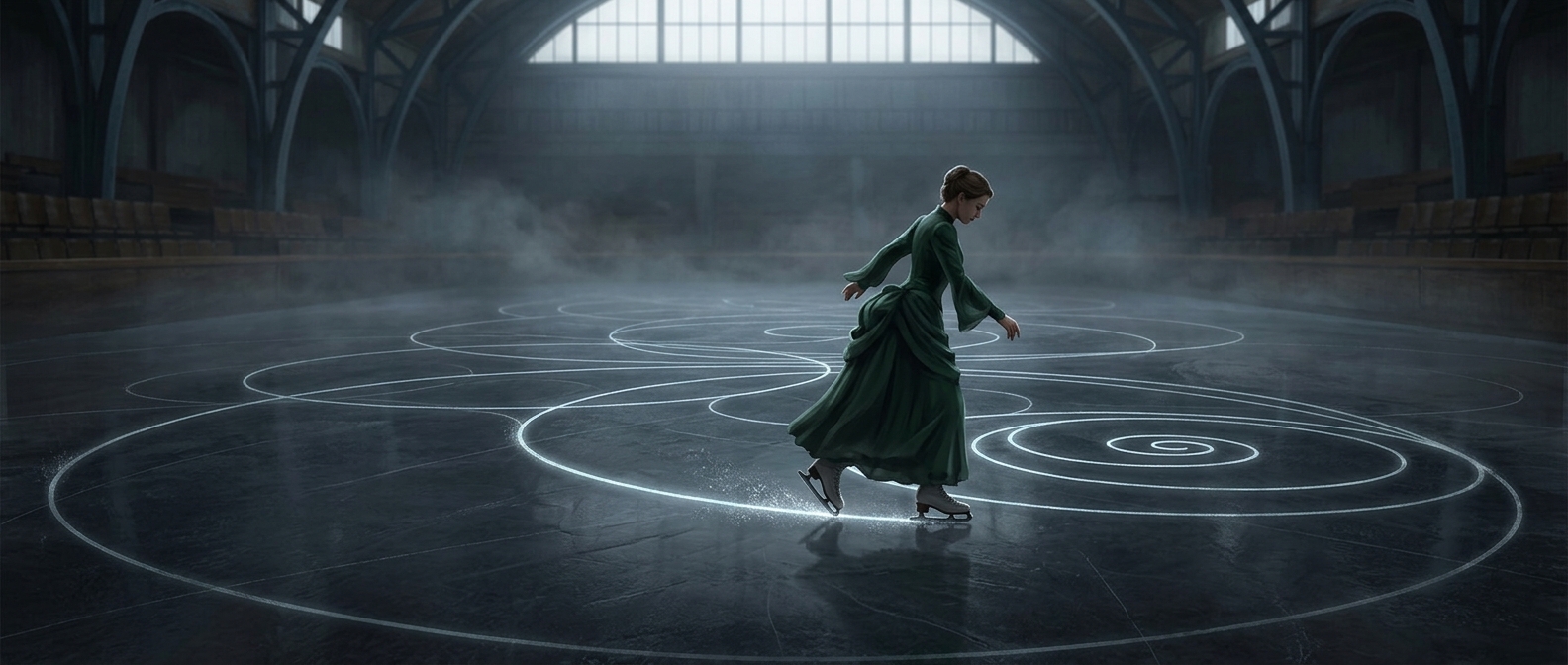
In early competitive figure skating, a skater’s main test was not how high they could jump but how precisely they could draw prescribed shapes on the ice. A figure-eight was made from two matching circles joined at a small center point. The skater traced it on one blade, using its inside or outside edge—the curved side of the blade—to steer each arc.
The shape had to be repeated cleanly. A skater who leaned unevenly, changed edges at the wrong moment, or drifted away from the intended curve could leave a wobbly or misplaced track. Judges examined the tracings for their symmetry, size, and accuracy. The ice itself became a record of the performance.
Control before spectacle
These exercises demanded quiet balance and precise control. Skaters had to maintain speed through a curve, switch direction without losing the shape, and return to the center of the pattern. Small errors mattered because they remained visible in the blade marks; a flashy finish could not erase a crooked circle.
That emphasis helps explain the sport’s name. “Figure skating” referred to the figures traced on the surface, not simply to the shapes a skater’s body makes in the air. Over time, competitions put much more weight on free skating, where athletes perform programs featuring jumps, spins, and steps. But the old figures reveal what judges once looked for first: whether a skater could make the ice itself show exact control.