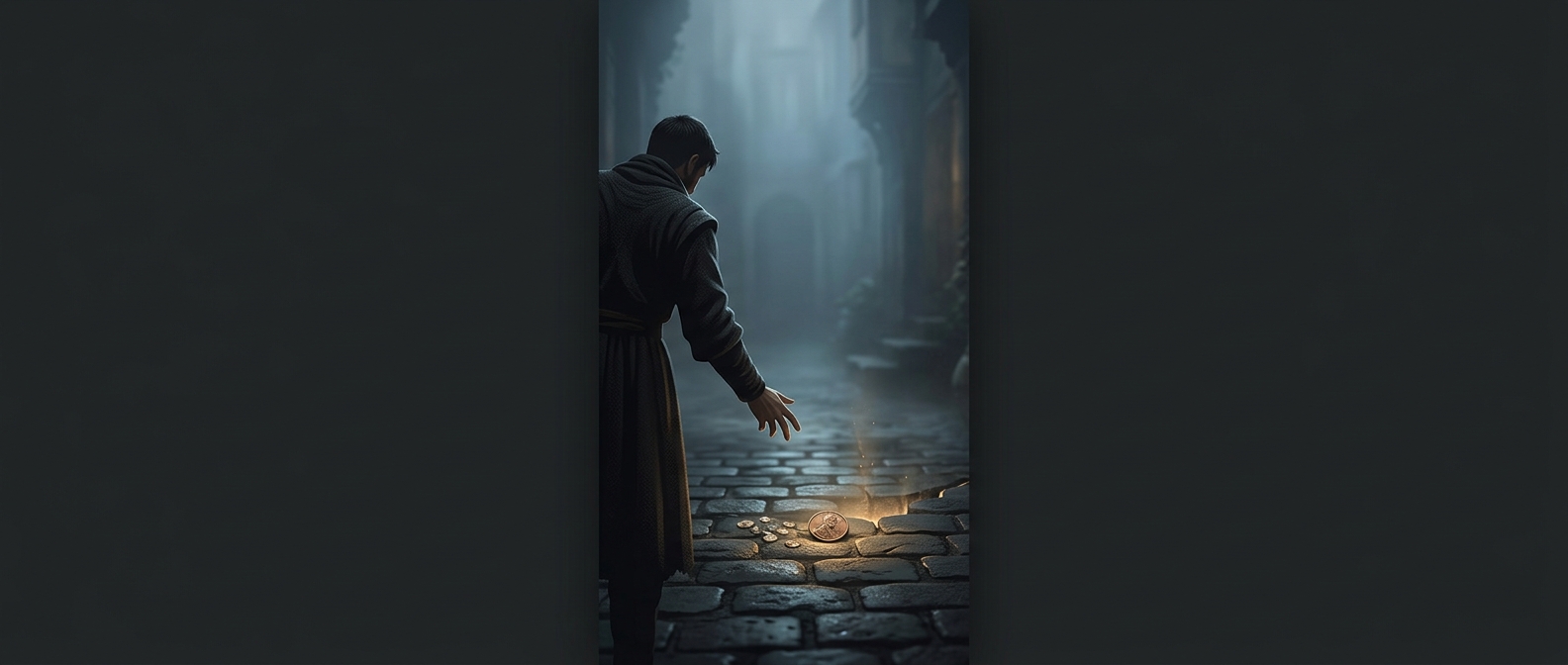
Why a Penny’s Face Could Seem to Matter
A face-up penny is a tiny, visible sign that luck is on your side. In folk belief, the coin’s two faces do more than identify its value: the upward-facing side is treated as open to good fortune, while the reverse suggests bad luck that might be passed along. The coin becomes a small ritual object, turning an ordinary find into a choice about what kind of luck to accept.
The Logic of Taking or Leaving It
That belief gives the familiar “find a penny” custom a practical rule. A coin showing its favorable face can be picked up as a welcome sign; one showing the other face is better left alone, so its supposed misfortune stays behind. The same coin can therefore invite opposite reactions depending on how it landed.
The ritual does not establish that coins can control events. Its meaning comes from interpreting chance: a random landing is read as a message, and a simple action—picking up or passing by—lets someone respond to it.
A Small Act of Folk Magic
Coins are especially suited to this kind of superstition because they are common, portable, and marked with distinct sides. Flipping one is already a familiar way to leave a decision to chance; finding one on the ground can make that chance feel personal. The face-up penny is remembered not as a prediction with evidence behind it, but as a tiny invitation to hope.